

Stay Informed
We love building relationships. Subscribe to our blog to receive weekly encouragement and monthly eNews for ministry updates in your email inbox.
Search Our Blog Posts
Blog Article Tags
Deprecated: htmlspecialchars(): Passing null to parameter #1 ($string) of type string is deprecated in /home/irsm/public_html/modules/mod_tagtransform/mod_tagtransform.php on line 12
Visit Our Store
Donate
You can also mail checks, made out to IRSM, to:
Iron Rose Sister Ministries
PO Box 1351
Searcy, AR 72145
IRSM is a 501(c)(3), so donations are tax-deductible.
Blog
More blog entries below
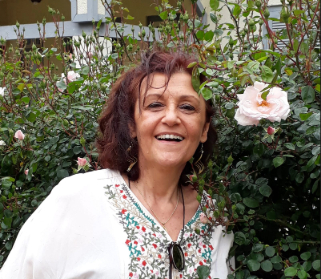 Written by Luzia Casali, volunteer with Iron Rose Sister Ministries in Rio Grande do Sul, Brazil
When I was a teenager, I was extremely impulsive. Impatient. I wanted everything done yesterday. Toward the end of high school, my father gave me something to think about:
"Luzia, it takes a hen 21 days to hatch an egg at a temperature of 98.6°. What would happen if I raised the temperature to 120°?"
I replied, "The egg would cook; there would be no chick."
He asked again, "What if I took the egg away from the hen after 15 days?"
I answered, "The chick wouldn't be ready."
The moral of the story: In life, there is a right time for a task to be completed—neither sooner nor later.
Just as I had an earthly father who gave good advice, we have a Heavenly Father who guides us in Jeremiah 29:11 (NIV): "For I know the plans I have for you," declares the Lord, "plans to prosper you and not to harm you, plans to give you hope and a future."
He is the One who holds the plans for each of us. These plans cover every area of our lives and unfold according to His timing.
Discipleship training is one of those. We need to pray and trust God throughout the process.
The Bible gives us an example of someone who tried to remove the egg before the chick was ready and suffered the consequences.
Let’s consider the case of Sarai in Genesis 16. God had made three promises to Abram in Genesis 13: a son, the land, and the Descendant. It was God Himself who made the promise, stating that Sarai would have a son. Feeling that the process was taking too long, she took matters into her own hands. She offered her Egyptian slave, Hagar, to Abram, and Hagar conceived. Believing herself superior to her mistress because she was able to get pregnant, Hagar began to look down on Sarai. Sarai, feeling disrespected, began to mistreat Hagar—with Abram’s consent. Unable to bear the pressure, Hagar fled into the desert (pregnant, without food or water). However, our merciful God intervened and sent an angel who told her to return and submit to Sarai. Yet, He instructed Hagar to name her son Ishmael—which means "God hears"—and prophesied that he would be a rebellious and independent man, constantly in conflict with others.
The Ishmaelites were, in fact, a contentious people, living in constant hostility toward all their brethren (Ge 25:17–18).
They were nomadic traders who even dealt in slaves. We must not forget that it was the Ishmaelites who bought Joseph from his brothers (Ge 37:28).
Although Sarai took the egg before it hatched, God honored the promise He had given to Abram. Nevertheless, consequences followed—specifically, the Ishmaelites' conflict with other peoples. Yet God did not change His plans; He fulfilled the promise made to Abram: Isaac (the son), Israel (the nation), and our Lord and Savior Jesus Christ (the Descendant).
Likewise, we cannot rush the training of disciples. There is a right time for each one to mature in faith and bear fruit. We must always bring disciples, their studies, and their quality time with the Father before the Throne of God.
If we remove the egg too soon—fail to allow sufficient time for the disciple to be prepared for work in the Church—there can be various consequences. Here are a few of them:
- Burnout and Frustration: The disciple faces responsibilities without the means to handle them, leading to stress, frustration, and discouragement—failing to disciple others and, in the worst-case scenario, an abandonment of the faith.
- Division and Conflict: Immaturity and/or a lack of proper knowledge can lead to hasty decisions or unwise use of the Word, causing friction within the congregation.
- Departure from Sound Doctrine: Without adequate knowledge, the disciple may compromise the preaching of the pure Word.
- Wounds within the Congregation: Unprepared individuals can emotionally hurt other members due to a lack of discernment or psychological and/or spiritual preparation.
Just as God had plans to send the Savior—plans that were not obstructed—we must realize that making disciples is part of God's plan: training them to make other disciples (Mt 28:19–20) and trusting that He is the One who brings the growth (1Co 3:6). We cannot try to take matters into our own hands as Sarai did because there will be consequences.
My comfort lies in knowing that, just as God did not change His plans to send the Savior, He will not change His plans for the Word to be preached.
May God bless us.
 Written by Liliana Henriquez, volunteer with Iron Sister Rose Ministries in Colombia
My school days coincided with the beginning of Shakira's musical career. At the time, it was easy to recognize one of her fans: it was enough to see her wearing plaid pants. It was an impressive fashion! We all wanted to have some. And the funny thing is, it went without saying that we were fans of Shakira; our way of dressing communicated it on its own.
Something similar happens with us as Christians. Many times, we don't need to say anything to communicate everything. Our attitudes, our words, and our way of living speak of who we are and who we follow.
As Nila reminded us at our Spanish virtual class in June, bearing fruit comes naturally. A branch connected to the vine produces fruit because that is its nature. She doesn't have to make an effort to appear to be alive. The fruit appears as a result of remaining connected to the source that gives it life.
In the same way, when we abide in Christ, fruit begins to manifest itself in our lives. It is reflected in our patience, in our way of loving, in our ability to forgive, and in the peace we experience even in the midst of difficult circumstances.
But let's go a little deeper...
Continuing with Shakira's example, it was not the same to wear plaid pants as it was to know all her songs. Those of us who knew the lyrics showed that we had really spent time listening to her music. There was more than just an outward appearance.
Something similar happens with Jesus. When we spend time with Him through His Word, we begin to think, speak, and act in a different way. Our words reflect what fills our hearts, and our actions are evidence of the closeness of our relationship with Him.
Sometimes we want to reflect Christ without spending time with Christ. We want to have the right answers, the right words, and the wisdom needed to help others, but we forget that all of that is born out of a close relationship with Him. There are no shortcuts to bearing abundant fruit.
We need to spend time with God. It is in that space of intimacy that the Holy Spirit teaches us, transforms us, and reminds us of the truths we need in each moment.
But the Advocate, the Holy Spirit, whom the Father will send in my name, will teach you all things and will remind you of everything I have said to you. (Jn 14:26 NIV)
And if you ever feel afraid that you won't know what to say or how to share Jesus with others, don't worry. It doesn't depend on your eloquence or having all the answers. Your responsibility is to be available and willing to be an instrument in God's hands to encourage, instruct, comfort, and bless others. The Holy Spirit will take care of the rest.
For the Holy Spirit will teach you at that time what you should say. (Lk 12:12)
Have you ever experienced that, while talking to someone, a piece of advice, a word of encouragement, or a perspective comes into your mind that you hadn't planned to share? Maybe you came into that conversation thinking you didn't have anything important to contribute, and suddenly you found the exact words the other person needed to hear.
I dare say that many of us have experienced something similar. And when it happens, we often ask ourselves, "Where did that come from?" There, we can see the work of the Holy Spirit using our lives to edify others. The wonderful thing is that God doesn't need perfect people to fulfil His purposes. He uses willing hearts, people who have learned to listen to Him and who are available to be led by Him.
I like to think of this as a synchronization. Just as email is automatically updated on all connected devices, our minds and hearts align with God when we stay close to Him. The more connected we are, the more sensitive we will be to His direction, and the easier it will be to recognize His voice in the midst of everyday situations.
So, what's the key?
Stay close to Jesus. Spend time in His presence. Allow His Word to transform our hearts. And when the time comes to speak, trust that the Holy Spirit will put the right words in our mouths.
Let God use you. When you walk close to Him, you will find that you do know what to say.