

Other Languages
Este devocional también está disponible en español.
Este artigo também está disponível em português.
Visit Our Store
Donate
You can also mail checks, made out to IRSM, to:
Iron Rose Sister Ministries
PO Box 1351
Searcy, AR 72145
IRSM is a 501(c)(3), so donations are tax-deductible.
What Fruit Is My Life Producing?
 Written by Abigail Adriana Loayza Becerra, volunteer with Iron Rose Sister Ministries in Cusco, Peru
This is to my Father's glory, that you bear much fruit, showing yourselves to be my disciples.
(John 15:8, NIV)
When we think about bearing fruit as disciples of Jesus, we often imagine doing more—serving more, participating more, knowing the Bible more, or doing more activities. But Galatians 5 leads us to a much deeper question: What is our life really producing?
Paul contrasts the acts of the flesh with the fruit of the Spirit. And there’s something interesting about the words he uses. He speaks of "acts" in the plural, but of "fruit" in the singular. Acts can be manufactured; fruit, on the other hand, grows.
The acts of the flesh represent what happens when we try to live from our own nature and our own desires. We can try to control our actions, appear spiritual, or strive to follow rules, but our external effort does not always transform our hearts. The history of Israel had already shown this reality; God had given His Law and clearly revealed what was good, but the problem was not in the Law, but in the human heart. That is why the prophets announced something much deeper.
God promised to change the hearts of His people. "I will give you a new heart and put a new spirit in you; I will remove from you your heart of stone and give you a heart of flesh" (Ezek 36:26), and Jeremiah also spoke of a time when God would put His Law in the minds of His people and write it on their hearts. Here we can see a beautiful connection to Galatians 5. God doesn't just want to tell us how to live—He wants to transform the living person from within. The fruit of the Spirit (love, joy, peace, patience, kindness, goodness, faithfulness, humility, and self-control) is not just a list that we must memorize to appear "spiritually mature." Instead, it is the result of a life that is being transformed by the Holy Spirit.
Isaiah 5 uses another powerful image: God compares Israel to a vineyard that He Himself planted and cared for. He expected it to produce good grapes, but it produced sour grapes. This metaphor reminds us that we can have the right environment, know the truth, and even be close to the things of God, and still not be able to produce the fruit He expects. So it is in this image that Jesus appears, saying, "I am the vine; you are the branches" (John 15:5). The difference is in remaining united to Him: a branch does not produce fruit apart from the vine; we do not need to strive to "look" like a fruitful branch; we need to be the branch that remains connected to the source of life, which also changes our understanding of being true disciples.
Our fruit reveals our connection to Christ. John 15:8 says that when we bear much fruit, we show that we are disciples of Jesus and, above all, we glorify the Father; that is why true fruit becomes more evident when life becomes difficult. Patience is demonstrated when someone irritates us. Self-control appears when we have reasons to react impulsively. Humility is revealed when we might demand recognition. Love becomes real when we must love even those who are not easy for us to love.
Galatians 5:25 tells us, "Since we live by the Spirit, let us keep in step with the Spirit." The Christian life is not only about knowing what God wants, but about walking in the same direction as the Spirit. Perhaps today the question should not be, "How much am I doing for God?" but rather, "What fruit is God producing in me?" Because in the end, being a disciple is not just about bearing the name of Christ; being a disciple goes beyond all of that. Being a disciple means allowing Christ to form me to the point that He, in the fullness of His character, is visible in how I love, speak, serve, forgive, and relate to others. A branch connected to the vine will bear fruit.
What fruit of the Spirit needs to grow the most in my life so those around me can see Christ in me?
Know the Tree by Its Fruits
 Written by Paulina C. Lux, volunteer with Iron Rose Sister Ministries in New York
By their fruit you will recognize them. Do people pick grapes from thornbushes, or figs from thistles? Likewise, every good tree bears good fruit, but a bad tree bears bad fruit. A good tree cannot bear bad fruit, and a bad tree cannot bear good fruit. Every tree that does not bear good fruit is cut down and thrown into the fire. Thus, by their fruit you will recognize them. (Matt 7:16-20 NIV)
My father was a farmer and fruit grower in my native country, Guatemala, known as the eternal spring. As a child, I enjoyed a special fruit he harvested. It was called Anna, a crisp, juicy apple. According to him, this fruit was produced in Israel by agronomist Abba Stein in 1950; the apple was named Anna in honor of his daughter. Since I was little, I saw how Dad took care of fruit trees, growing them in good soil so they would have deep roots hydrated by rain and could produce good fruit. He had many fruit trees, and each tree produced fruit according to its species.
A tree is known by its fruit. Jesus spoke to His general audience, and more specifically the religious scribes who knew the Mosaic law to the letter and were strict in their observance, but whose words were not consistent with their actions.
Woe to you, teachers of the law and Pharisees, you hypocrites! You give a tenth of your spices—mint, dill and cumin. But you have neglected the more important matters of the law—justice, mercy and faithfulness. You should have practiced the latter, without neglecting the former. (Matt 23:23)
They made themselves known by their fruits.
The questions I ask myself now are: What kind of tree am I? How do I know I'm a good tree?
Thales of Miletus is credited with this phrase: "The most difficult task is to know oneself." It's difficult because it takes humility and wisdom to accept my shortcomings. It's easier to hide my true self so as not to be criticized or corrected, and I pretend to be a good Christian. But I can't maintain appearances for long; my actions give me away. Because the fruit Jesus speaks of is our actions, words, or children, I have three princesses. They look like me, only in mini versions; they have my character, and they expose me to my spiritual sisters. That's right: they are my fruits. The written word exhorts us to introspect, self-evaluate, and see what kind of fruit we are producing.
How can I produce good fruit? First, we look for fertile soil to sow the seed. The soil is my heart, which is willing to receive a good seed, which is the Word of God, and be watered by the Holy Spirit, which is the fountain of living water. A seed sown without being watered by the rain dies. When Jesus was coming from Judea to Galilee, He passed through Samaria, met the Samaritan woman, and asked her for water.
Jesus answered her, “If you knew the gift of God and who it is that asks you for a drink, you would have asked him and he would have given you living water.” “Sir,” the woman said, “you have nothing to draw with and the well is deep. Where can you get this living water? Are you greater than our father Jacob, who gave us the well and drank from it himself, as did also his sons and his livestock?” Jesus answered, “Everyone who drinks this water will be thirsty again, but whoever drinks the water I give them will never thirst. Indeed, the water I give them will become in them a spring of water welling up to eternal life." (John 4:10-14)
A good tree bears good fruit, and a bad tree bears bad fruit. You know, my beloved reader, each tree bears fruit according to its kind. The thorn in the desert also produces thorns. When our heart is dry, it is like a desert that produces only thorns and hurts our loved ones: family, husband, children, spiritual family, friends, etc.
It is important to prepare the earth first, healing our emotional wounds (inner child), so the soil is fertile, and the seed of the gospel can germinate in our hearts and be watered by the Holy Spirit so that it produces good fruit in worship to God and for the the edification of my neighbor.
For the bad tree bears bad fruit, but the good tree produces good fruit. Like the apple tree, Anna, its fruit is juicy.
What kind of tree would you like to be?
Planning for Growth; Planting Vineyards
 Written by Leylane Bertoldo Campos, volunteer with Iron Rose Sister Ministries in Recife, Pernambuco, Brazil
The saying "practice makes perfect" is a classic across many cultures. Whether you are reading this blog post in Portuguese, English, or Spanish, you have surely heard it before. But is it really that simple? I have heard that some psychologists and neuroscientists prefer to make a slight correction to this adage. They say that "practice leads to permanence," but not necessarily to perfection. This is because, if you practice something the wrong way, your brain will reinforce that error. With this in mind, we can apply this logic to our walk with God, as the risk is very similar. When we try to practice a godly life in the wrong way, we may pursue a perfection that will never come. Instead, we can seek a godliness that pleases God—not to become perfect, but to become mature and fruitful.
It is common to see a simplified view of spirituality within our community. For some, regularly attending church activities, mechanically reading a chapter of the Bible, and saying a quick prayer before bed make up a sort of “holiness combo.” While these actions are essential when performed intentionally, reducing faith to a checklist can be an unwise and haphazard way to nurture our spiritual lives. We need to understand that biblical faith is not passive. God’s wisdom also manifests itself through strategy and planning—and this is precisely what the woman of Proverbs 31 demonstrates.
She considers a field and buys it; out of her earnings she plants a vineyard. (Prov 31:16 NIV)
The woman of Proverbs 31 has a very clear vision of her future. Notice that she does not buy a property on impulse; she examines it before making that decision. When examining a property, it is necessary to patiently assess its suitability for the intended purpose—in this case, planting a vineyard. There is a principle of biblical wisdom here. In Proverbs, the wise person observes, ponders, and acts with discernment.
In this verse, we also see a woman who devoted her efforts to planting a vineyard—an undertaking that requires long-term vision. An experienced winegrower knows that the entire process of planting a vineyard demands patience. In the early years, the project may appear stagnant. Yet, it is beneath the soil—hidden from our view—that the real work takes place. That is where the plant expends all its energy, driving its roots as deep as possible to absorb the necessary nutrients. If it were to bear fruit without deep roots, its entire structure could be compromised. This reminds us that Christian maturity also requires the patience of cultivation—a practice that will lead us to become like Christ.
At first glance, we might view this verse merely as guidance regarding business or finances. However, God’s wisdom is reflected in our everyday lives. The way we examine our choices also reflects the state of our hearts. The daily actions we take are deeply connected to good habits that can draw us closer to God.
Have you ever stopped to consider how you make your decisions? How you manage your resources? How you plan your time, handle your money, or use your talents? Do you seek to make decisions based on God’s wisdom, rather than on a desire for instant results or emotional neediness?
Just like a vineyard, spiritual growth requires daily consistency, pruning, and great patience. A truly worthwhile spiritual life does not happen overnight, nor does it arise from vain repetitions devoid of purpose or planning. Whether at home, at work, or in the church, we need to apply God's wisdom to every decision we make—examining matters and planning for the long term.
Christian women seek the success of the Kingdom of God above all else; they examine their attitudes and manage with discernment what God has placed in their hands. Which "soil" do you need to examine more mindfully right now before making a decision? Have you been planting vineyards for the future, or living merely for present impulses? Have you been spending your energy planting vineyards that will nourish your future, or have you spent your days reacting only to the impulses and urgencies of the present?
James 5:7-8 says: “Be patient, then, brothers and sisters, until the Lord’s coming. See how the farmer waits for the land to yield its valuable crop, patiently waiting for the autumn and spring rains. You too, be patient and stand firm, because the Lord’s coming is near.”
Begin today what you hope for tomorrow. Prepare yourself for the coming of Christ. Pray today for the future of your marriage. Pray today for your baby’s teenage years, or for the future spouses of your young children. Seek today the spiritual growth you desire for your future. Practicing a godly life may not lead to the perfection the world seeks, but it will certainly lead us to a fruitful life—a practice carried out in the right way, as God desires and has taught us, so that we may strengthen our hearts, for the coming of the Lord is near.
Growth and Harvest
 Written by Kim Solis, volunteer with Iron Rose Sister Ministries in Oregon
Matthew 9:37–38 says:
The harvest is plentiful, but the workers are few.
Ask the Lord of the harvest, therefore, to send out workers into his harvest field. (NIV)
Whenever I think about this passage, I picture men and women working in a field, gathering the harvest from what has already been planted. It is hard work, the kind of work most people would rather avoid. It requires time, effort, and energy, resulting in aching backs, rough hands, dirty knees, and often blood, sweat, and tears.
Many sermons, lessons, and exhortations focus on asking Christians whether we are working in the field, participating in the harvest by talking to people about God and explaining His plan of salvation.
The Spanish TLA (Traducción en Lenguaje Actual, or Translation in Contemporary Language) says:
Jesus said to his disciples, “There are many people who need to enter the kingdom of God, but there are very few disciples to tell them the good news.
So ask God to send more disciples to share the good news with all those people.”
Working in the field, harvesting = proclaiming and sharing the good news with people.
Many times, we think the right way to “evangelize”—to share the good news—is primarily through evangelistic campaigns, knocking on doors, or handing out flyers in the street. And often the approach begins by pointing out people’s sins or errors: telling them they are lost, that only Jesus can save them, that they need to repent and be baptized for the forgiveness of their sins, and rise with Him to a new life.
I agree with that message. What I question is whether pointing out what is wrong and correcting people should be the starting point.
The good news is, after all, GOOD.
It announces that the lame can now walk, the deaf can hear, and the captives have been set free. In the gospels, Jesus’ strongest rebukes were directed toward those who already knew the Scriptures and claimed to know God. But when He approached the hurting, the marginalized, and those who were far from God, He often began by meeting their physical needs and, perhaps even more importantly, their emotional ones. He offered compassion, acceptance, dignity, and friendship. And from within that relationship, He taught them a new way to live.
First Peter 3:15–16 says that we should always be prepared to give a defense for the hope that is within us.
That means there must first be a hope within us that others can see.
People notice our peace, our hope, the way we love, and the way we live. And that difference should naturally lead them to ask why something is different about us.
But being a worker in the field also involves much more than speaking words of explanation or instruction.
No harvest would ever happen if someone had not first planted, watered, and cultivated with intention, attention, patience, care, and love.
Paul’s words in 1 Corinthians 3:6–7 come to mind:
I planted the seed, Apollos watered it, but God has been making it grow.
So neither the one who plants nor the one who waters is anything, but only God, who makes things grow. (NIV)
When we show people mercy, when we are generous with our affection, our resources, and our time, when we help, encourage, and walk alongside others, we are planting, watering, and cultivating, even before we ever open the pages of a Bible.
First John 4:11–12 says:
Dear friends, since God so loved us, we also ought to love one another.
No one has ever seen God; but if we love one another, God lives in us and his love is made complete in us.
People cannot see God. But when they see the love we show one another and the love we extend to those around us, they can catch a glimpse of Him. God becomes present among us, and His love is made visible in a way others can experience.
That, too, is sharing the gospel.
That, too, is proclaiming the good news.
That, too, is taking part in the work of the field and the harvest.
So, what are you doing today to participate in the work of the field?
Are you planting?
Are you watering?
Are you cultivating with love, generosity, and mercy?
Or perhaps today is a day for harvesting—being ready to explain the hope within you and to tell someone that the same hope is available to them.
We do not all do the same part of the work at the same time.
Some plant. Others water. Others harvest. But God is the One who gives the growth.
Living Water, Lasting Growth
 Written by Kat Bittner, volunteer with Iron Rose Sister Ministries in Colorado
Growth is a natural expectation of life. Whether we are talking about a plant, a tree, the physical body, or a spiritual walk, healthy growth requires consistent nourishment. One of the most essential elements for growth is water. Without it, even the strongest seed or healthiest vine will struggle to survive. The same principle applies to our relationship with God.
In Ezekiel 19:10, the prophet proclaims, "Your mother was like a vine planted by the water's edge. It had lush, green foliage because of the abundant water." (NLT)
This beautiful image reminds us that fruitfulness is connected to a reliable water source. The vine did not become fruitful on its own. It flourished because it was planted where it could continually receive the water needed to sustain life and growth.
Anyone who has cared for a garden understands the importance of water. Even if planted in good soil, without water, a garden cannot develop roots, produce leaves, or bear fruit. Water feeds the life within a plant and enables it to become what it was created to be.
The same is true for us as Christians. We want a stronger faith, greater wisdom, better relationships, and a deeper purpose in life. We want to become what we were created to be. Yet growth does not happen simply because we want it. We need to be fed and nurtured continually. Like the vine in Ezekiel, we must remain connected to a source that continually nourishes us. God never intended for us to survive on occasional inspiration. He calls us into a daily relationship where His presence refreshes, strengthens, and transforms us over time.
When Jesus met the Samaritan woman at the well, He shifted the conversation from physical water to a much deeper need. In John 4:13-14, Jesus said, "Anyone who drinks this water will soon become thirsty again. But those who drink the water I give will never be thirsty again. It becomes a fresh, bubbling spring within them, giving them eternal life.”
Spiritual growth is not an overnight transformation. Rather, it is a lifelong journey of being nourished by Christ, our Living Water, on a regular basis. Just as a vine planted by abundant waters grows strong, fruitful, and resilient, we too become spiritually healthy when we remain connected to Jesus. Through regular study of God's Word, prayer, worship, and the guidance of trusted spiritual mentors, God gradually shapes our character, deepens our faith, and equips us for His purposes.
When we intentionally seek Christ each day, we can trust that He will provide the nourishment we need for every season. There will be seasons of rapid growth and seasons where growth seems stagnant. The key is to stay planted near the source of water. When we remain rooted in Jesus and open to His teaching, growth becomes the natural result of a life continually refreshed by the Living Water. And He is the source of water that never runs dry.
This message of spiritual growth can be beautifully summarized by Psalm 1:2-3: "But they delight in the law of the Lord, meditating on it day and night. They are like trees planted along the riverbank, bearing fruit each season. Their leaves never wither, and they prosper in all they do.”
The woman at the well delighted in what Jesus told her and asked to be given this water so that she’d “never be thirsty again” (John 4:15). Never thirst again. Like the plant which remains embedded in the water, we will never be thirsty if we are continually fixed on Jesus. We will flourish in the source of living water, Jesus.
What will you do to be nourished by the Living Water? How can you have lasting growth?
Doing God's Will and Bearing Fruit is Our Sustenance
 Written by Ayane Nayara, Brazil Assistant with Iron Rose Sister Ministries
“My food,” said Jesus, “is to do the will of him who sent me and to finish his work.” (John 4:34 NIV)
The word "hyperfocus" describes the act of devoting your full attention to something for an extended period. It is when we find something that feels exactly right to do at a given moment, and we become so focused and determined to complete it that we even forget to eat. In that moment, it is our source of delight; nothing else matters. We even neglect our basic needs.
In the John 4 text, we read about the moment Jesus meets the Samaritan woman. As mentioned in the text, Samaritans and Jews did not get along (Jesus was a Jew; the woman, a Samaritan). When the disciples find them talking, they find it quite strange, but they do not question it.
From the beginning of the Gospel of John, we see Jesus in action. He is described as the Word in action. Before reaching chapter 4, we see a series of encounters He had with certain people—encounters that bore fruit.
Christ came into the world with a very clear mission: to preach the Word of God and bring the message of the hope of salvation to all peoples.
You see, the Samaritan woman was not someone who did not know God; on the contrary, she was awaiting the arrival of the Messiah, expecting Him to come and explain the true nature of worship. Yet, her hope for salvation was being undermined by those who ought to have brought that very hope to her—in the eyes of the Jews, she was condemned and not even considered part of God’s people. (The Samaritans originated from a history of Israelites intermixing with other peoples, leading the Jews to reject them as God's people. On top of this, differences in religious practices fueled tension between the two groups.)
In this encounter, we see Jesus fulfilling His mission—restoring that woman's hope. He was not concerned with whether lunchtime had already passed or whether she would serve Him the water; what we see here is an intentional act of drawing near and touching her life.
That was Jesus’s hyperfocus: bearing fruit. That was what He fed His Spirit with—fulfilling the mission to which He had been appointed.
God has also called us to a great mission—to be salt and light in this world. This entails presenting the Gospel message to those who do not know it, restoring hope to those deemed unworthy of salvation through the message of the cross, and living in love with His people—the church.
Unfortunately, we live in a world where attention to one's own needs often takes precedence over others. There is constant talk of high performance—of how YOU can achieve YOUR goals and YOUR objectives—yet we often overlook the true value of the fruit we bear. While we race after things that will remain in this life, Christ calls us to a mission that yields eternal fruit—our own spiritual growth and the rescue of the lost.
I am not suggesting that we stop eating or forget about the life we live here. Rather, I am urging us to reflect on what our priorities have been as we live as people who have decided to follow the Master’s call.
Since, then, you have been raised with Christ, set your hearts on things above, where Christ is, seated at the right hand of God. Set your minds on things above, not on earthly things. (Col 3:1-2)
We need only look around us to see people who do not yet know the Savior—people who have heard of Him but have not been fully taught, and those who need to encounter the Jesus who is the source of living water, full of grace and mercy for those whom others condemn as unworthy of His word.
We have a Spirit within us which feeds on the practice of God’s justice—the same Spirit that dwelt in Christ (John 1:32–33) and found fulfillment in doing the Father’s will. The Spirit hungers and thirsts for this action, and God has promised to satisfy us (Matt 5:6).
The disciples were surprised by Jesus’s action because they saw only an unworthy woman, but Jesus saw soil ready to receive the seed of the Gospel and be watered by living water. He saw in that moment yet another fulfillment of His mission—not merely a task checked off a list, but fruit ready to be produced.
And what about us? Where are we nourishing our spirit? Where is our hyperfocus directed?
Growth Requires Light
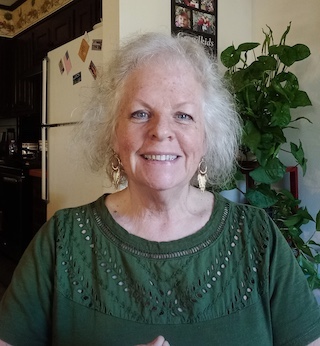 Written by Kathy Reagan, volunteer with Iron Rose Sister Ministries in Texas
I’ve been a gardener for many years. Isn’t it wonderful how God teaches us life lessons using His creation?
I planted a large garden several years ago, together with my daughter-in-law, Sharon. We had a friend with a tractor come in and clear a huge area for us; we were so excited! It took two whole days of toiling in the garden to plant everything we wanted to raise, including blueberry bushes, a nice selection of herbs, a wide variety of vegetables, and even a few fruit trees. We could already taste the fruits and veggies! And imagine the yummy variations of common dinners with fresh herbs added!
Well, that year was the rainiest summer on record; cloudy every day, very little sunshine all summer long. (And that was very rare for our part of Colorado!) Needless to say, we yielded very little from our enormous garden; just a few carrots, if I remember right.
What can we learn from this experience?
We, like a garden, need sunshine to grow and bear fruit! The Word tells us to “…grow in the grace and knowledge of our Lord and Savior Jesus Christ” (2Pe 3:18a ESV). We see it is God’s will for us to grow in our spiritual walk with Him. In fact, it is our privilege and joy to look back and see the spiritual growth in our lives!
Our goal is spiritual maturity so that we can bear fruit, being established in our faith, with roots that sink deep and anchor us to our Creator (Col 2:7).
And just like my garden, our growth to maturity requires light.
One definition of light is perfect brightness, pure radiance.
God is light, and in Him is no darkness at all (1Jn 1:5a).
How do we feast on the Light to grow?
- Long for the pure milk of the Word. “Like newborn infants, long for the pure spiritual milk, that by it you may grow up into salvation” (1Pe 2:2). Like a baby longs for mama’s milk and needs it to survive, we long to be fed by God’s Word, His teaching. Just like a newly planted garden draws its nourishment from light to grow, we feast on Jesus’ light in God’s Word.
- Walk in the Light. “For you were formerly darkness, but now you are light in the Lord; walk as children of light, (for the fruit of light consists in all goodness and righteousness and truth), trying to learn what is pleasing to the Lord” (Eph 5:8-10 NASB). God’s glorious light warms us, feeds us, leads us, and lights our path. “Your Word is a lamp to my feet and a light to my path” (Ps 119:105 ESV).
- Squash the darkness. Remember that “God is light and in Him is no darkness at all” (1Jn 1:5a), so, as we try to learn what pleases Him…
- We need to pull weeds that pop up constantly in our lives. “…let us lay aside every encumbrance and the sin which so easily entangles us and run with endurance the race that is set before us” (Heb 12:1 NASB).
- Pruning is necessary. “Put to death therefore what is earthly in you: sexual immorality, impurity, passion, evil desire and covetousness, which is idolatry” (Col 3:5 ESV). Just like we trim back weak areas of our healthy plants to keep them growing well, sometimes we must prune our own lives!
When we grow to spiritual maturity, the Light can’t help but shine brightly out of us, and we bless the world as they see our Father in us and are drawn to Him.
You are the light of the world. A city set on a hill cannot be hidden. Nor do people light a lamp and put it under a basket, but on a stand, and it gives light to all in the house. In the same way, let your light shine before others, so that they may see your good works and give glory to your Father who is in heaven. (Mt 5:14-16)
Just like my garden, when the light is obstructed or limited, growth slows to a crawl, and there may be no fruit at all – or even death.
Sisters, allow me to strongly encourage us all to let the Light shine brightly inside us daily by nourishing our spirits in God’s Word, walking daily in the glorious light of Jesus’ example, and taking regular inventory of our own spiritual growth so we can consistently weed out the sin that wants to grow slowly up around us and strangle us.
Then Jesus’ glorious light will shine out of us to bless the world and those around us, and we will bear fruit and be pleasing to the Father of lights (Jas 1:17)!
That's Not My Gift
 Written by Abigail Adriana Loayza Becerra, volunteer with Iron Rose Sister Ministries in Cusco, Peru
Instead, speaking the truth in love, we will grow to become in every respect the mature body of him who is the head, that is, Christ. From him the whole body, joined and held together by every supporting ligament, grows and builds itself up in love, as each part does its work. (Eph 4:15-16, NIV)
This is to my Father’s glory, that you bear much fruit, showing yourselves to be my disciples. (Jn 15:8)
How many times have we heard or said: "That's not my gift"?
We often say that when someone invites us to serve, to teach, to evangelize, or even just to listen. Without realizing it, that phrase becomes a shortcut to avoid commitment and an excuse not to participate in the mission that Jesus left us. It is true that God has given each of us different gifts. The Bible tells us that the body of Christ is made up of many parts and each one fulfills a different function: some teach, others encourage, others serve, others lead, others show mercy, etc., etc. And having different gifts does not mean that some believers are exempt from bearing fruit or making disciples.
Ephesians 4 explains that each member of the body contributes something indispensable to the Church. When each member uses the gifts God has given them, the body grows, becomes stronger, and reflects the love of Christ. The problem begins when we hide our talents behind phrases such as "that's not my gift," "I'm not good at that," or "it's better for someone else to do it." Many times, it is not a lack of capacity, but fear, comfort, insecurity, or lack of willingness.
Nor did Jesus say that only some should bear fruit. In John 15:8, He affirms that the Father is glorified when we bear much fruit and prove that we are His disciples. Bearing fruit doesn't just mean preaching from a pulpit. We bear fruit when we disciple someone, when we serve with joy, when we show hospitality, when we listen to those who need comfort, when we manage our resources well, or use our abilities to bless others.
The gifts God gives us are not for our own benefit, but for the edification and growth of the Church so that others may know Christ. Every gift, every talent can be a tool to spread the Kingdom of God. Many times, we expect to feel prepared to serve, but if we are willing to use the gifts God gave us, even if we feel unprepared, He will empower us as we act in obedience (like Moses, Deborah, Gideon, and many more).
Maybe your gift is teaching, singing, encouraging, evangelizing, organizing, cooking, writing, listening, administering, etc. No gift is too small when it is used with love, willingness, and above all, with the intention of glorifying God. One of the most important things is that we do not go around comparing gifts, but instead that we focus on being faithful to God with the gifts He has entrusted to us.
When we stop making excuses and serve willingly and intentionally, and when each member decides to take the place God has prepared for them, we discover that God can do more than we can imagine. We will see lives transformed, we will see the Church grow, we will see people being strengthened. Let us not allow the phrase "that is not my gift" to prevent us from obeying Christ's call for us, but let us instead ask ourselves, "How can I use what God has already placed in my hands to bear fruit and make disciples?" In the end, we may not be remembered for the gifts we had, but rather for our faithfulness in using them for the glory of God.
What gift, talent, or ability has God given you that you may have been putting aside out of fear or excuses, and how can you begin to intentionally use it to bear fruit and make disciples this week?
Lies of the Accuser That Hinder Us from Bearing Fruit
 Written by Michelle J. Goff, Founder and Executive Director of Iron Rose Sister Ministries in Arkansas
“No, you don’t have to truly die to all of your old life…” “You can just give God this one area of your life and hold back the others…”
If the enemy can keep us deceived and distracted, our growth is stunted. We are cut off from the True Vine, and we no longer bear fruit.
God longs to bring about growth in our lives, but the growth must begin with death. Those who have been united with Christ in His death, burial, and resurrection through baptism, have accepted the gracious gift of new life in Him (Ro 6:1-4).
As with a seed, our spiritual walk begins with death.
Very truly I tell you, unless a kernel of wheat falls to the ground and dies, it remains only a single seed. But if it dies, it produces many seeds. (Jn 12:24).
23 Then he said to them all: “Whoever wants to be my disciple must deny themselves and take up their cross daily and follow me.24 For whoever wants to save their life will lose it, but whoever loses their life for me will save it. 25 What good is it for someone to gain the whole world, and yet lose or forfeit their very self? (Lk 9:23-25)
The “daily” facet of Jesus’ invitation is a challenge for me. Do I daily die to myself, my needs and desires, to seek His Kingdom and His righteousness? What excuses do I allow to derail me from my primary purpose to remain in the Vine, to love God and love others?
Using one of my mom’s favorite words, there is a “plethora” of excuses or lies I accept. I allow them to become hindrances to my own growth and the process of fruit bearing. Today, we are going to call out some familiar lies or excuses and replace them with truth.
To do so, we will use a Lie/Truth Chart from Who Has the Last Word? Cutting through Satan’s Lies with the Truth of God’s Word. First, we Recognize the Lie in our own words. Then, we Replace that Lie with Truth, again, in our own words. These are the first two columns. The last column is for Remembering the Truth through a specific Bible verse or passage of Scripture.
|
RECOGNIZE the Lie |
REPLACE the Lie with Truth (in your own words) |
REMEMBER the Truth |
|
You can keep doing <distracting activity>. There will be time later to read your Bible, pray, encourage a friend, reach out to a neighbor… |
Doing <distracting activity> is keeping me from doing and being what God has given me the opportunity for today. |
“But encourage one another daily, as long as it is called “Today,” so that none of you may be hardened by sin’s deceitfulness.” (Heb 3:13) |
|
I just can’t do what it takes to remain in the Vine. I know the list of things I’m supposed to do, but is it even worth it? |
To remain or abide in the Vine is to invest in a relationship with the One who loves me perfectly and created me to grow in Him. |
““As the Father has loved me, so have I loved you. Now remain in my love.” (Jn 15:9) |
|
Fruit bearing is frustrating and exhausting work that is not worth the effort. |
Remaining in God’s love, bearing fruit as He designed, is the ultimate source of complete joy. Even when I’m tired, God will help me find a way to do good. |
“I have told you this so that my joy may be in you and that your joy may be complete.” (Jn 15:11) “Let us not become weary in doing good, for at the proper time we will reap a harvest if we do not give up.” (Gal 6:9) |
|
I am all alone. No one around me is striving to bear fruit or remain in the Vine. |
Satan wants me to feel alone and compare myself to others. God has gifted me with a body of believers that face the same struggles. |
“We do not dare to classify or compare ourselves with some who commend themselves. When they measure themselves by themselves and compare themselves with themselves, they are not wise.” (2Co 10:12) |
The examples I have listed barely scratch the surface of the excuses the devil uses to deter us from Kingdom work and Kingdom blessings. In Christ, we can put all the accuser’s lies to death—the kind of death that brings life and later bears fruit.
What excuses does the accuser bring to your mind that you want to replace with truth? What lie does he use to invade your thoughts and distract you from bearing fruit?
The examples I have listed barely scratch the surface of the excuses the devil uses to deter us from Kingdom work and Kingdom blessings. In Christ, we can put all the accuser’s lies to death—the kind of death that brings life and later bears fruit.
What excuses does the accuser bring to your mind that you want to replace with truth? What lie does he use to invade your thoughts and distract you from bearing fruit?
Sarah’s Shortcut to Bearing Fruit: Trusting That God Will Bring the Growth
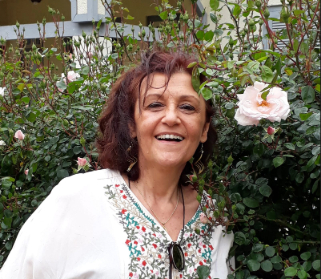 Written by Luzia Casali, volunteer with Iron Rose Sister Ministries in Rio Grande do Sul, Brazil
When I was a teenager, I was extremely impulsive. Impatient. I wanted everything done yesterday. Toward the end of high school, my father gave me something to think about:
"Luzia, it takes a hen 21 days to hatch an egg at a temperature of 98.6°. What would happen if I raised the temperature to 120°?"
I replied, "The egg would cook; there would be no chick."
He asked again, "What if I took the egg away from the hen after 15 days?"
I answered, "The chick wouldn't be ready."
The moral of the story: In life, there is a right time for a task to be completed—neither sooner nor later.
Just as I had an earthly father who gave good advice, we have a Heavenly Father who guides us in Jeremiah 29:11 (NIV): "For I know the plans I have for you," declares the Lord, "plans to prosper you and not to harm you, plans to give you hope and a future."
He is the One who holds the plans for each of us. These plans cover every area of our lives and unfold according to His timing.
Discipleship training is one of those. We need to pray and trust God throughout the process.
The Bible gives us an example of someone who tried to remove the egg before the chick was ready and suffered the consequences.
Let’s consider the case of Sarai in Genesis 16. God had made three promises to Abram in Genesis 13: a son, the land, and the Descendant. It was God Himself who made the promise, stating that Sarai would have a son. Feeling that the process was taking too long, she took matters into her own hands. She offered her Egyptian slave, Hagar, to Abram, and Hagar conceived. Believing herself superior to her mistress because she was able to get pregnant, Hagar began to look down on Sarai. Sarai, feeling disrespected, began to mistreat Hagar—with Abram’s consent. Unable to bear the pressure, Hagar fled into the desert (pregnant, without food or water). However, our merciful God intervened and sent an angel who told her to return and submit to Sarai. Yet, He instructed Hagar to name her son Ishmael—which means "God hears"—and prophesied that he would be a rebellious and independent man, constantly in conflict with others.
The Ishmaelites were, in fact, a contentious people, living in constant hostility toward all their brethren (Ge 25:17–18).
They were nomadic traders who even dealt in slaves. We must not forget that it was the Ishmaelites who bought Joseph from his brothers (Ge 37:28).
Although Sarai took the egg before it hatched, God honored the promise He had given to Abram. Nevertheless, consequences followed—specifically, the Ishmaelites' conflict with other peoples. Yet God did not change His plans; He fulfilled the promise made to Abram: Isaac (the son), Israel (the nation), and our Lord and Savior Jesus Christ (the Descendant).
Likewise, we cannot rush the training of disciples. There is a right time for each one to mature in faith and bear fruit. We must always bring disciples, their studies, and their quality time with the Father before the Throne of God.
If we remove the egg too soon—fail to allow sufficient time for the disciple to be prepared for work in the Church—there can be various consequences. Here are a few of them:
- Burnout and Frustration: The disciple faces responsibilities without the means to handle them, leading to stress, frustration, and discouragement—failing to disciple others and, in the worst-case scenario, an abandonment of the faith.
- Division and Conflict: Immaturity and/or a lack of proper knowledge can lead to hasty decisions or unwise use of the Word, causing friction within the congregation.
- Departure from Sound Doctrine: Without adequate knowledge, the disciple may compromise the preaching of the pure Word.
- Wounds within the Congregation: Unprepared individuals can emotionally hurt other members due to a lack of discernment or psychological and/or spiritual preparation.
Just as God had plans to send the Savior—plans that were not obstructed—we must realize that making disciples is part of God's plan: training them to make other disciples (Mt 28:19–20) and trusting that He is the One who brings the growth (1Co 3:6). We cannot try to take matters into our own hands as Sarai did because there will be consequences.
My comfort lies in knowing that, just as God did not change His plans to send the Savior, He will not change His plans for the Word to be preached.
May God bless us.
I Don’t Know What to Say!
 Written by Liliana Henriquez, volunteer with Iron Sister Rose Ministries in Colombia
My school days coincided with the beginning of Shakira's musical career. At the time, it was easy to recognize one of her fans: it was enough to see her wearing plaid pants. It was an impressive fashion! We all wanted to have some. And the funny thing is, it went without saying that we were fans of Shakira; our way of dressing communicated it on its own.
Something similar happens with us as Christians. Many times, we don't need to say anything to communicate everything. Our attitudes, our words, and our way of living speak of who we are and who we follow.
As Nila reminded us at our Spanish virtual class in June, bearing fruit comes naturally. A branch connected to the vine produces fruit because that is its nature. She doesn't have to make an effort to appear to be alive. The fruit appears as a result of remaining connected to the source that gives it life.
In the same way, when we abide in Christ, fruit begins to manifest itself in our lives. It is reflected in our patience, in our way of loving, in our ability to forgive, and in the peace we experience even in the midst of difficult circumstances.
But let's go a little deeper...
Continuing with Shakira's example, it was not the same to wear plaid pants as it was to know all her songs. Those of us who knew the lyrics showed that we had really spent time listening to her music. There was more than just an outward appearance.
Something similar happens with Jesus. When we spend time with Him through His Word, we begin to think, speak, and act in a different way. Our words reflect what fills our hearts, and our actions are evidence of the closeness of our relationship with Him.
Sometimes we want to reflect Christ without spending time with Christ. We want to have the right answers, the right words, and the wisdom needed to help others, but we forget that all of that is born out of a close relationship with Him. There are no shortcuts to bearing abundant fruit.
We need to spend time with God. It is in that space of intimacy that the Holy Spirit teaches us, transforms us, and reminds us of the truths we need in each moment.
But the Advocate, the Holy Spirit, whom the Father will send in my name, will teach you all things and will remind you of everything I have said to you. (Jn 14:26 NIV)
And if you ever feel afraid that you won't know what to say or how to share Jesus with others, don't worry. It doesn't depend on your eloquence or having all the answers. Your responsibility is to be available and willing to be an instrument in God's hands to encourage, instruct, comfort, and bless others. The Holy Spirit will take care of the rest.
For the Holy Spirit will teach you at that time what you should say. (Lk 12:12)
Have you ever experienced that, while talking to someone, a piece of advice, a word of encouragement, or a perspective comes into your mind that you hadn't planned to share? Maybe you came into that conversation thinking you didn't have anything important to contribute, and suddenly you found the exact words the other person needed to hear.
I dare say that many of us have experienced something similar. And when it happens, we often ask ourselves, "Where did that come from?" There, we can see the work of the Holy Spirit using our lives to edify others. The wonderful thing is that God doesn't need perfect people to fulfil His purposes. He uses willing hearts, people who have learned to listen to Him and who are available to be led by Him.
I like to think of this as a synchronization. Just as email is automatically updated on all connected devices, our minds and hearts align with God when we stay close to Him. The more connected we are, the more sensitive we will be to His direction, and the easier it will be to recognize His voice in the midst of everyday situations.
So, what's the key?
Stay close to Jesus. Spend time in His presence. Allow His Word to transform our hearts. And when the time comes to speak, trust that the Holy Spirit will put the right words in our mouths.
Let God use you. When you walk close to Him, you will find that you do know what to say.
Surrendered Lives
 Written by Deanna Brooks, volunteer with Iron Rose Sister Ministries in Arkansas
Have you noticed how sometimes God does the unexpected?
When we read Matthew’s genealogy of Jesus, five women are listed in the group. Why are these women listed? None of them would have been accepted by the religious leaders for various reasons, but our Heavenly Father chose them to be in the ancestral lineage of His Son.
Tamar - She probably was a Gentile… not an Israelite. She married the two older sons of Judah, who were each described as wicked (Ge 38:7,10). Tamar pretended to be a prostitute when she realized Judah was not going to allow her to marry the third son. One of the twins she bore from the encounter with Judah became an ancestor of Jesus.
Rahab - She was a Canaanite, a resident of Jericho, described as a prostitute or harlot. When the spies entered her city, she gave them refuge. Then, she told them that she knew what their God had done in Egypt and through the years, and asked for protection when they came to conquer Jericho (Jos 2:8-13). Rahab is mentioned as having faith in Hebrews 11. She and her family were saved during the destruction of Jericho because she gave a friendly welcome to the spies. She married Salmon, an Israelite, and was the great-great-grandmother of King David.
Ruth - She was from the land of Moab. Deuteronomy 23 prohibits marriage with Moabite men, because they had not welcomed the Israelites as they were passing through the land on their way to the Promised Land. Ruth had accepted the faith of Naomi and become a follower of YHWH (Ru 1:16). She returned with Naomi to Bethlehem and cared for her. Ruth married Boaz, son of Rahab, and she was the great-grandmother of King David.
Bathsheba - She was an Israelite married to Uriah the Hittite, one of David’s mighty men. King David took Bathsheba into his private chamber while Uriah was away at war, and she became pregnant with David’s child (2Sa 11). Was she a willing participant, or did she resist? Scripture does not say. She would probably have been bathing in an enclosed courtyard with an open roof when David saw her. Only someone who was at a higher elevation could have seen her. I believe it is fair to say David took advantage of a situation he accidentally encountered, and because of his power as king and the status of women, she probably could not resist. When David arranged the death of Uriah, he took Bathsheba as his wife. She gave him four sons after the first one died. Nathan was the third son of the four who lived and was in the lineage of Jesus.
Mary - She was an Israelite to whom the angel Gabriel appeared and told her that she would become the mother of God’s Son. We aren’t told what went through her mind as she realized she was facing a pregnancy out of wedlock… a situation where there would be whispers and accusations… a situation punishable by stoning. Mary’s submission is seen in Luke 1:38 when she tells Gabriel, “Behold, I am the servant of the Lord; let it be to me according to your word” (NIV).
Each of these women was in a circumstance they did not create, and which was beyond their control. God used them to serve His purpose… just as He can use each of us.
Take a look at the situation each faced and think about how you might have responded.
Tamar was widowed twice and bore twins through an illicit relationship.
Rahab was a harlot, entertaining men for a living, but gave protection to the spies.
Ruth was widowed and left her homeland to care for her mother-in-law.
Bathsheba was a married woman, called by the king for an adulterous evening and became pregnant while her husband was away at war. She is thought by many scholars to be the woman mentioned in Proverbs 31 who advised King Lemuel, possibly a nickname for King Solomon.
Mary found favor with God, was engaged to Joseph, but she was carrying a child out of wedlock… a pregnancy with a story many would not believe.
Each of these women trusted in God.
Do we trust in God when life circumstances take us down an unexpected path?
Following the Example of Eunice and Lois
 Written by Naraiane Silva, volunteer with Iron Rose Sister Ministries in Ponta Grossa, Paraná, Brazil
I am reminded of your sincere faith, which first lived in your grandmother Lois and your mother Eunice and, I am persuaded, now lives in you also. (2Ti 1:5 NIV)
Telling people what to do is a far cry from showing people what to do.
When I merely utter words hoping someone will act, it's unlikely that person will do so, and if that person is my son or daughter, the probability decreases even further. However, when I put my words into practice, the chances of being heard are much greater. We see Eunice and Lois applying this in practice with their son and grandson Timothy. They were Jewish and converted to Christianity in Lystra after hearing a sermon by the apostle Paul, and from then on, with great zeal, they instructed Timothy in the principles of God's Word.
These commandments that I give you today are to be on your hearts. Impress them on your children. Talk about them when you sit at home and when you walk along the road, when you lie down and when you get up. (Dt 6:6-7)
This mother and daughter did such important work together through Timothy that they have become an inspiration to us today.
And Timothy's father? He was Greek and probably died in the early years of his son's life.
And what about the fathers of our generation? Some have died like Timothy's father, others fulfill their roles as fathers, and still others leave the spiritual responsibilities of their children in the hands of the women. The fact is that many mothers find themselves alone in the responsibility of leading their children to God. I myself am one of those mothers.
I began serving God when my son was nine years old, and my daughter was one year old, and I can say that I have spent many years praying for both of them. I have led them to God through my examples of faith in practice, in everyday life. I have taught them to pray, but they need to see me praying.
The prayer of a righteous person is powerful and effective. (Jas 5:16b)
I have taught them to be grateful, but they need to see me being grateful. I have taught them to be generous, but they need to see me being charitable. I have taught them to ask God when they need something, but they need to see me being dependent on God first. Genuine faith develops through practice, not just theory.
In the same way, faith by itself, if it is not accompanied by action, is dead. (Jas 2:17)
This faith, which was seen in Timothy and mentioned by the apostle Paul, was likely practiced in every meal, in every devotional time, in every nightly prayer, and in observing the attitudes of his mother and grandmother.
Eunice and Lois are notable for the seed of the gospel planted in Timothy; their dedication was recorded to inspire women like me, who need a lot of courage and dedication to fulfill the beautiful ministry that is motherhood.
Let us not become weary in doing good, for at the proper time we will reap a harvest if we do not give up. (Gal 6:9)
Today my son is 15 years old, and my daughter is seven, and they face constant challenges that can only be overcome with God. I believe that my secret tears are being dried and my heavy burden is becoming light through my true faith in Christ Jesus, our Lord and Savior.
Those who sow with tears will reap with songs of joy. (Ps 126:5)
This is the faith I want my children to develop, and this is the faith that will be awakened in them if they see me praying, reading the Bible, meeting with my brothers and sisters, and leading a worthy and devout life.
Follow my example, as I follow the example of Christ. (1Co 11:1)
It is small, consistent daily actions that lead children to Heaven.
Examples of Fruit-Bearers: Paul and an Example of Paul Today
 Written by Gaby Medrano, volunteer with Iron Rose Sister Ministries in Nicaragua
"I have fought the good fight, I have finished the race, I have kept the faith" (2Ti 4:7 NIV).
This verse, which summarizes the legacy of the apostle Paul, continues to inspire millions of believers around the world. Paul went from persecuting Christians to becoming one of the greatest preachers of the Gospel. His life was transformed by Christ, and since then, he dedicated his time to sharing the good news, discipling believers, and planting churches—a missionary par excellence.
The fruit of his ministry was not only seen in the congregations he founded, but also in the lives he spiritually formed. In the Bible, we can see that he had several spiritual children— brothers whom he taught, accompanied, and helped to grow spiritually, such as:
"To Timothy, my true son in the faith: Grace, mercy and peace from God the Father and Christ Jesus our Lord." (1Ti 1:2)
"To Titus my true son in our common faith: Grace and peace from God the Father and Christ Jesus our Savior." (Tit 1:4)
He also wrote:
"Even if you had ten thousand guardians in Christ, you do not have many fathers, for in Christ Jesus I became your father through the gospel." (1Co 4:15)
These verses show how the apostle Paul produced lasting fruit by forming spiritual children who continued to teach and strengthen God's work. Their example continues to inspire Christians today to invest in the spiritual lives of others and to leave a legacy of faith that will endure for generations.
Who would be a Paul today?
In our day, a Paul can be a person who invests time in the spiritual lives of others. He is not necessarily a recognized pastor, preacher, or leader; it may be a Sunday school teacher, a home group leader, a Christian mother, an evangelist, a ladies' leader, a small group teaching leader, or a believer who leads others to the feet of Christ.
A current Paul is someone who:
- Shares the gospel with love.
- Teaches God's Word.
- Accompanies new believers in their spiritual growth.
- Prays for their children in the faith.
- Sets an example with their testimony and conduct.
Our Lord Jesus taught that the true disciple produces fruit that abides.
Paul's life and his incomparable abilities were precious to God. Paul gave himself to Him without reserve. God used all of his training, education, intelligence, and personality. God had a willing servant who gave all of himself until his last breath. Like Paul, you have unparalleled gifts and abilities that make you of great value to God's service.
Throughout the Bible, the word “fruit” refers to evidence from within. If what is inside a person is rotten, the fruit of that person's life will also be bad. Anyone who knows Christ and is baptized has Jesus Christ living within them and must bear good fruit—the fruit of righteousness (Php 1:11)—as God shines in his life. The fruit of the Spirit has been described as those gentle customs which the Holy Spirit produces in the Christian. In Galatians 5:22-23, the apostle Paul lists such gentle customs, the gifts of grace: "But the fruit of the Spirit is love, joy, peace, forbearance, kindness, goodness, faithfulness, gentleness and self-control."
Walking in the Spirit means:
- Living every moment in submission to God with integrity.
- Trying to please God with the thoughts we choose to harbor, the words we choose to speak, and the actions we choose to take.
- Letting Him guide and transform us every step of the way. Letting Him work within us so that we can glorify God.
Now, my dear sister, let me quickly tell you that walking in the Spirit doesn't mean you won't have difficult days. It means drawing on the resources God has provided for you to manage your impossible day and face it God's way, enjoying His grace, His strength, and His power. You will be able to handle difficulties calmly, and you will have everything under control, thanks to the assurance of peace, patience, and temperance that God gives you through the Spirit. And always keep these two truths in mind: the Holy Spirit speaks to you when you read God's Word, and if you walk in the Spirit, the Holy Spirit will bear fruit in your life.
Are you willing to let God take your life with all your qualities, including your faults, and put them at His service? Or are there some areas of your life that you reserve for yourself?
You'll never know what God can do through you until you allow Him to use every part of you, living and being a servant to His glory.
Jesus Called His Disciples to Bear Fruit
 Written by Wendy Neill, volunteer with Iron Rose Sister Ministries in Arkansas
When Jesus was on the earth, His pattern was to go from town to town, teach people about the Kingdom of God, and back it up with the authority to heal and do miracles. His ministry bore abundant fruit as people believed, repented, and followed Him.
But Jesus knew His time on earth was short. Part of His bearing fruit was to teach others to do the same. John Mark Comer, in his book Practicing the Way, points out that Jesus used the same methods as other rabbis of His time. He chose His disciples, had them be with Him, become like Him, then do as He did. As apprentices to Jesus, these are the same steps we should follow. We must spend time in His presence, become like Him in the way we live, and do as He did. Only then can we bear fruit.
In Matthew 10, the time had come for the Twelve to advance to the last phase: doing as He did. Jesus told them to go throughout Israel and gave these instructions:
As you go, proclaim this message: 'The kingdom of heaven has come near.' Heal the sick, raise the dead, cleanse those who have leprosy, drive out demons. Freely you have received; freely give. (Mt 10:7-8 NIV)
In the parallel passage in Luke 9, it says “So they set out and went from village to village, proclaiming the good news and healing people everywhere” (Lk 9:6). In Mark 6, we read, “They went out and preached that people should repent” (Mk 6:12). The disciples were not sent with a different message than Jesus preached. Likewise, if we want to bear fruit today, our message remains the same:
- We have good news!
- The Kingdom of God is near.
- Repent: turn away from sin and toward God.
We also find out in Mark’s account that Jesus sent them two by two. God knows our fruit bearing is maximized when we help one another, especially since we will face persecution. Jesus doesn’t sugarcoat it. He warns the Twelve that they will be “like sheep among wolves,” that some will not welcome them or listen, that they will be hated, and that some of them will even be arrested and flogged (Mt 10:16-22). But in verses 26-31, He reiterates three times, “do not be afraid.” He backs that up with a promise: "Whoever acknowledges me before others, I will also acknowledge before my Father in heaven” (Mt 10:32).
Do you find yourself scared to share your faith? Let this story remind you of a few important things:
- Learning to share your faith is easier with a buddy.
- You will probably get pushback, and it might be severe.
- Don’t be afraid.
- Jesus will welcome you to Heaven if you acknowledge Him before men.
In Luke 10, Jesus expands His team beyond the Twelve.
After this the Lord appointed seventy-two others and sent them two by two ahead of him to every town and place where he was about to go. He told them, "The harvest is plentiful, but the workers are few. Ask the Lord of the harvest, therefore, to send out workers into his harvest field. (Lk 10:1-2)
Their job was to prepare people’s hearts to accept Jesus when He came to them, and to ask God for even more workers to glean the harvest of souls. The sending of the 72 shows that fruit bearing was never meant to belong only to the apostles. Jesus widened the circle. More workers were needed because the harvest was—and still is—plentiful.
Jesus intentionally multiplied His ministry by preparing disciples and sending them out. First came the Twelve, then the 72, and eventually all believers who would carry the gospel to the world. The same invitation remains for us today. As we spend time with Jesus, become more like Him, and step out in faith to do as He did, He can use us to prepare hearts, share the good news, and gather a harvest for His Kingdom. The harvest is still plentiful.
How might God be asking you to bear fruit by sharing the Good News with someone in your family, neighborhood, or community?
How the Early Church Bore Fruit
Written by Betânia Sousa, volunteer with Iron Rose Sister Ministries in Belo Jardim, Pernambuco, Brazil
When we think of the early church, we often think of the numbers, the miracles, and the rapid growth. But the book of Acts reveals something even deeper: the fruit was not born from the structure, but from transformation. Before impacting the world, the church was profoundly transformed by the Holy Spirit.
In Acts 2, after the outpouring of the Spirit, we see a community marked by perseverance, fellowship, and simplicity of heart. They “devoted themselves to the apostles’ teaching and to fellowship, to the breaking of bread and to prayer” (Ac 2:42 NIV). The fruit began within the heart, and then manifested itself outwardly. It was not a faith limited to the temple, but lived in homes, in relationships, and in caring for one another.
This transformation challenges us as women of faith. Many of us serve, care for, and support homes and ministries, but sometimes we do so without allowing God to transform deep areas of our lives. The early church teaches us that there is no true fruit without a transformed life. Bearing fruit is not about doing more; it's about allowing God to be more in us.
Another remarkable aspect of Acts is the transformation of fear into boldness. The disciples were ordinary people, without social recognition, but filled with the Spirit. “They took note that these men had been with Jesus” (Ac 4:13). The Spirit not only changed their behavior; He changed their identity and posture before the world.
How many women today carry old traumas, insecurities, and wounds that try to stifle their calling? The early church flourished because it did not remain paralyzed by fear. They prayed, were filled again with the Spirit, and proclaimed the Word with courage (Ac 4:31). When God transforms the inner self, boldness naturally blossoms.
Acts also teaches us that trials can be instruments of fruitfulness. The persecution that arose after Stephen's death seemed like a defeat, but it became expansion: "Those who had been scattered preached the word wherever they went" (Ac 8:4). What seemed like a disruption became a seed.
This truth comforts women facing loss, unexpected changes, or difficult seasons. Not all pain is a sign of the end; some are paths God uses to lead us to bear fruit in new places. Transformation doesn't remove all pain, but gives it meaning.
This month's theme, "Our purpose to bear fruit," finds a clear path in Acts: fruit is the result of a life surrendered to the Spirit. It doesn't come from comparison, haste, or spiritual performance. It comes from daily obedience, sincere fellowship, and hearts open to being molded.
The early church bore fruit because it allowed God to transform its way of life, its relationships, and its response to adversity. The same Spirit that worked in Acts continues to work today, transforming ordinary women into living witnesses of grace.
May our desire be not only to produce visible results, but to live in such a way that fruit is inevitable. After all, the church and each woman who composes it only fulfill their purpose when they allow God to transform them first.
The church that bears fruit is the one that accepts being transformed by God every day.
We Will Bear Fruit If We Follow God’s Commands

Written by Jocelynn Goff, volunteer with Iron Rose Sister Ministries in Arkansas
I planted a garden again this year and I am anticipating the harvest of tomatoes, cucumbers, eggplant, and peppers. I’m especially looking forward to one of my favorites: a crisp cucumber and fresh tomato sandwich. A fresh tomato on a BLT (bacon, lettuce, and tomato) sandwich may be your favorite, or a cucumber tomato salad, or canning fresh salsa. Whatever it is, if it comes fresh from the garden it’s always better than store-bought. But it’s often hard to know if this will be an abundant harvest with plenty to share or just a lot of hard work for a disappointing harvest.
However, we know that if God plants a garden or vineyard the harvest will be plentiful and it will not disappoint. As we read in Zecharaiah 8:12 (CSB) “For they will sow in peace: the vine will yield its fruit, the land will yield its produce, and the skies will yield their dew. I will give the remnant of this people all these things as an inheritance.” This is a promise from God to the remnant of Israel. God is telling them that He will supply an abundance for them.
As we read further in Zecharaiah 8 we see that there are conditions requiring obedience that are a part of this promise. Zecharaiah 8:16 says, “These are the things you must do: Speak truth to one another, make true and sound decisions within your city gates. Do not plot evil in your hearts against your neighbor, and do not love perjury for I hate all this – this is the LORD’s declaration.” And, get this, if they act in obedience to this, then the result as Zecharaiah 8:22-23 shares, “Many people and strong nations will come to seek the LORD of Armies in Jerusalem and to plead for the Lord’s favor. The LORD of Armies says this: “In those days, ten men from nations of every language will grab the robe of a Jewish man tightly, urging: Let us go with you, for we have heard that God is with you.”
So, God gives the remnant a fruitful harvest to enjoy if they obey His commands, and the result is another type of fruit. This is the fruit of someone who wants to know about the LORD.
This is a pretty amazing progression of fruit, obedience, and bearing fruit.
However, I know you may be thinking this is an Old Testament situation and doesn’t apply to today and to me. Let’s look at some other New Testament scriptures. John 13:34 Jesus says, “I give you a new command: Love one another. Just as I have loved you, you are also to love one another. By this everyone will know that you are My disciples, if you love one another.” Applying the principle of following our Lord’s commands, if we love one another—and love is one of the fruit of the Spirit mentioned in Galatians 5:22—then the result will be that everyone will know that we are His disciples.
This is that double fruit. Fruit within us and then fruit around us because they know we are His.
To carry this thought further we know that the fruit of love is not from our own effort. We need to die to ourselves much as a seed dies when it is planted in order to produce a harvest. As John 12:24 reminds us, “Truly I tell you, unless a grain of wheat falls to the ground and dies, it remains by itself. But if it dies, it produces much fruit.”
In addition, in Romans 7:4b we also bear fruit through the body of Christ as it says, “You belong to Him Who was raised from the dead in order that we may bear fruit for God.” If we belong to Him then we may bear fruit. This reminds me of the words of Jesus in John 15:5, “I am the Vine; you are the branches. The one who remains in Me and I in him produces much fruit, because you can do nothing without me.”
Since I believe all Iron Rose Sisters want to bear fruit, then we must ask ourselves these questions:
- Am I obedient by practicing the fruit of the Spirit of love so others will know I am His?
- Have I become a seed and died to myself?
- Do I belong to the One who was raised from the dead?
- Am I remaining in Him because I can do nothing without Him?
Blessings to all my Iron Rose Sisters as we journey forward in obedience and bearing fruit.
Bear and Multiply Spiritual Fruit
 Written by Michelle J. Goff, Founder and Executive Director of Iron Rose Sister Ministries in Arkansas
“Be fruitful and increase in number…” (Gen 1:28 NIV). “But women will be saved through childbearing…” (1Ti 2:15). Commands like these can be frustrating and confusing for single women. And for women who long to be a mother but are unable to bear children, they can become discouraged and disheartened.
Without negating the original commands to procreate and fill the earth, I would like to offer the principles in Isaiah 54 and John 15 as a spiritual interpretation of those commands for all Christians, no matter our marital status.
“Sing, barren woman,
you who never bore a child;
burst into song, shout for joy,
you who were never in labor;
because more are the children of the desolate woman
than of her who has a husband,”
says the Lord.
“Enlarge the place of your tent,
stretch your tent curtains wide,
do not hold back;
lengthen your cords,
strengthen your stakes.
For you will spread out to the right and to the left;
your descendants will dispossess nations
and settle in their desolate cities.
“Do not be afraid; you will not be put to shame.
Do not fear disgrace; you will not be humiliated.
You will forget the shame of your youth
and remember no more the reproach of your widowhood.
For your Maker is your husband—
the Lord Almighty is his name—
the Holy One of Israel is your Redeemer;
he is called the God of all the earth.
The Lord will call you back
as if you were a wife deserted and distressed in spirit—
a wife who married young,
only to be rejected,” says your God.
“For a brief moment I abandoned you,
but with deep compassion I will bring you back.
In a surge of anger
I hid my face from you for a moment,
but with everlasting kindness
I will have compassion on you,”
says the Lord your Redeemer. (Isa 54:1-8, emphasis added)
For a woman of biblical times, her status and value were based on her ability to bear children, specifically male heirs. A wife was sometimes rejected or deserted because of her lack of offspring.
Barren women and single ladies, the Lord Almighty, our Maker, is our beloved husband, and partnered with Him, we can bear much fruit—spiritual offspring that will last an eternity.
While the Lord our Redeemer is speaking through the prophet Isaiah in broad terms to the nation of Israel, He is simultaneously presenting the principle of descendants “borne” to a barren woman.
“More are the children of the desolate woman… your descendants will dispossess nations… enlarge the place of your tent…” The Lord Almighty grants us the blessing and possibility of bearing spiritual children and grandchildren.
This simple blog post offers inadequate space to fully develop these principles or a theology for singleness, but I invite you to a deeper dive into the value and responsibility every single one of us has to bear fruit and multiply, to grow the Kingdom, through the book One Single Reason: Conversations with Single Women.
As a single woman, never married, who always dreamed of being a mom, I delight in stories of God’s amazing promises fulfilled through bearing spiritual fruit. I love to proudly share pictures of my spiritual children and grandchildren, my adoptive nieces and nephews. In addition to my own family, we are a spiritual family in Christ.
This is to my Father’s glory, that you bear much fruit, showing yourselves to be my disciples. (Jn 15:8)
All fruit contains the seed of future fruit. Its nature is to multiply. Whether we have children in the traditional sense, adoptive children, or spiritual children, we should model and instill in others this teaching to bear fruit and multiply—teaching to teach to teach (2Ti 2:2). It is a vital part of our DNA and identity as disciples of Christ.
For those whose family have not modeled this, for first generation Christians, and even for those who grew up in a Christian home, may we each thank the Lord for those who have made it a priority to enlarge their tents and invite us into the spiritual family of Christ.
How are you fulfilling the command to be fruitful and multiply? How does reframing the concept of spiritual descendants from Isaiah 54 help empower you for eternal Kingdom impact?
Discipleship is a Requirement
 Written by Marisa Signoretti, volunteer with Iron Rose Sister Ministries in Ponta Grossa, Paraná, Brazil
Discipleship is considered a fundamental requirement for the transformation of the Christian woman, acting as an ongoing process that molds character, mind, and heart into the likeness of Christ. It is not merely a teaching method, but an intentional relationship and a daily journey of learning and imitation, essential for a complete change.
One of the greatest and most vital areas of women's ministry in the New Testament was discipleship. In the "Great Commission," Jesus Christ commanded His disciples to make disciples of others (Mt 28:19-20). Go and transform lives!
This process involved two principles, illustrated in the life of Jesus and His apostles: association and instruction (walking together and paying attention to what is taught).
To begin, a disciple associated or interacted with a person in a personal way. Jesus, for example, chose His disciples so that they could “be with him” (Mk 3:14 NIV), and be transformed into saviors of souls.
The apostle Paul also recognized that discipleship occurred in the context of intimate relationships or in the "sharing" of life (1Th 1:7-8). A transformed life is contagious.
The second aspect of discipleship was instruction. Disciples were to be taught to be obedient (Mt 28:20), encouraging people to learn more about Christ and His teachings so that they could be firmly rooted, built up in Him, and established in the faith (Col 2:6-7).
Paul instructed spiritually mature women to serve as mentors to younger women (Tit 2:3-5). Through discipleship with other women and bringing them to maturity in Christ, New Testament women glorified God and were fully involved in the ministry of God's Kingdom (the church).
Key aspects of discipleship as a requirement for transformation:
- Inner and character transformation: true discipleship seeks to align a person's character with God's character. This involves an inner transformation that alters values, virtues, and behaviors, promoting continuous growth in the image of Christ.
- The process of imitation: the essence of discipleship, from a Christian perspective, is the art of imitating Christ, with the help of examples. It is a calling to be molded, not just transformed.
- The cost of transformation: following Christ and going through the discipleship process involves renouncing and submitting one's own will to God's will, making the process a true test of commitment.
In short, discipleship is the vehicle through which transformation happens in the life of those who wish to go further – being transformed in order to then transform others.
Becoming a follower of Jesus is a commitment that requires a choice.
Jesus went straight to the heart of this commitment: His disciples were to deny their own desires in order to follow him. Commitment demands action; it cannot be separated from responsibility.
Are you committed to this type of transformation?
Chosen to Bear Fruit That Will Remain
Written by Sharit Saman Zapata, volunteer with Iron Rose Sister Ministries in Peru
There is a phrase that I heard years ago, and I still remember it because of how significant it was: "There is no such thing as coincidence, there is God-incidence". And to be honest, there were seasons in my life when I couldn't believe that, especially when I looked at my own spiritual life and felt like I wasn't "bearing fruit." I tried to do everything: I prayed more, served more, and demanded more of myself, trying to force the fruit on me, because somehow, I wanted to convince myself that I was useful to God. However, the more I tried to produce fruit by my own strength, the drier and more worn out I felt inside. But this passage in John 15:16 caused me to pause and reflect: "You did not choose me, but I chose you and appointed you so that you might go and bear fruit—fruit that will last—and so that whatever you ask in my name the Father will give you" (NIV).
These words of Jesus were spoken in one of the most intense moments of His ministry, a few hours before His crucifixion, in the middle of the Last Supper with His disciples, just before He faced fear, loss, and confusion. Jesus reminded them of something essential: their calling did not begin with them; it began with Him.
They didn't come to Jesus by merit, and neither did we, because we were chosen, called and appointed by Him, and that changes everything. If He was the One who chose us, then our permanence does not depend on our perfection or our efforts. We are not holding Christ with our fragile hands; He sustains us. For a long time, for me, bearing fruit felt more like a burden than a privilege, almost as if God was waiting for spiritual results while I was trying to survive. Over time, I understood something: the real fruit is never born from pressure; it is born from permanence.
An apple tree does not strive to bear apples; it simply remains rooted where it receives life. That reminded me of when Paul writes, "continue to work out your salvation with fear and trembling, for it is God who works in you to will and to act in order to fulfill his good purpose" (Php 2:12b-13). Our responsibility exists, yes, but it is God who makes transformation possible. He doesn't just ask us for fruit, He works in us to produce it. And it's a promise that's repeated in Hebrews 13:20-21 as well, "Now may the God of peace, […] equip you with everything good for doing his will, and may he work in us what is pleasing to him, through Jesus Christ, to whom be glory for ever and ever." To understand that companionship in the struggle is a great relief, to know that God never demands something without also providing what is necessary to fulfill it.
But Jesus does not speak of any fruit; He speaks to us of a fruit that remains. It is not something superficial, emotional, or momentary. He desires to form in us a transformed character that consistently reflects Christ, a fruit that shows that we give up our battles, that we die to ourselves and let Him be who others see, so that they see God at work in us even as we continue to struggle every day.
"So that you may live a life worthy of the Lord and please him in every way: bearing fruit in every good work...” (Col 1:10). To bear fruit is evidence of a life surrendered to God, it is to love when it is difficult, it is to serve when no one applauds, to remain faithful when no one is watching, it is to show Christ in a world desperate for hope. And imagine how God feels when he sees us doing the right thing, even knowing it wasn't easy. To surrender our will to Him is not to lose, it is to gain the peace of knowing that God has already seen what we do not yet see.
And finally, Jesus adds something surprising: "and so that whatever you ask in my name the Father will give you" (Jn 15:16b). This doesn't mean that God promises to do everything we want; it means that when our life is aligned with His will, our prayers begin to reflect His heart, God's will becomes ours, and eventually everything is aligned.
Being chosen by Almighty God should thrill our souls, because He saw our potential even before we saw it. And perhaps most shocking of all, Almighty God chose to trust imperfect people like us to reflect His image to the world.
The real question is not whether you are capable enough to bear fruit; the real question is: Are you abiding long enough in Jesus to allow Him to produce in you fruit that truly abides?
Confident Trust in All Seasons
Written by Kenva Barr, volunteer with Iron Rose Sister Ministries in Texas
But blessed is the one who trusts in the Lord, whose confidence is in him. They will be like a tree planted by the water that sends out its roots by the stream. It does not fear when heat comes; its leaves are always green. It has no worries in a year of drought and never fails to bear fruit. (Jer 17:7-8 NIV)
We are reminded to have confident trust in all seasons. Living the Christian life is beautiful. There are so many blessings that we receive daily, but there are also a lot of hard times we must endure. We can find ourselves feeling drained and empty at times. We endure pain and suffering, too. Even when we do our best, trials arise out of nowhere. These are our seasons of testing that can leave us feeling parched and weary. We may wonder, is God really listening to our prayers? If He cares for me, why do I feel so alone, and why do I have to go through this? Our scripture is a reminder to place our faith in God. The Greek word for faith also means to believe, and to trust… which is hard to do in times of “drought.” It is hard, but not impossible.
A confident trust in God leads us to do His will, despite what life throws at us. It is what drives us to praise even when our prayers may not be answered the way that we had hoped.
How can we have confident trust in all seasons? One way is to remember that Jesus warned us that the world would hate us, and the apostle Peter warned us to expect trials. Having a mindset that allows us to remember that “this is only for a season, and seasons always change” will help. Along the way, remember to keep praying and praising God. The Bible tells us that God will draw nigh to us if we draw nigh to Him, and we need His strength.
The evil one wants us to feel weakened and give up. He wants us to dismiss our faith so he can defeat us. He will remind you of your past sins to trap you with guilt, but you are already forgiven! He will put any obstacle in our way to stop us – even those we love – but we have God’s help. If you stumble, forgive yourself and pick yourself up; you have God’s grace. Remember, the enemy was already defeated at the cross.
Endurance is so important. Don’t allow your feelings to rule your actions. Keeping our focus on spiritual matters, especially when things go wrong, strengthens our faith. This is what it means to be rooted: you are unmovable. Keep following Jesus! Keep serving and loving others, and don’t neglect Bible study or worship. When possible, spend time with others of the faith to be strengthened. Share your struggles and how you have overcome them, too.
You never know who will benefit. Remember to ask for prayers when you feel overwhelmed, and talk to a trusted Christian who has gone through that struggle and can give you wise counsel. When I lack confident trust in God, and the scorching heat of fear and doubt try to burn me, I meditate on God’s promises for reassurance:
- God will never leave me nor forsake me (Heb 13:5,6; Dt 31:6; Isa 41:10).
- I can be content in every situation; Jesus is my peace (Jn 14:27; Eph 2:14).
- In my weakness, God lends me His strength (2 Co 12:9).
- God will meet all my needs (Php 4:19).
- God gave me a Spirit of power, love, and discipline (2Ti 1:7).
- If I put Him first, everything else will eventually fall into place (Mt 6:33; 2Co 5:9; Ecc 12:13).
- Everything will work out for the best because I love God and do His will (Ro 8:28).
- I can cast all my anxiety on God; He cares for me (Php 4:6,7; 1Pe 5:7).
- God will keep me; I don’t need to be anxious (Rev 3:10; Mt 6:25-34).
- God will fight for me (Jos 1:9).
Focusing on God’s promises helps anchor us in our faith. In any season, through any trial, we can confidently trust that God is in charge and that God has a plan for us (Jer 29:11).
What other promises of God can you think of, and how do these give you confident trust in Him?
God's Sovereign Plan for Us to Be Fruit and to Bear Fruit
 Written by Rayne Paz, volunteer with Iron Rose Sister Ministries in Salvador, Bahia, Brazil
My mother was always growing plants, and when I moved into my new house, I decided to bring that practice to my home. I confess that at first I wasn't very used to all the proper care, and some died. However, interestingly enough, one of them, which seemed dead, after a few days of pruning and watering, began to grow again like a new plant, restored and transformed. It was interesting to observe that its dry branches began to sprout new shoots. A true renewal.
This is the example used by Isaiah in chapter 11, verse 1, and chapter 53, verse 2. That which seemed to be dead and broken burst forth to create something new, and we could not be speaking of anyone other than the Messiah. The Messiah, Christ, came to renew and bear fruit in wisdom, justice, and faithfulness for a people already considered "dead." This renewal extends beyond the original recipients and reaches us. "And again, Isaiah says, ’The Root of Jesse will spring up, one who will arise to rule over the nations; in him the Gentiles will hope'" (Ro 15:12 NIV).
In John 15, Jesus states that His disciples are also branches sprouting from a true vine: Himself. We are the fruit of Christ's work on the cross; we are the branches that sprout from His sacrifice. Now, if we are connected to a living tree, nothing is more inevitable than growth and the bearing of fruit. However, this growth and fruitfulness require some considerations:
- Pruning: “He cuts off every branch in me that bears no fruit, while every branch that does bear fruit he prunes so that it will be even more fruitful.” (Jn 15:2) - Growth only occurs on a clean branch, and we are cleansed by pruning with the Word. We must read it, put it into practice in our lives— for it is like a sword that pierces us to transform us (Heb 4:12).
- Permanence and Dependence: “Remain in me, as I also remain in you. No branch can bear fruit by itself; it must remain in the vine. Neither can you bear fruit unless you remain in me” (Jn 15:4). - No branch produces fruit on its own— it is necessary to depend on the Vine. Bearing fruit implies understanding that we cannot do it alone; we need to abandon the idea of independence and submit our lives to Christ.
- Attributing glory to the truly worthy: “This is to my Father's glory, that you bear much fruit, showing yourselves to be my disciples” (Jn 15:8). - It is common for humans to observe their results and attribute the achievement to themselves or their own efforts. This is not how it works in the Kingdom of God. God is glorified when we produce fruit, and we should attribute such an accomplishment to Him.
As a result of sprouting, we too must continue producing. God invites us, through the example of Christ, to submit to Him, to be established in Him, to depend on Him, and to produce for Him.
In what ways can you bear fruit today? In service in the congregation? Loving in your home? Evangelizing the lost? Praying for someone? I am sure there are many ways to manifest these fruits. And don't forget, God is glorified in our lives when we bear fruit. So: bear fruit!
Rooted by Grace, Rooted to Grow
 Written by Abby Baumgartner, an Iron Rose Sister Ministries volunteer in Texas
In school, did you ever try to grow a plant in a wet paper towel? My elementary school teacher gave each student a small seed, a wet paper towel, and a Ziploc bag. We placed the seed inside the folded towel, the towel inside the bag, and the bag by a window. Over the course of a week, we watched the seeds sprout, but the plants did not last long. A seedling cannot survive in a wet paper towel forever — in fact, the stem snaps if the plant is not rooted in a source of strength and sustenance. A plant cannot live and grow without affixing its roots to something stronger than itself.
This seemingly trivial science lesson rings true in life, too. When we rely on our own abilities to grow, we are successful for a time, but without being rooted in a deeper source of strength, we continually fall short. Scripture reflects this idea, too. When the LORD led the Israelites out of Egypt, they committed to following the living God who performed miracles, brought them out of captivity, and parted the Red Sea. Yet their growth in trusting God had not taken root — they still questioned how He would provide food and water, doubted His protection, and consistently chose their own desires over closeness to God.
But, before I judge the Israelites of old, I must remember that I struggle with the very same things. Scripture says that “all have sinned and fall short of the glory of God” (Ro 3:23 ESV). If I were able to fix my own flaws, I would not be in need of a Savior. I see areas of life where I want to grow, but making positive, lasting change is hard work! For example, I struggled mightily with gossip in the past. I wanted to honor Christ and the others by ending my sinful habits, but my willpower was not enough. The good news that I was “justified by his grace as a gift, through the redemption that is in Christ Jesus” (Ro 3:24). This was not lost on me, but I wanted to grow in my ability to honor Him fully… What could I do?
In his letter to the Colossians, Paul wrote, “As you therefore have received Christ Jesus the Lord, so walk in Him, rooted and built up in Him and established in the faith, as you have been taught, abounding in it with thanksgiving” (Col 2:6-7 NKJV).
A core temptation of life is to say I can be the source of my own growth, that within me I contain all that is needed to become a better person. While each person must play a part in creating healthy change in their lives, growth only takes root when we are “rooted” in Christ. This passage in Colossians has become a personal favorite because it highlights my humility, Christ’s sufficiency, and our consistency.
First, my humility: Paul says we should “walk” in Christ the same way we “received” Christ (Col 2:6). I received Christ in the humblest of situations. I was aware of my insufficiency and my need for a Savior, and I approached Christ with childlike dependence. In cutting gossip from my relationships, I recognized that my strength could only go so far — I needed to let go of my pride and turn to Christ for help.
Second, Christ’s sufficiency: Christ is more than capable of meeting my needs because when I am “rooted” in Him, I am also “built up” and “established” (Col 2:7). When I focus more on all that Christ gives me, I learn to trust Him to sustain my need for connection that I tried to fill through gossip. Only then could I let go of the fear that drove me to seek connection in unhealthy ways.
Finally, our consistency: Over time, we develop consistency in our relationship with Christ. As I see His work in my life, my roots run deep, and I grow toward “abounding in [Christ and faith] with thanksgiving” (Col 2:7). Now, my life yields the fruit of joy and thanksgiving because my roots are in Christ.
As you go forth today, think: How can you remember your root in Christ, and how can you look for the fruit of that rootedness?
I want to leave you with the words of the song “Grace by Which I Stand” by Keith Green. I absolutely love this contemporary Christian song because it reminds me that any need met, any decision made, any modification of my character can only “stand” and last by the grace of God. Here is how the song goes:
Lord, the feelings are not the same
I guess I'm older
I guess I've changed
And how I wish it had been explained
That as you're growing
You must remember
That nothing lasts
Except the grace of God
By which I stand in Jesus
I know that I would surely fall away
Except for grace
By which I am saved
Lord, I remember that special way
I vowed to serve You
When it was brand new
But like Peter, I can't even watch and pray
One hour with You
And I bet I could deny You, too
And nothing lasts
Except the grace of God
By which I stand in Jesus
I'm sure that my whole life would waste away
Except for grace
By which I'm saved
Well, nothing lasts
Except the grace of God
By which I stand in Jesus
I know that I would surely fall away
Except for grace
By which I am saved
Rooted or Simply Occupied
Written by Sharit Saman Zapata, volunteer with Iron Rose Sister Ministries in Peru
Imagine a tree in the desert that, from afar, seems strong and robust, but when you get closer, you discover that it is dry, without sap or fruit, and rotten inside. Its strength was only an appearance. Now imagine another tree by a river, full of fruits and shiny leaves; it does not struggle to survive, it grows calmly, and that is why it overflows with life.
Which of the two trees is more like our spiritual life?
Blessed is the one who does not walk in step with the wicked or stand in the way that sinners take or sit in the company of mockers, but whose delight is in the law of the Lord, and who meditates on his law day and night. That person is like a tree planted by streams of water, which yields its fruit in season and whose leaf does not wither—whatever they do prospers.(Ps 1:1-3; NIV)
Many of us, after years in the Church, learn to see ourselves well from afar: we speak like Christians, we move in environments of faith, we master biblical passages and practice disciplines... but inside, something does not grow. The dangerous thing is to stagnate, to get used to living like this, to do the "right" things without satisfaction: we pray, we read the Bible, we surround ourselves with Christians... and we are still empty.
This is a real struggle, but we should not allow ourselves to remain in this state for long or settle. There is a big difference between being busy with things of God and being really rooted in Him.
Some tips we can take from Psalm 1:1-3:
- Stop walking where you shouldn't.
"the one who does not walk in step with the wicked..."
Before speaking of roots, the psalmist points in the direction: how can we grow in God if we listen to voices and make decisions that lead us away from Him? It is like a tree in dry ground: its fruits, if there are any, will be contaminated. Jesus said, "No one can serve two masters. Either you will hate the one and love the other, or you will be devoted to the one and despise the other" (Mt 6:24). Many times, we do not grow because we have our hearts divided between obedience and comfort and we do not want to let go of what prevents us from moving forward.
- Stop "trying" and start reveling.
"whose delight is in the law of the Lord."
Here we are going to find the real problem: it is not a lack of discipline; it is a lack of delight. You can read the Bible every day and still be dry, we can pray and still be empty, all this because God is not looking for routines: He is looking for genuine love. And if we think about it, no one needs reminders to do something they love. Psalm 42:1 says, "As the deer pants for streams of water, so my soul pants for you, my God." That is our reference, it is not an obligation… it is hunger. If your relationship with God feels heavy, it is not a problem of agenda... It's a heart problem. This is because a tree should not simply visit water, it should live connected to it.
- Stay, don't just pass by.
"who meditates on his law day and night"
Sometimes we treat God as a quick stop: a short devotional, a prayer before bed, a song on the road, while the rest of our life is disconnected. Jesus says, "apart from me you can do nothing" (Jn 15:5). It doesn't just say a little, it says NOTHING. It is like a state-of-the-art cell phone—although it has all the potential, without being charged or connected, it is useless. So is your spiritual life if you do not abide in Him.
- The fruit will be inevitable if the roots are real and firm.
"That person is like a tree planted by streams of water, which yields its fruit in season"
Many people get frustrated looking for immediate fruit, but the passage says it will be in due time. Like the tree that stands by its source, without comparing or forcing itself, it only strives to stay at its source, then the fruit comes naturally. In Galatians 5:22–23 we see the fruit of the Spirit: love, joy, peace,... This fruit grows when we are connected. If there is no fruit, the problem is not the fruit, but the roots.
You don't need another spiritual strategy or a perfect plan; you need to decide TODAY where you are planted. You can be busy with Christian stuff or be a really rooted woman by the river. Those two things are not the same. How much longer are you going to settle for a life that seems strong on the outside, but is dry on the inside?
Following in His Footsteps: Grafting New Branches
Written by Elane Bernardo, volunteer with Iron Rose Sister Ministries in Caruaru, Pernambuco
If the part of the dough offered as firstfruits is holy, then the whole batch is holy; if the root is holy, so are the branches. If some of the branches have been broken off, and you, though a wild olive shoot, have been grafted in among the others and now share in the nourishing sap from the olive root, do not consider yourself to be superior to those other branches…Do not be arrogant, but tremble. (Ro 11:16-18a, 20b NIV)
Beloved sisters,
With affection, I invite you, before proceeding with this reading, to pray and ask God to speak to your heart through His Word, just as He has spoken and deeply touched my heart.
There is a very common tendency in the human heart: to look at the fruit before looking at the root.
People seek change, growth, spiritual strength, and transformation, but often all of this is pursued through their own efforts, as if life with God depended on the ability to produce visible results.
Romans 11 shows us another way.
It presents the image of an olive tree, with a sacred root and branches that live from the sap that comes from it. Some branches have been broken off, while others, which did not originally belong to the tree, have been grafted on. This image not only explains a spiritual truth, but also repositions the heart.
Life doesn't begin in the branch.
Strength doesn’t lie in the branch.
Fruit doesn't grow from the branch.
Everything comes from the root.
The holiness mentioned in verse 16 is not something produced, but transmitted. The branches only participate in this life because they are connected to that which is holy. This confronts a spirituality based on effort, where one tries to produce fruit without prioritizing connection.
Bearing fruit is not about producing something for God, but about allowing His life to manifest itself through those who are truly connected to the root. When this truth is forgotten, what should be fruitful becomes an attempt. What should flow becomes a burden. And spiritual life begins to be lived as constant effort, not as dependence.
The text also presents an important warning: some branches were broken off by unbelief. This reveals that it is not enough to be near. It is not enough to appear to be a part of something. Permanence is not sustained by appearances, but by faith.
And it is at this point that the Word clearly directs: "Do not be arrogant, but tremble."Spiritual pride is silent. It doesn't necessarily manifest itself in words, but in self-sufficiency. It arises when there is confidence in one's own path, when dependence on God ceases to be daily and becomes occasional.
But the truth remains: it is not the branch that supports the root. It is the root that supports the branch.
When this is forgotten, the connection weakens. Structure may still exist, there may still be an appearance of life, but the flow of sap is no longer the same. And without sap, there is no fruit.
On the other hand, when there is a true connection, the fruit becomes inevitable. It manifests itself in attitudes, choices, and the way of living in the face of daily situations--not as something forced, but as evidence of a life sustained by God.
The text concludes with a serious warning: if God did not spare the natural branches, neither should we live carelessly before Him. This does not point to fear, but to reverence—a conscious, aligned, and dependent life—a life that understands that being grafted in is a grace, and that remaining is a daily decision.
Therefore, bearing fruit doesn't begin with what one does, but with where one is connected. And in light of this, a necessary question remains:
Has life been lived from the root that sustains it, or is there still an attempt to produce fruit through one's own strength?
Rooted in the Reach: Living as Branches of the True Vine
 Written by Kat Bittner, volunteer with Sister Iron Rose Ministries in Colorado
In the hustle of our daily lives, it’s easy to feel like we are running on empty. We strive to be "good people," to be productive, and to make a difference, but often we find ourselves exhausted and withered. The secret to a vibrant, impactful life isn't found in trying harder—it’s found in abiding deeper.
While 2 Peter 3 reminds us of the patience of the Lord and the promise of His return, it calls us to "grow in the grace and knowledge of our Lord and Savior Jesus Christ" (2Pe 3:18). This growth isn't a solo DIY project; it is the natural result of being connected to the Source.
The Anatomy of the Vine
To understand our relationship with Jesus, we have to look at the vineyard. Jesus famously said, "I am the vine; you are the branches" (Jn 15:5). In a physical vineyard, the vine is the lifeline. It pumps water and nutrients from the earth into the branches. The branch doesn't "work" to create a grape; it simply holds on.
- The Vine provides the identity: A branch without a vine is just a stick.
- The Vine provides the energy: The sap (the Holy Spirit) flows through the connection.
- The Vine determines the fruit: You cannot produce "peace" or "love" on your own strength any more than a branch can produce an apple by sheer willpower.
"The branch of the vine does not worry, and fret, and rush here and there to seek for sunshine, air, and ingredients of life... it simply rests in the vine, and the fruit which comes is the vine’s fruit, grown through the branch." — Hudson Taylor
Why We Invite Others into the Vineyard
If we are truly connected to the Vine, our lives will naturally hang heavy with fruit. And fruit isn't for the branch—fruit is for others to eat. Second Peter 3:9 tells us that the Lord is "patient with you, not wanting anyone to perish, but everyone to come to repentance." If we have found the source of life, our greatest act of love is to invite others to graft themselves into the same Vine. We aren't just inviting people to a "religion"; we are inviting them to a relationship that sustains them.
Practical Ways to Invite Others
Inviting someone to know Jesus doesn't always require a pulpit. Sometimes, it just requires a gardener’s touch. Here are three practical ways to share the Vine:
- The "Taste and See" Invitation: Share a specific way Jesus has helped you through a recent struggle. When people see the "fruit" of peace in your life during a storm, they will want to know where it comes from.
- The Open Table: Invite a neighbor or coworker for a meal. Use the time to listen deeply. As 1 Peter 3:15 suggests, "Always be prepared to give an answer to everyone who asks you to give the reason for the hope that you have."
- The Simple "Come and See": You don't need to have all the answers. Like Philip said to Nathanael in John 1:46, just say: "I’ve found something that changed my life. Do you want to come to service (or small group) with me this week?"
Conclusion
As we wait for the day of the Lord described in 2 Peter 3, let us not be idle. Let us sink our roots deep into Jesus, the True Vine, and extend our branches wide to a world that is hungry for the fruit only He can provide.
I encourage you to create a list of five daily "Abiding Prompts" to help you stay connected to the Vine throughout your week.
Remaining in the Vine
 Written by Rachel D. Baker, volunteer with Sister Iron Rose Sister Ministries in Arkansas
It's time for many of us to face the difficult truth: It is entirely possible to spend a lot of time doing things for God and still feel spiritually empty.
Church events, cooking meals, Bible studies, helping others, showing up when someone needs prayer… none of these things are bad. In fact, they are beautiful expressions of faith! But somewhere along the way, many of us quietly drift into a dangerous rhythm. We become so focused on serving others for God that we slowly stop spending much time with Him.
This is exactly where Jesus’s words gently pull us back to what matters most:
“Remain in me, as I also remain in you. No branch can bear fruit by itself; it must remain in the vine. Neither can you bear fruit unless you remain in me. I am the vine; you are the branches. If you remain in me and I in you, you will bear much fruit;
apart from me you can do nothing.” John 15:4-5 (NIV)
The imagery Jesus uses here is simple, but powerful. A branch has no life source of its own, and it can’t produce fruit through determination or effort. It only bears fruit because it’s connected to the vine that supplies everything it needs. If a branch is cut off, it could still look fine for a little while. The leaves might still appear green. But eventually, life fades from the branch because the connection is gone.
The same is true for us. We can stay busy with good things for a while. We can keep showing up, serving, and checking all the right boxes. But if we aren't still connected to Jesus — the true Vine — our spiritual lives slowly begin to dry out. This is why we need a reminder that tends to step on our toes:
Don’t spend so much time working for God that you forget to spend time with God.
Ministering to others can easily crowd out intimacy with the One we are serving. Our calendars fill up, and responsibilities multiply. Before we realize it, quiet time with our Father becomes the thing we squeeze in “if there’s time.”
But the fruit of the Spirit — love, joy, peace, patience, kindness, goodness, faithfulness, gentleness, self-control — does not grow out of a packed schedule or stubborn willpower. Fruit grows from connection.
Jesus never told us to create fruit. He told us to remain in Him and yield the fruit.
Remaining in Christ isn’t complicated, but it does require intention. It means stepping away from the noise and distractions long enough to sit in God’s presence. It means opening His Word and letting it speak into our hearts instead of rushing through a few verses on our way to the next task. It means praying honestly and pausing long enough to listen. It’s less about checking a spiritual box and more about cultivating a relationship.
So, what does this look like?
Maybe sometimes it looks like sitting quietly with your Bible and a cup of coffee before the house wakes up. Sometimes it’s whispering prayers while folding laundry or driving to work. Sometimes it’s simply slowing down enough to notice God’s presence in the middle of an ordinary day. These small moments of connection are where spiritual fruit begins to grow.
When we stay close to Jesus, His life flows through us. Over time, we start to notice changes — not because we forced them, but because God works within us. Patience shows up where frustration used to live. Peace settles into places that once felt chaotic. Love becomes easier to extend, even when it’s difficult. This is the beauty of remaining close to Christ: The pressure to produce fruit isn’t on us. (Hallelujah!) Our role is simply to remain connected to the Vine.
So, if life has felt busy, overwhelming, or spiritually dry lately, the invitation today isn’t to try harder. It’s simply to slow down and return to the Vine. Because when we dwell with Him, the fruit will come.
Are you spending more time working for God, or remaining with Him?
What might need to shift in your daily rhythms so you can stay more closely connected to the Vine?
Connected to the Vine: The Fruit of Resurrection
Written by Abigail Becerra, volunteer with Iron Rose Sister Ministries in Peru

With great power the apostles continued to testify to the resurrection of the Lord Jesus. And God’s grace was so powerfully at work in them all. (Ac 4:33 NIV)
We were therefore buried with him through baptism into death in order that, just as Christ was raised from the dead through the glory of the Father, we too may live a new life. For if we have been united with him in a death like his, we will certainly also be united with him in a resurrection like his. (Ro 6:4-5)
When I think of the resurrection, many times my mind goes to a special celebration, to a specific Sunday of the year. But the resurrection is not just a date... it is a source, it is the root that sustains all true fruit in our lives. If I am connected to the Vine, then the fruit that should begin to be seen in my life has a very clear explanation: the risen Christ lives in me, and because He lives, I no longer have to continue living the same as before. I don't have to stay in the same struggles, in the same habits, or in the same way of thinking. Jesus' resurrection means that there is new life available to us today, not just a future hope.
In Acts 4:33, we see something very beautiful. The apostles bore witness "with great power" to the Lord Jesus' resurrection. And if you think about it, it wasn't simply a message they were just repeating from memory, but a truth that had completely changed their lives. They weren't talking about an idea or a pretty theory. They were talking about someone who really lives. They had seen the risen Lord, and so their message had power. It wasn't just information; it was a life transformed, bearing witness to a Savior who is alive. And the result was clear: abundant grace was upon them all.
This confronts me a lot because when I really understand that Jesus conquered death, something in my life is supposed to look different. The resurrection is not just a truth I believe; it is a reality that begins to be reflected in how I am living. Grace should be seen in the way I speak, grace in the way I treat others, and grace even when circumstances are not easy. Because if Christ lives in me, then, once again, His life also begins to be noticed in my everyday life. So, the fruit of the resurrection is not just a spiritual emotion, but visible evidence.
Romans 6 should also touch us. This passage says that we were buried with Him and that we can now walk in newness of life. It is not only that Jesus came out of the tomb; it also means that I don't have to live in my old life anymore. So, in Christ, there is a new life, and that life begins immediately. That changes everything; it means that my past does not define me. It means that sin does not have the last word, that guilt has no permanent authority over my heart. Because He is risen, I can begin to walk differently. Walking in a new life involves a daily decision; it is not something automatic or simple. It is remembering every day who I am in Christ, it is choosing to respond patiently when I previously reacted with anger, to trust when I previously doubted, and to serve when I previously thought only of myself. That is the fruit of the resurrection: a real transformation.
One thing I really like about Acts 4 is that the fruit wasn't just individual; grace was over everyone. So, when a woman lives connected to the Vine, her life inevitably impacts others; their faith is strengthened, their hope is contagious, and their witness is encouraging. The resurrection also produces courage. The apostles preached even with threats around. Why? Because when you know that death has already been defeated, fear loses strength.
Sometimes I, Abbi, want fruit without the necessary process. I want quick changes, I want to see immediate results, but Romans 6 also tells us about being planted together with Him. Planting involves depth, roots, and time. This fruit does not appear overnight, but it does come when we abide in Him.
In conclusion:
- Being connected to the Vine does not mean there are no struggles; it means that life constantly flows from Christ to me.
- The resurrection is not just a doctrine that I believe—it is a reality that I must live by.
- And if Christ truly lives in me, it should be evident in some way.
In what area of your life do you need to remember today that Christ is resurrected in order to begin to walk in that new life that He has already given you?
Through Sacrifice and Discipline: Thy Will Be Done
Written by Caroline Prieto, volunteer with Iron Rose Sister Ministries in João Pessoa, Paraíba, Brazil

Adolescence was one of the phases of my life when I felt most disciplined by my parents. At 13 years old, I decided to give my life to the Lord and was baptized. Years later, I remember that my school friends lived things I had never experienced. Many of my classmates went to parties regularly, and my parents never let me go. You can imagine that for a teenager's mind, it wasn't the best feeling to be excluded by not doing what everyone else did, even though I had chosen to be a Christian. Several times I begged my parents to let me go to parties with my school friends, but the answer was always: no!
I remember once confiding in one of these classmates. I mentioned that I was very frustrated because I felt my parents wouldn't let me do everything I wanted – like going out to parties like everyone else. My classmate's response is still vivid in my mind. She said, "I wish my parents wouldn't let me go to all the parties either. They always let me do whatever I want… sometimes I feel like my parents don't even care about me."
I was speechless. I could be sure that my parents loved me. Look, I don't think my classmate's parents didn't love her, but maybe they believed they were doing the best for her, according to the context in which they lived. They weren't Christians, so they probably believed that the best way to be good parents was to never forbid anything.
At that moment, it was as if everything made sense to me. Today, years after that conversation, I can look back and feel even more the immense love my parents had for me. The prohibitions, in fact, were pure discipline. It was an attempt to keep me from losing myself. Today, I understand that my parents were looking out for my best interests and were affirming their love for me.
Similarly, but even more profoundly, God also does this with us. Take a look at what is written in Hebrews 12:10-11 (NIV).
They disciplined us for a little while as they thought best; but God disciplines us for our good, in order that we may share in his holiness. No discipline seems pleasant at the time, but painful. Later on, however, it produces a harvest of righteousness and peace for those who have been trained by it.
How can I accept being called a daughter of God and reject His discipline for me? Discipline is a gift to children!
Look at how great the love of our Father is: when God allows us to be disciplined, He is affirming that we are legitimate daughters, even when we are considered illegitimate by the world.
I want to invite you to reflect on some reasons to see God's discipline as something good for us, based on the verses in Hebrews chapter 12:
- Discipline is a clear sign that we are children of God and that He loves us.
...because the Lord disciplines the one he loves, and he chastens everyone he accepts as his son. Endure hardship as discipline; God is treating you as his children. For what children are not disciplined by their father? (Heb 12:6-7)
- The purpose of discipline is our own well-being.
- Through discipline, we can participate in God's holiness.
They disciplined us for a little while as they thought best; but God disciplines us for our good, in order that we may share in his holiness. (Heb 12:10)
Sharing in God's holiness is an inheritance, and only His children receive it!
It's as if God were telling us, “You are my beloved daughter. I want what's best for you, and I want you to share in holiness with me... that's why I'm disciplining you!”
But what does it actually mean to be disciplined by God?
It means we are required to go through corrections and processes that are permitted by Him, not as punishment for rejection, but as proof of love and care, with the goal of making us more like Christ.
In practice, this discipline can manifest in various ways, for example: through the Word of God, through our brothers and sisters in Christ, through the Holy Spirit, and even through the consequences of our wrong choices.
I would like to conclude this blog with a quote from Albert Barnes: "I have never known a Christian who was not benefited by afflictions."
However difficult it may be, everything we experience works together for the good of being transformed into the image and likeness of Christ. What a privilege!
I know that during my adolescence, it wasn't pleasant being disciplined by my parents, but today I can see the fruits I've reaped. Our God is also disciplining us today so that later we can produce fruit of righteousness and peace.
I encourage you to see God's daily care for you through discipline.
Have no doubt about the greatness of our Father's love.
How have you experienced the Lord's discipline in your life? Reflect on this!
Bearing Fruit as a Top Priority of Obedience and Kingdom Living
Written by Rhenana Grimes, volunteer with Iron Rose Sister Ministries
Someone once said to me, “Bloom where you’re planted.” I know it was meant to be encouraging, but in that season, I didn’t feel like I was growing much, let alone blooming. Looking back, I can see that what seemed unfruitful was actually a season of pruning, and though it was painful, that process led to deeper spiritual maturity and the ability to bear more lasting fruit.
Growing, blooming, and bearing fruit all require life-sustaining elements. After all, how many of us would plant a seed, tell it to grow, and then walk away?
I’ve come to believe the phrase would sound better as, “Bloom where you’re watered, where there’s good soil, consistent care, and sunlight.” Similarly, bearing fruit for the Kingdom is not a one-time decision with a final outcome, but rather a continual process of remaining connected to the True Vine. This is why Jesus’ words in Matthew are so fundamental to Kingdom living:
But seek first the kingdom of God and His righteousness, and all these things will be added to you. (Mt 6:33 ESV)
When our priority is seeking Him first, the focus moves from producing outcomes to remaining where life is supplied, abiding, not striving. Still, we can drift into thinking that bearing fruit or discipleship is our idea, when in truth it has always been His initiative. Jesus calls us to seek Him and to be like Him in service to others, which He models repeatedly. He says, “If I then, your Lord and Teacher, have washed your feet, you also ought to wash one another’s feet. For I have given you an example, that you should do just as I have done to you” (Jn 13:14-15).
In the world, obedience is often framed as control, limitation, or restriction, but in the Word, it is an invitation to remain connected to God, thus bearing His image. It’s not about what we are prevented from doing, but what we are free to do, and in abundance! As a society, we are no strangers to laws and rules, but scripture tells us something radically different about the fruit that comes from life in the Spirit:
But the fruit of the Spirit is love, joy, peace, patience, kindness, goodness, faithfulness, gentleness self-control, against such things there is no law.” (Gal 5:22-23)
And since the Kingdom of God is not merely a future hope, but a present reality, we as His children accept our citizenship in His Kingdom. We are not simply passive observers, but faithful children, transformed through repentance, living in His love, and bearing fruit that points to Him.
Therefore, bearing fruit matters, as it reveals the reign of Christ in our lives here and now. It is how the unseen Kingdom is visible to a broken world.
When the Kingdom is first, fruit is formed, not forced. It emerges from a sustained connection to the True Vine, becoming the central, foundational, and identifying evidence of a life lived in Christ, holy and set apart. We will be recognized by it.
Since we are known by our fruit, how do we intentionally cultivate the kind of fruit that reflects the posture of our heart?
- Repentance that leads to fruit:
“Bear fruit in keeping with repentance” (Mt 3:8). This begins with honest self-examination and a continual turning towards God, seeking both His righteousness and His Kingdom.
- Abiding in our source of life:
“…I am the way, the truth, and the life. No one comes to the Father except through me.” (Jn 14:6b). Proximity matters, remaining rooted in the Word and in relationship with Him, our true source of life.
- Allowing the Father to prune us so that we can bear more fruit:
“For the moment all discipline seems painful rather than pleasant, but later it yields the peaceful fruit of righteousness to those who have been trained by it” (Heb 12:11). It means remaining hopeful, knowing that even seasons of struggle can produce lasting fruit.
- Living in His Kingdom, revealing Christ to others:
“By this all people will know that you are my disciples, if you have love for one another” (Jn 13:35). As we bear fruit, we glorify the Father and lovingly point others to Him!
Where might God be inviting you to reorder your priorities so that His Kingdom and righteousness come first?
She Did What She Could – Pruning
Written by Ayane Nayara, Brazil Assistant for Iron Rose Sister Ministries
In the northeast region of Brazil, where I live, we are in the time of year when the fruit trees are full of their fruit. It's a beautiful sight to see; our eyes are filled with the beauty of each fruit, with its different shape and color. After this season, the farmers who care for these trees have the job of cleaning them, removing dead branches and leaves, and adding fertilizer, preparing them for the following seasons so that, in due time, they will bear fruit again.
I once lived in a house with a huge mango tree in the yard. It was beautiful. When I first moved in, I thought, "I'll eat plenty of mangoes when the time is right." The time for that mango tree to bloom came, and it did, just like all the others in the region, but when the time came for the flowers to turn into fruit, they began to fall. While all the mango trees I saw around the city were laden with fruit, the one in my yard was empty. I found out that my tree hadn't borne fruit for years.
Jesus often used illustrations from agriculture and fishing to teach people about the message of the Kingdom and the Gospel, and I particularly enjoy these illustrations because I appreciate this way of life. On two occasions (Jn 15:1-6 and Lk 13:6-9), He tells His disciples two parables. The first is about the true vine, and the second about a fig tree that did not bear fruit. Reading them allowed me to reflect on some points that I want to share with you.
- If you or I are not bearing fruit, we should repent (Lk 13:6-9)!
We were called to be part of a Kingdom where each one plays their role, and that is a privilege. We were dying, useless branches that by ourselves were incapable of producing anything, and we were connected to a tree that made us capable of producing fruit. So, let's bear fruit! God has given us, through Christ, a new chance, and we cannot waste it. We cannot occupy a space that could be filled by someone who would bear fruit, without bearing any fruit at all. We must be fruitful! Or we will be like that mango tree in my yard, blossoming – pretending that we will bear fruit, but that fruit never comes to be (Col 1:21-23).
- We need to be pruned of our old habits so that we can bear more fruit, and better fruit (Jn 15:2).
And that is exactly what God wants to do with each of us who are in Christ--To prune us so that we may be more fruitful. But what would this pruning entail?
The Greek term for pruning is also used for cleansing. God, our Father, wants to cleanse us. The reason a farmer prunes trees, removing dead branches and leaves, is so that the plant doesn't waste its energy and nutrients on things that are not worth cultivating and that hinder the growth of the fruit. God wants to cleanse us of what can hinder our fruitfulness. Surely there are some twigs of sin in our hearts that drain our energy and hinder our growth, and that is exactly what God wants to remove from our hearts.
For you have been born again, not of perishable seed, but of imperishable, through the living and enduring word of God. (1Pe 1:23 NIV)
Therefore, rid yourselves of all malice and all deceit, hypocrisy, envy, and slander of every kind. Like newborn babies, crave pure spiritual milk, so that by it you may grow up in your salvation. (1Pe 2:1-2)
- There is no other way to bear fruit except by remaining in Jesus Christ (Jn 15:5).
We can observe that while Jesus speaks to His disciples in John 15:1-6, He repeats the word "remain" at least six times. Clearly, He wanted to convey to them the importance of this attitude. To bear fruit and continue to be cleansed by our great Gardener, we need to remain in Christ. There is no other way to grow. We are incapable of producing anything or even sustaining ourselves alone. Without Christ, we are nothing more than dry and dead branches.
Finally, sisters, God expects from us what we were called to do – bear fruit. This work is a two-way street: our surrender in allowing ourselves to be cleansed and used by our Gardener, and His work in us, pruning and cleansing our hearts of all that hinders our development.
Reflect:
What is hindering the growth of your fruit and needs pruning? Are you willing for this pruning to happen?
On This Side, We May Never Know
Written by Ann Thiede, volunteer with Iron Rose Sister Ministries in Searcy, Arkansas
Jesus the Vine (Jn 15) desires that we who are attached to Him bear fruit that will last, beginning with planting seeds of God’s Word. In His day, unlikely people hungered for the righteousness He freely offered: sinners, prostitutes, tax collectors. Only God knows if a heart is hard or fertile to receive His Word.
The disciples of Jesus set the example for us, learning to plant seeds of the Word and continuing to do so after Jesus ascended into Heaven. Listen to this account in the book of Acts:
At that time a great persecution arose against the church which was at Jerusalem; and they were all scattered throughout the regions of Judea and Samaria, except the apostles…Therefore those who were scattered went everywhere preaching the word. (Ac 8:1b,4 NKJV)
Disciples scattered seeds everywhere! What a beautiful picture! And of all things, persecution motivated them. Saul, the driven persecutor of Christians, became Paul the master sower, overwhelmed by the truth of Jesus’s grace and mercy. He explains one technique to the church in Corinth: “I planted, Apollos watered, but God gave the increase” (1Co 3:6).
Today, many souls are weary, parched, and starving, in great need of spiritual nourishment, just as in the time of Christ. Consider these words:
But when He saw the multitudes, He was moved with compassion for them, because they were weary and scattered, like sheep having no shepherd. Then He said to His disciples, “The harvest truly is plentiful, but the laborers are few. Therefore pray the Lord of the harvest to send out laborers into His harvest.” (Mt 9:36-38)
Have you ever been moved like Jesus? You see a crowd of people somewhere, maybe an airport or some type of gathering, and realize that many of them, hurrying on their way with who-knows-what going on in their lives, need Jesus. You might feel overwhelmed and think, “What can I do? I’m just one person!” Perhaps Jesus would say, “Just share the Good News -- one soul at a time. Plant or water what others may have planted, and I will give the increase into My Kingdom.”
But you might think, “I don’t know the Bible well enough,” or ”What would I say?“, “That’s not my gift,” or ”I’m afraid of rejection.”
Here are a few things that can help in planting and watering God’s beautiful seeds:
- Above all else, draw close to Jesus daily in His Word and prayer, and let His Spirit fill you with love, mercy, and grace. Here’s an encouraging scripture: “Now when they saw the boldness of Peter and John, and perceived that they were uneducated and untrained men, they marveled. And they realized that they had been with Jesus” (Ac 4:13).
- Since you know how much you’ve been given, plant seeds of Christ’s love to soften hearts (2Co 5:14 NIV). The Christian singer, Olivia Lane, shared on the Sirius XM station The Message that it wasn’t going to church or reading the Bible that brought her to Christ. It was two believers loving on her and sharing the healing Christ wanted to give that produced lasting fruit.
- Ask the Holy Spirit to let love overcome fear and begin a conversation. Here are some suggestions: Start simple. “Are you a person of faith?” (without assuming anything). Let them share. Listen. Ask questions. Direct them to Jesus and what He’s done in your life. Share His love for them and the price He paid. “God made Him who had no sin to be sin for us, so that in Him we might become the righteousness of God” (2Co 5:21). Ask if they’d like to read one of the Gospels, like Luke or John, with you, whether familiar or unfamiliar with the Bible.
- Keep praying for the person in whom you plant or water that God’s Spirit would powerfully work, whether you see them again or not.
Love. Share Jesus. Keep planting and watering. Pray! May you witness God giving the increase here on earth! We may not see some of the results in this life, but how wonderful to meet souls in Heaven in whom we planted Jesus’s Word!
Will you share with another Christian the suggestions above and encourage one another? God will work in you!
Scattering the Seed
Written by Kim Solis, volunteer with Iron Rose Sister Ministries in Oregon
As I sit at my desk in Keizer, Oregon, looking out at the barren winter landscape, contemplating this blog post on the process of bearing fruit, I am munching on a special treat produced by bushes in my own back yard: frozen blueberries - sweet and satisfying, a reminder of the abundant late summer harvest. It’s funny, I am a terrible gardener, yet these bushes produce the most delicious berries. Why? I know there are external factors that affect plant growth — rain levels, sun, temperatures— but I also know that I haven’t done anything to control those factors except turn on the sprinkler system so they would survive in the summer heat. My bushes bear fruit simply because it’s what healthy blueberry bushes do.
When I apply this to my own process of bearing fruit, I am struck by two thoughts and verses.
- Our theme verse for this year
John 15:8 says that when we bear fruit, we are giving glory to God and showing ourselves to be His disciples.
I would not know what kind of bushes were in my yard if not for the fruit they bear. One year, I cut them back too much for the winter, and they didn’t produce any fruit the next summer. I thought I had killed them, but thankfully, the year after that, they produced even more abundantly than ever, and the berries were even larger and sweeter than before. That is a whole other analogy to draw from, but the point is clear – fruit lets us know the kind of plant and the state of its health.
I invite you to analyze just what kind of fruit you are producing and what it says about your relationship with God. Can people tell you are a disciple by your fruit?
- The Parable of the Sower in Matthew 13
When I moved into this house nearly four years ago, there were also two empty garden beds waiting for seed to be sown. I have tried corn, squash, tomatoes, peppers, and now blackberries and raspberries. I have seen plants grow and wither, weeds sprout and flourish, crops sickly and abundant, and the words of the parable have become images in my mind, proven by my own garden. Some seeds bear fruit, and some do not.
While the fate of my harvest has largely been due to my diligence or lack thereof, 1 Corinthians 3:7 makes it clear that, when speaking of spiritual fruit, “neither he who plants nor he who waters is anything, but only God who gives the growth” (ESV).
So, if I do not actually control the growth, what then is my role in the production of fruit for the Kingdom?
I am simply the sower, scattering seed as I go along my way… as I go to school, as I go to work, as I interact with those around me. Like a dandelion head, white and fuzzy, caught by a breeze.
Seeds are simply the product of the fruit that already exists; the part that is dispersed in hopes it will take root and bring forth another plant. When the Word of God takes root in our hearts, it produces the fruit of the Spirit: love, joy, peace, patience, kindness, goodness, faithfulness, gentleness, and self-control, and when this fruit matures, it overflows into the lives of those around us through our Christ-like actions, sowing itself in the soil of their hearts. Our fruit is not our zeal, our obedience, our sinlessness, or our knowledge, but rather the way we act and interact with others.
What fruit is evident in your life, words, and actions?
What seeds are you sowing in the hearts of those around you?
Lead Me to Some Soul Today
Written by Jocelynn Goff, volunteer with Iron Rose Sister Ministries
“Lead Me to Some Soul Today” is a song I grew up singing at church. I can still hear the Downtown church of Christ in Kansas City, MO, back in the mid 1960’s singing this. We started meeting in an old grocery store on a neighborhood street. We would sing this song, pray for souls, and then go door to door, inviting them to come to church, asking if they’d like a personal Bible study, and what needs they had. I remember many being curious at first, and after seeing the truth, they committed to become a Christian.
This is having the same heart as God and partnering with Him in His desire as we see in 1 Timothy 2:3b-4 “…God our Savior, who wants all people to be saved and to come to a knowledge of the truth” (NIV). It was also the apostle Paul’s desire, as we see in Romans 10:1, “Brothers and sisters, my heart’s desire and prayer to God for the Israelites is that they may be saved.” This was important to God and to the apostle Paul, so it should be our prayer as well.
Then the question is, how do we accomplish this? Prayer is first, and then a realization that there are many ways to be a witness for Christ living in us. A personal example of this is with our neighbor, Jackie.
Jackie lived across the street from us in Baton Rouge, LA. Shortly after we moved into our house, I went across the street to meet our neighbor and invite her to the neighborhood ladies’ Bible study on Thursdays. She blew cigarette smoke in my face and said she wasn’t interested. She said to come back when school started, as her son would be at school and she’d have more time. I thought she was the most disinterested person I’d ever met. However, I dutifully went each of the next several years at the beginning of the school year. Each time, she blew cigarette smoke in my face and found different excuses. The next year, I decided I was not a glutton for punishment (I have a strong dislike for cigarette smoke), and besides, she wasn’t interested. I had given up on her and started praying for another neighbor.
However, that was the year she came to my house! She asked me if we still had the neighborhood ladies’ Bible study. I replied yes, and then she ran back home. The next day she came back and said she’d like to know more about where I go to church, but not right then. We arranged for her to come back the next day and we’d have a conversation. Prayers covered this unexpected openness. The next morning came, and we sat at the kitchen table. I had just taken a sip of iced tea and was opening my mouth to begin speaking when in the door came some friends from church who said, “Hi, I’m hungry. Feed me.”
It was our friend Edith with her 2-year-old son, and a screaming baby, along with an engaged couple. Edith was our Puerto Rican friend who, along with her husband, we’d studied the Bible with a year earlier. As part of the Kingdom relationship, our families shared dinner every Monday night as we prayed together, continued Bible study, and twice took our two families on summer vacations together. I was glad to see Edith, but this was bad timing in my opinion. My thought was, “God, do You know what You’re doing? My neighbor was finally interested, and here you have our friends troop in for a meal.” I offered different sandwich choices and whispered to Edith, “I’m trying to study the Bible with my neighbor. Can you take the sandwiches and leave soon?” They did leave soon, but so did Jackie. I thought this was a failure. However, as Isaiah 55:8 says, “For my thoughts are not your thoughts, neither are your ways my ways, declares the LORD.”
I thought Jackie was not interested when, in fact, she was very open and searching. She had applied for numerous Bible correspondence courses. Also, unknown to me, she and her family had frequently observed us from their kitchen window. They saw us leave for church, have brothers and sisters over for dinner, and host volleyball games. They saw the Kingdom in action when our house flooded. Then that day when we were supposed to have our first Bible study, she witnessed the relationships in Christ in each others’ homes. She admitted she’d never experienced anything like the family of God living in relationship with Him and each other. She was hungry to know more and know Him. We studied further, and she did become a Christian. Yes, it started with knocking on her door, but it was so much more because of living out faith in front of her.
Are you prayerfully living out the song, “Lead Me to Some Soul Today,” and seeking to have the same desire as God and Paul to have all people come to know the truth? May God bless all of us as we remain in Him to bear fruit.
Pray for the Lost
 Written by Amanda Miriam, volunteer with Iron Rose Sister Ministries in João Pessoa, Brazil
Dear sister, it is with great gratitude that I share with you some of my reflections based on the theme that I was given. I recommend that you have your Bible in hand, pray, and ask the Lord to speak to you through His Word. We have a precious theme here.
In chapter 15 of the Gospel of Luke, three parables are presented. They speak about the lost: the sheep, the coin, and the son. But before we delve into the parables, the text speaks about who was present while Jesus was teaching. In verses 1 and 2, the audience is basically divided into two groups: the tax collectors and sinners, who were the "listeners," and the Pharisees and teachers of the law, who were the "critics."
The group of "critics" thought it completely absurd that Jesus sat at the table with tax collectors and sinners. They considered themselves worthy, superior, and above sinners, yet they were incapable of hearing what Jesus was saying.
My prayer is that we may be among those who hear what Jesus has to say, those who know exactly where they were when they were found by the Lord, and the high price that He paid so that we might be restored and brought back with great joy to the Father's house. Once restored, our mission is to go and take the gospel to every creature; our mission is not to criticize or choose who will or will not hear about Christ. We need to go and seek with compassion and joy those who are lost, without pride or superiority; the gospel is for everyone.
Three situations were presented: the man who went in search of the sheep, the woman who swept her house looking for the coin, and the father who had to wait for the return of his son, who decided to leave. What happens in our hearts while we search? What comes to our minds while we wait? Verse 22 says that the father, full of compassion, received his son back. There are various contexts in which our mission of "go" (Mt 28:18-19) will be fulfilled; we will seek the lost in different situations, but the Word reveals to us that prayer is a powerful tool in all of them. First Thessalonians 5:17 says: "Pray continually" (NIV).
Matthew 17:14-21 tells of the healing of a demon-possessed boy. The boy's father came to Jesus, pleading with Him to heal his son, since he had already sought help from the discipleswho were unable to heal him. Jesus healed the boy, told the disciples that faith the size of a mustard seed could move mountains, and concluded by saying, "However, this kind does not go out except by prayer and fasting” (NKJV).
Regardless of the situation and who the lost soul you are seeking may be, pray! We need to nourish our faith with the Word of Truth and with constant prayer so that we may have compassionate hearts that are not critical or resentful.
Sister, can you think of someone you've repeatedly tried to bring to Christ? If you haven't yet experienced the joy of witnessing that encounter, persevere in prayer. Can you think of someone in your home who isn't yet in Christ? Persevere in prayer. Is there someone who has left the Father's house and you're waiting for them to return? Persevere in prayer.
If you can, take some time and pray once more for those whom God has placed in your path and who need to be rescued. May we persevere, and may the Lord guide us every step of the way in this mission.
Prayer Brings Blessings
 Written by Kathy Reagan, volunteer with Iron Rose Sister Ministries
We know that prayer and study of the Word are the backbone of our relationships with God. I’ve heard it said that it’s the same in any relationship: once you stop listening to and talking to someone, that relationship is over. We listen to God by reading His Word, and we speak to Him in prayer. “Continue steadfastly in prayer, being watchful in it with thanksgiving” (Col 4:2 ESV). Again, in 1 Thessalonians 5:17, we’re instructed, “Pray without ceasing.”
Sisters, we all know how much God loves us, right? Just a few minutes of meditation on Jesus’ sacrifice makes that loud and clear. We know that it’s His will that we pray to Him, but let’s explore the blessings that come from a strong and consistent prayer life. They may surprise you.
- Prayer encourages us because we know that we have the ear of the Creator of the universe anytime we want! “We know that God does not listen to sinners, but if anyone is a worshipper of God and does His will, God listens to him” (Jn 9:31). This is still staggering to me, even after 50 years of being a Christian! Imagine living in a foreign country ruled by a king. Even if you were his close friend, how likely is it that you could get the king to listen to your every concern 24/7? How much more infinitely powerful is the One who spoke the universe into existence?! We have His ear at any time of day or night! Take a minute and reflect on the power of that alone!
- Prayer humbles us as we start our prayers with praise, reminding us of our proper place in relationship to our Creator. When Jesus gave His apostles an example of prayer, He began with “Our Father in heaven, hallowed be Your name” (Mt 6:9). We, too, begin our conversation with abundant praise for God, putting us in awe of Him once again, as we reflect on all He has done and continues to do, of His great love for us that He would give His Son to die such a hideous death to pave the way for us to be with Him eternally.
- Prayer humbles us as we consistently ask for His help. It reminds us that we are not perfect: “All have sinned and fall short of the glory of God” (Ro 3:23). On the contrary, we are weak and sinful, yet the enemy likes to subtly encourage us to be puffed up, overconfident, and think too much of ourselves. The reality is that we’re simply unable or unequipped to do most things in life alone. But God promises to be with us: “Behold, I am with you always, to the end of the age” (Mt 28:20b), and give us wisdom: “If any of you lacks wisdom, let him ask God, who gives generously to all without reproach, and it will be given to Him” (Jas 1:5), and strength: “I can do all things through Him who strengthens me” (Php 4:13).
- Prayer blesses us even when we are so overwhelmed that we literally cannot utter the words to pray. The Spirit, who lives within us, intercedes at the most vulnerable times in our lives: “The Spirit helps us in our weakness. For we do not know what to pray for, as we ought, but the Spirit Himself intercedes for us with groanings too deep for words” (Ro 8:26).
- Prayer blesses us by keeping our minds on spiritual things, reminding us to see with spiritual eyes, and not focus on things of the earth: “Set your minds on things that are above, not on things that are on earth” (Col 3:2). Life on earth can be fast paced, often distracting us from spiritual things. But prayer recenters our thoughts and gives us a proper perspective on any topic, no matter how troubling.
- Prayer blesses us as we continually give up our struggles to Him, resulting in a peace that we cannot even understand! “Do not be anxious about anything, but in everything by prayer and supplication with thanksgiving let your requests be made known to God. And the peace of God, which surpasses all understanding, will guard your hearts and your minds in Christ Jesus” (Php 4:6-7).
- Lastly, prayer blesses others and increases the Kingdom. We pray for those who are sick, and God heals them, or we pray for safety for our loved ones, and He grants that. We pray for someone we are studying with to have an open heart, and when they do, we rejoice with them at their baptism! Others are blessed through our prayers. The Kingdom increases.
Is it surprising to think that the majority of the blessings of an earnest and consistent prayer life come to those who are doing the praying?
Sisters, please allow me to encourage you to increase your prayer life significantly. It will bless you abundantly, as well as those you are praying for, and the Kingdom!
The Prayer of a Righteous (Wo)Man Is Powerful and Effective
 Written by Corinne Faneus, Ministry Coordinator at Iron Rose Sister Ministries
“Well, there is nothing left to do except pray.”
“Sorry, I can’t do anything else, but I’ll pray for you.”
“The least I can do is pray.”
And the prayer offered in faith will make the sick person well; the Lord will raise them up. If they have sinned, they will be forgiven. Therefore confess your sins to each other and pray for each other so that you may be healed. The prayer of a righteous person is powerful and effective. (Jas 5:15-16 NIV)
We read throughout the Scriptures multiple prayers that had incredible and powerful results—Hannah in 1 Samuel 2, Hezekiah in 2 Kings 19, and Elijah in 1 Kings 17 and 18. Prayer is shown countless times as the means by which we put our faith and trust in God as the means for God to fulfill His promises and plans in our lives. Yet, often unintentionally, with our own words, we take away the very power that prayer holds. Like the phrases above, we often minimize prayer as a last resort or as a small, almost insufficient service to those around us.
Prayer is one of the greatest gifts we have been given. That God allows and plans for our prayers to be how He is moved to action is amazing, confusing, wonderful, mysterious, and awe-inspiring. God’s hand is moved by the prayers of His creation.
If we know all this to be true about prayer, how can we be women who offer powerful and effective prayers? How can our prayers bear fruit?
It may sound cliché, but for our prayers to be powerful and effective, we must have faith in God— faith that our prayers serve a purpose, and faith that God is working through our prayers. We can often wonder, “What difference will our prayers make? If God is sovereign and has everything all planned out, what difference does it make to pray for a dear friend to be healed from sickness? Does it really matter if I pray for my unbelieving relative, if God’s will is going to be accomplished regardless?”
“Jesus replied, ‘Truly I tell you, if you have faith and do not doubt, not only can you do what was done to the fig tree, but also you can say to this mountain, ‘Go, throw yourself into the sea,’ and it will be done.’” (Mt 21:21)
Our prayers of faith make all the difference, not because we can change God’s plans, but because part of God’s plan is that we pray! We pray to bring about what God has planned. Do you trust and believe that your prayer is part of God’s sovereign plan? Do you believe that God has planned to act because of your prayer?
In James 5:17, we see James give an example of a righteous person’s powerful and effective prayer, “Elijah was a man with a nature like ours, and he prayed fervently that it might not rain, and for three years and six months it did not rain on the earth” (ESV). Being a spiritual superstar like Elijah is not what makes our prayers effective and powerful. James points out to us that Elijah was a man with a nature like ours; he was a normal human being who prayed. He was just a man who prayed fervently, and his prayers were answered. Normal average women like you and me have that same ability as Elijah because prayer is about God and not about us. Just like Elijah, we can be righteous by offering fervent, faith-filled prayers.
Ordinary women submitted to God can offer effective and powerful prayers because we pray to an extraordinary God.
The Gospel Is Bearing Fruit That Will Last
 Written by Katie Forbess, Board President of Iron Rose Sister Ministries in Missouri
You did not choose me, but I chose you and appointed you so that you might go and bear fruit—fruit that will last—and so that whatever you ask in my name the Father will give you. (Jn 15:16 NIV)
Iron Rose Sister Ministries actively does things to help women by equipping and encouraging them to grow closer to God and one another, bearing fruit that will last, and hearing their prayers along the way.
Last year, the theme of “Practice like a Wise Woman” shook the ministry and blessed it in ways never imagined. Thankfully, we trusted and sought wisdom, and we truly moved in the ways we felt God calling us. Not perfectly, but faithfully.
That Godly wisdom brought us this year’s theme of “Bear Fruit,” which will touch many parts of our lives and relationships. Personally, I have come to define bearing fruit as this: When I am living in such a way that I am connected to God, like a healthy vine to the branches, and I allow God to work through me, fruit is produced.
While remaining in the love of God, I believe part of bearing fruit is the fruit of the Spirit in me, and another part is the sharing of the truth of the gospel of Christ to someone in a way that they become capable of reproducing that gospel themselves. And all future fruit will go on to do the same. The fruit of more disciples will last long past my time here on earth, and long past the people who know me or will even know about me. This fruit is eternal, so it will last in heaven. In the end, I believe we will all feel connected to the same Vine and the same roots and truly be one in Christ.
On a personal level, as I look at this year, I see there will be a lot of changes, such as a son who will be graduating and going to college, a daughter who could be engaged by the end of the year, and another daughter who plans to start driving by the end of the month. There are always changes. There will be ups and downs. Joys and sorrows. The real question is: Will I bear fruit that lasts during these times?
I’m reminded of Abraham, whom God told that his family would be as numerous as the stars. It took a few failed attempts on Abraham's part and a baby born many generations later to completely fulfill that promise. That baby grew up to make disciples, died for the sins of the world, and then arose, sending all His disciples to go out and make disciples.
The fruit that God is asking me to bear is only possible through this blessing of Abraham’s descendent, Jesus Christ. Abraham could never have known how eternal his fruit would be. The fruit we bear is under God’s control, as well. I may never truly understand what will happen with the fruit He has called me to bear. What a blessing to be part of something so much bigger!
How can we bear fruit that will last during this time in our lives?
How can we trust God with the eternal impact of the fruit we will bear in His name?
Bearing Fruit "Along the Way"
 Written by Beliz Kocev, Brazil Coordinator with Iron Rose Sister Ministries
Remain in me, as I also remain in you. No branch can bear fruit by itself; it must remain in the vine. Neither can you bear fruit unless you remain in me. I am the vine; you are the branches. If you remain in me and I in you, you will bear much fruit; apart from me you can do nothing. (Jn 15:4-5 NIV)
When I first became a Christian, I was under the impression that some things were spiritual and others weren't. In other words, I thought that God was involved and interested in some parts of my life, but that there was no room for God in the other areas, and He wasn't interested in them anyway.
My spiritual life seemed to have nothing to do with the rudeness I directed at my mother or the clothes I chose to wear to class. But guess what? It did! And by not involving God in my choices and actions, I wasn't bearing fruit as I could have been. I was a branch that thought it could connect and disconnect from the vine as it pleased. In other words, I was a branch about to die at any moment.
...so that you may live a life worthy of the Lord and please him in every way: bearing fruit in every good work, growing in the knowledge of God. (Col 1:10)
It was only when I understood that everything is spiritual, and that God must be involved in all areas of my life, that I was able to begin bearing fruit along the way wherever I went. God is interested in everything that is part of who I am, from big decisions like where to live, what profession to choose, how to spend my salary, to things that seem small: how I treat strangers, how I react to unexpected situations...
And in each of these scenarios, there is an opportunity to please God in everything, bearing fruit along the way.
A plant that is not healthy cannot bear fruit. A branch that does not receive nutrients from the tree dies. We, as branches connected to the true Vine, being nourished by the Word, are renewed, and we grow. And it is impossible to have the presence of God through the Holy Spirit without change. The conversion of our hearts produces the transformation of our actions and words as fruit: "Produce fruit in keeping with repentance" (Mt 3:8).
The fruit of our repentance is a powerful testimony that leads to one of the most incredible parts of bearing fruit—multiplication. “Therefore go and make disciples of all nations, baptizing them in the name of the Father and of the Son and of the Holy Spirit” (Mt 28:19).
I want to encourage you to remember that everything is spiritual, to nourish yourself with the Word, and to reflect on the impact your actions have on the people around you (whatever they may be and in any environment)! I want to encourage you to bear fruit along the way, wherever you go—so that the fruit of the transformation of your heart will be seen and heard by everyone. And may God's will always guide your choices.
May we be “like a tree planted by streams of water, which yields its fruit in season and whose leaf does not wither” (Ps 1:3).
The Multiplication Model of Bearing Fruit
 Written by Deanna Brooks, volunteer with Iron Rose Sister Ministries
2 Timothy 2:2 reads: “What you have heard from me in the presence of many witnesses entrust to faithful men, who will be able to teach others also” (ESV).
Paul is reaching the end of his life, and he wants this precious message to continue to be passed on.
“Entrust” indicates responsibility and stewardship. “Faithful” means those who will treasure what they have and handle it as God intended.
We, as disciples of Jesus, are the only way others will learn about Jesus and why He came to earth. We have been given a mission, and in John 15, Jesus shares His plans with His disciples.
Jesus paints a word picture of Himself as the Vine and His disciples as the branches that bear the fruit. Some of His statements are:
Verse 2: “Every branch in me that does not bear fruit he takes away, and every branch that does bear fruit he prunes, that it may bear more fruit.”
Verse 4: “Abide in me, and I in you. As the branch cannot bear fruit by itself, unless it abides in the vine, neither can you, unless you abide in me.”
Verse 5: “Whoever abides in me and I in him, he it is that bears much fruit, for apart from me you can do nothing.”
Verse 8: “By this my Father is glorified, that you bear much fruit and so prove to be my disciples.”
Verse 16: “You did not choose me, but I chose you and appointed you that you should go and bear fruit and that your fruit should abide, so that whatever you ask the Father in my name, he may give it to you.”
When a branch bears fruit, it provides the way by which other fruit can be produced. The branch that does not bear fruit is considered dead.
If you have ever grown a garden or fruit trees, you know an important part of having a healthy plant is to cut off dead or diseased limbs, so they do not weaken the healthy branches. Likewise, Jesus says He will remove those branches that are not bearing fruit.
Some of Jesus’ last words were, “Go therefore and make disciples of all nations…” (Mt 28:19).
There is joy in seeing someone you have taught become a follower of Jesus.
“Each one teach one” is a common saying among believers, indicating each of us is responsible for reaching someone who can then reach someone else, just as 2 Timothy 2:2 says.
Teaching about Jesus should be a normal part of our lives. Deuteronomy 6:4-9 emphasizes the importance of teaching when you sit in your house and when you walk by the way, when you lie down, and when you rise.
Some ways to reach out to others are:
- Invite someone to VBS, gospel meetings, or a Bible study.
- Invite your friend for coffee and tell her you have good news you want to share… Then share your faith story and the path that led you to be a Christ follower (to discipleship).
- When you are with a friend, ask what she believes, then listen. Be ready to share your common beliefs, but if she mentions something not in Scripture, gently ask where she gets the authority for what she said.
- When you are asked a question, turn to Scripture instead of sharing your opinion.
- Stay “on target” in your study with others.
If you do not know how to teach someone, find a friend who does and ask them to help you learn. It may be that you are like Andrew and can seek people out and invite them to a Bible class or worship services, leaving the more formal teaching to someone else.
It is important to be alert and realize when a friend may be receptive. Life changes often create an interest that has not been present. When a new family moves into the neighborhood and is making new friends can be an excellent time to set up a study.
For us, it is important to:
- know who our authority is.
- know what and why we believe.
- be willing to search if asked a question we don’t know.
Are you willing to put 2 Timothy 2:2 into practice in your life?
Bear Fruit and John 15
 Written by Michelle J. Goff, Founder and Executive Director of Iron Rose Sister Ministries
Agricultural analogies can be found throughout the Old and New Testaments. For farming and shepherding communities in the Bible lands, these were practical examples used to teach us about God’s nature and His Kingdom. John 15 is one of those examples. In that chapter, we find the final time that Jesus makes one of His “I AM” statements, ultimately equating Himself with YHWH, Yahweh, the LORD, or Jehovah.
I am the true vine and my Father is the gardener.
I am the vine; you are the branches. If you remain in me and I in you, you will bear much fruit; apart from me you can do nothing. (Jn 15:1, 5 NIV)
Through the imagery of the Vine, Jesus illustrates the necessity of remaining in the Vine for the vitality of the branches—relationship with God. He also highlights the importance of bearing more fruit as the branches reproduce and multiply—relationships with others.
Does that sound familiar? Yes! The central core of Iron Rose Sister Ministries’ vision can be found in John 15. We exist to equip women to connect to God and one another more deeply.
Throughout 2026, we will be equipping women in these two relational areas using John 15 as our primary text. The blog posts will develop the theme, the virtual events will expound upon it, and new online resources will be released that will multiply our efforts.
As we roll out the topic through the month of January, I want to elaborate on four key points found in John 15.
- Jesus is the True Vine, and His Father is the Gardener (Jn 15:1). God is our source of life and love (Jn 15:1, 9). We must remain in Him and in His love to survive.
- We must extend God’s love to others. If we remain in God’s love as His love remains in us, we have love from which to obey His commands to love Him and love others (Jn 15:12-13, 17; Mt 22:36-40).
- The fruit of a disciple is another disciple. We show that we are His disciples by bearing the fruit of another disciple. And we were appointed to bear that fruit—fruit that will last (Jn 15:8, 16).
- Apart from God, we can do nothing (Jn 15:5). As the apostle Paul described, “I planted the seed, Apollos watered it, but God has been making it grow” (1Co 3:6).
Each one of those points could be its own lesson. The teachings of Jesus in John 15 provide such richness, abundance, and layers of application as spoken to His followers and penned by the apostle John.
The first 17 verses of John 15 are written out in chapter 10 of One Single Reason: Conversations with Single Women. The accompanying exercise from those verses affirms that the two deepest desires of our heart are relationship and purpose.
We cannot be disciples nor bear the fruit of more disciples without a relationship with the True Vine.
How can you prioritize being connected to the True Vine this week?
What one step can you take this week to plant, water, or specifically pray for someone in whom God can bring the growth of a disciple?
How can we encourage or equip you toward those goals?
For 2026, let’s bear fruit together!
May You Continue to “Practice Like a Wise Woman”
 Written by Michelle J. Goff, Founder and Executive Director of Iron Rose Sister Ministries
The year 2025 has provided ample opportunity to learn and practice wisdom. As with any type of practice, we did not do it perfectly from the start, but learned along the way and grew as a result.
Faith is a wise woman practice. It is a noun, but one that implies action. The apostle James stated, “But someone will say, ’You have faith; I have deeds.’ Show me your faith without deeds, and I will show you my faith by my deeds” (Jas 2:18 NIV). The more we exercise our faith, the stronger it grows. Others see evidence of our faith by our actions.
Hebrews 11 is the highlight reel for many heroes of the faith. It is like the social media summary of their spiritual lives. That brief description of their faith does not permit the detailed retelling of what happened throughout their stories. Each of them had to practice their faith over time. Generations later, we see the fruit of their faith.
Over the past year, women from across the Americas have shared their own words of wisdom as we have highlighted different facets of “Practice Like a Wise Woman.” Whether you read every post as it was published or are a new reader of our blog, we invite you to scroll back through the articles from this past year and reflect on the impact of practicing like wise women who build their houses on the Rock (Mt 7:24).
We should all “Pray about it!” Instead of getting frustrated about what we can’t do, remember when Jesus recognized the woman who sacrificed for Him. In His own words, “She Did What She Could,” preparing Christ’s body for His burial. During the month in which we celebrate the resurrection, we turned to what it means to “Follow in His Steps.” Christ reminds us that we, the church, are His bride. Are you “Rehearsing for the Big Event”? As we practice and prepare, we undergo a “Transformation.”
During the second half of the year, we looked to scriptural and everyday examples that can say, “Follow Me, As I Follow Christ.” When we do so effectively, we enter into “Disciple Training,” but since that training is riddled with mistakes, also known as learning opportunities, we question: “Practice Makes Perfect?”
Therefore, to finish the year strong, we circled back to our primary emphasis by centering on “Wise Woman Practices,” even demonstrated and discussed in a trilingual virtual event. Through the month of November, during which many practice the spiritual discipline of giving thanks, we “Practiced Thanksgiving.” And then, to finish out the year, we have looked to “Wise Women in Action” as our inspiration in preparation for the new year to come.
Each of these topics has been rooted in faith—a faith we have been putting into practice.
Thank you to our faithful readers, to those who respond with encouragement and feedback, and to those who share these posts with others. It is our prayer that you have been encouraged and equipped in your spiritual walk—to grow closer to God and one another. May we continue to put these things into practice like wise women who build their houses on the Rock and also “Bear Fruit” (Jn 15), our theme for 2026.
Whatever You Did for the Least of These
Written by Michelle J. Goff, Founder and Executive Director of Iron Rose Sister Ministries
A smile, a seat on the bus, a cup of cold water… There are many ways we can be kind and generous toward others, which is the primary encouragement found in the third parable of Matthew chapter 25.
The King will reply, “Truly I tell you, whatever you did for one of the least of these brothers and sisters of mine, you did for me.” (Mt 25:40 NIV)
The King welcomed those into His Kingdom who had put His words into practice, “Love your neighbor as yourself,” those who practiced love for Him by extending that lovingkindness to others.
The recipients of the King’s blessing were surprised at His words because they did not remember serving Him. He recognized the simple act of the mother who shared food with the hungry child who came over to play with her own children. He honored the consistent way in which the businesswoman brought an extra bottle of water for the homeless man who sat in front of her office building. He celebrated the women who donated new clothes to the battered women’s shelter, not just the forgotten items in the back of the closet.
The parable about the sheep and goats at the end of Matthew 25 follows two others that also emphasize the importance of good stewardship— the proper management of what God has provided. The five virgins who took sufficient oil were intentional about planning ahead. The first two men, with five and two talents respectively, administered well what they had been given, thus multiplying it for when the master returned. Finally, the sheep were blessed by the Father and given their inheritance (Mt 25:34) because they honored the Father and took care of “the least of these.”
For us to be wise women, we must be good stewards of what God has provided.
- Recognize that all that we have comes from God. The virgin’s oil, the men’s talents, and whatever the people used to bless others, everything comes from the Great Provider.
- Be intentional about how we use what God has provided. The wise virgins didn’t share their oil with the foolish virgins, but the sheep were affirmed for sharing their food, drink, and clothing with others. Both practices have their place in the Kingdom.
- Keep a Kingdom focus. Prepare for the Bridegroom, work for the Master, and honor the Father by fulfilling His commands to love.
- Check our motivation. Are we falling into the trap of comparison? Are we doing things so that others will see us? Will someone recognize Christ through what we do or say?
- Avoid selfishness. If we are going to love and care for others, there will be sacrifices. But remember, we serve a God of abundance who graciously provides beyond what we could ask or imagine.
Take a moment to reflect on these five points. During a week in which many are focused on the birth of Christ, how did Jesus embody and inspire us to do whatever we can for the least of these”?
Finally, using the Common Threads, let’s make it very personal and practical.
From Matthew 25, name an area in which you want to grow or bloom.
What is a thorn that needs to be removed, possibly something that is hindering you from loving “the least of these”?
Is there an area in which you want to dig deeper or need someone to hold you accountable (iron sharpening iron, Pr 27:17)?
One way to dig deeper is to read the entire 25th chapter of Matthew and pray over these three parables, asking God to reveal the application for your life.
Amidst the holiday season, let’s extend God’s lovingkindness to others and give thanks when others do the same for us. We would love to hear your stories or see pictures of how God has provided opportunities for this to happen!
Wise Woman in Action: Living Life to the Fullest as a Single Woman
 Written by Silene Coelho, volunteer with Iron Rose Sister Ministries in Manaus, Brazil
The wise woman builds her house, but with her own hands the foolish one tears hers down. (Pr 14:1 NIV)
When I read this verse, I'm reminded that wisdom isn't simply about knowing the Bible or having many years of experience. Being wise means living out God's teachings in a practical way, making choices that build up, not tear down. And this doesn't depend on whether I'm single, married, widowed, or divorced. Wisdom is a calling for all of us.
We need to understand that true wisdom does not depend on marital status. Being wise means living in a way that my actions edify, that my choices reflect Christ, and that my life is useful in the Kingdom. And this is possible for any woman—single, widowed, or divorced. Single Christians should understand that they can experience a wonderful life with freedom, excitement, and happiness while fulfilling God's purpose in their lives.
Being single has taught me a profound lesson: holiness is more than "not sinning" in the sexual area. It's about living set apart for God in all areas—thoughts, relationships, choices. Paul spoke about this in 1 Corinthians 7:8-9, reminding us that marriage is a blessing, but that single life can also be lived for God's glory. I've seen single women get involved in purposeless relationships just to avoid being alone, and I've seen how this can lead to heartache. The wise woman understands that waiting on God is safer than rushing things. This doesn't mean being passive, but choosing paths that preserve peace and purity.
One of the blessings of singleness is the freedom to serve. Paul mentions that a single woman can dedicate herself more to the things of the Lord (1Co 7:32-35). I see this in the lives of many women: they have time to be involved in ministries, visit people, participate in missionary events, and study the Word more intensely. It is also noticeable in the lives of widows who, after their loss, found new strength in Christian service, and in divorced women who rebuilt their faith and self-esteem by serving others. These stories show that serving not only blesses those who receive but also heals and strengthens those who serve.
Even though I am not in a relationship, I know that my daily choices define the kind of woman I will be tomorrow. Choosing friends who draw me closer to God, managing my finances well, investing in my personal and spiritual growth—all of this is building my inner "house." If marriage comes someday, it's important to be emotionally healthy and spiritually strong. Wise women—whether married, widowed, or divorced—show that the right choices today build a solid and blessed future. As C.S. Lewis said, “A woman's heart must be so hidden in God that a man must seek Him to find her.”
Even as an adult and independent woman, I've learned that obeying and respecting authority is part of wisdom. This includes honoring parents (Ex 20:12), even if living alone, and listening to spiritual leaders (Heb 13:17). Obedience doesn't diminish, but protects and strengthens. Widows and divorcees who maintain this posture of humility and respect show that this is a key to preserving relationships and opening doors to new opportunities.
Being single has taught me that self-love is not selfishness, but a commandment that requires patience and constant reflection on my attitudes (Lk 10:27). I have come to value my well-being, to say "no" when necessary, to protect my rest, and to nourish my mind with things that edify. I have also learned that solitude can be a gift—a time to deepen my relationship with God, without distractions. Widows who, after years of caring for others, have learned to care for themselves, and divorced women who have rediscovered their identity after separation, show that loving oneself is being prepared to love others better.
Being wise is a calling for all women, regardless of marital status. "Alone, yes, but not lonely!"—because emptiness does not come from the absence of a husband, but from the lack of Jesus, the only source of fullness. A woman's worth is in Christ, and until the day of the Lamb's wedding (Rev 19:7), her purpose is to live like the woman of Proverbs 14:1, building up and not tearing down.
Let those of us who are single continue to encourage one another to seek wisdom in our singleness.
Well Done, Good and Faithful Servant
 Written by Jocelynn Goff, Volunteer with Iron Rose Sister Ministries in Arkansas
“Well done, good and faithful servant!” (Mt 25:21a). As Christians, these are words of blessing and affirmation we all long to hear. They bring hope and peace to our souls as we live out our faith in a world full of struggles, hurts, and deception. This begs the question: How can we make sure we hear these words?
To answer that question, let’s look at the whole context of the story that Jesus tells us.
Again, it will be like a man going on a journey who called his servants and entrusted his property to them. To one he gave five talents of money, to another two talents, and to another one talent, each according to his ability. Then he went on His journey. The man who had received the five talents went at once and put his money to work and gained five more. So also, the one with the two talents gained two more. But the man who had received the one talent went off, dug a hole in the ground and hid his master’s money. After a long time the master of those servants returned and settled accounts with them. The man who had received the five talents brought the other five. ‘Master, he said, you entrusted me with five talents. See, I have gained five more.’ His master replied, ‘Well done, good and faithful servant! You have been faithful with a few things; I will put you in charge of many things. Come and share your master’s happiness! (Mt 25:14-21)
If we were to read further, we’d see that the man given two talents received the same affirming words, “Well done, good and faithful servant” (Mt 25:23a). However, the man who was given one talent did not receive these same words of blessing. Instead, he received harsh words from his master. “You wicked, lazy servant!” (Mt 25:26a).
Wait, couldn’t the one-talent man have also received the words, “Well done, good and faithful servant”? Yes, I believe he could have. However, he acted out of fear and assumed his master was a hard man, so he went and hid his talent in the ground.
In contrast, I’m confident that my parents, who have both recently ascended to their eternal reward, have heard those precious words, “Well done, good and faithful servant.” They were definitely faithful stewards of the five talents that their Master had given them to bless others and give glory to Him. In turn, they were given other things with which to be in charge. While I realize that the reference in scripture refers to money, I believe it has application for abilities also. My parents used both money and abilities to multiply their Master’s Kingdom.
I’ve also known many faithful stewards who were given one talent but are not acting in fear, nor are they comparing themselves with those who have been given more talents. Rather, by faith, they are in the Kingdom business of using their money and abilities to the glory of God.
The question to each of us is not what number of talents we have been given by our Master but rather are we faithful stewards of those talents? Are we using them or hiding them? I pray that each of us will assess ourselves, be about Kingdom business with what we’ve each been given, and will all hear the blessed words, “Well done, good and faithful servant”.
A Wise Woman of Action
 Written by Kat Bittner, Volunteer and Board Member with Iron Rose Sister Ministries
I recall a time struggling to understand faith vs. works. There was a tendency growing up to believe that one had to be “doing good” to get to Heaven. And I was consumed by that belief. I battled internally with guilt – and fear – that my faith wasn’t sufficient because I wasn’t doing enough. Even after marrying a faithful believer, becoming a mother, and making a home, I felt inadequate as a Christian woman.
However, a wise, Godly woman speaking at a ladies’ event helped me understand something that changed my thinking. It was my flawed perspective on “doing good” that kept me from being the faithful woman of God I wanted to be… and that God had intended for me. She said it starts with a faithful fear of the Lord.
What’s required of us by God is to “fear the Lord…and live in a way that pleases Him” (Dt 10:12 NLT). She further explained that the fear of the Lord is not being afraid of God, or His wrath and punishment, or not going to Heaven. Rather, it is reverence and awe of His holiness and submission to Him. Scripture tells us that the fear of the Lord produces wisdom (Ps 111:10) and faithfulness (Pr 2:1-6; Jas 3:13). And faithfulness is revealed by our fruits or good deeds (Mt 7:17-20). And I learned from this wise woman’s counsel and further study on my own that I am not doing good to be faithful, but the other way around. Because I am faithful, I do good.
I will show you my faith by my good deeds. (Jas 2:18)
I have also come to appreciate that the more I grow in my faith, the more active in my faith I am (Jas 2:18, 24). Because I was “created in Christ Jesus to do good works which God prepared in advance for us to do” (Eph 2:10 NIV), I pursue those things which God has gifted me to do. For example, I am passionate about women’s and children’s ministries and devote a lot of my time teaching and serving in areas that further those efforts, like Iron Rose Sister Ministries and Ciudad de Angeles in Cozumel, Mexico. In my home congregation, I teach the 2- and 3-year olds’ Bible class and VBS, serve on our Women’s Ministry Committee, lead several women’s events and classes, and organize the ministry that serves meals to families in need within our congregation. God has also called me to do a good work with my gift and love for singing. I do this by spreading the name of Jesus in sacred song with the community choir of which I’m a part.
I do all this not to earn my way to Heaven, nor do I share this with you to boast. On the contrary, I am active in all this because each day I only want to please the Lord in doing what He has ordained for my life (Ps 139:16). I want to do good things to honor and glorify God because I love Him, and I am thankful to be in relationship with Him. Put simply, I want to do these things. As we have been commanded to “love each other just as I have loved you” (Jn 13:34 NLT), I want to do them because I express my love for God by doing things for others in love.
Every woman is equipped to put her faith into action with the good works that God has especially designed for her. Not every woman will teach. Not every woman will sing. Not every woman will be a wife or mother. But every woman can increase in wisdom through the fear of the Lord. And the wise woman who does good reveals her faithfulness by what she does. And she is to be praised for it (Pr 31:30-31)!
From the mundane task to the most benevolent act – all things should be done for God’s glory and in service to Him (Col 3:23-24). Our faithfulness to God is revealed through the deeds we do, which He has prepared for us according to the unique way He created each of us. Theologian and evangelist John Wesely sums it up well with the following synthesis of his teachings and sentiments: “Do all the good you can, by all the means you can, in all the ways you can, in all the places you can, at all the times you can, to all the people you can, as long as ever you can.”
What will you do as a wise woman of action, showing your faithfulness to God?
How Hannah Practiced Gratitude
 Written by Jéssica Romero, volunteer with Iron Rose Sister Ministries in Manaus, Brazil
Hannah's story is a true inspiration for us—women who desire to live with wisdom and faith. In 1 Samuel 1 and 2, we see her journey: she was a distressed woman, humiliated by her barrenness, and constantly provoked by her rival, Peninnah. However, amidst her pain, Hannah did not turn away from God. On the contrary, she drew closer. Hannah's sincere cry before the Lord shows us where true gratitude begins: in complete trust in God.
After God answered her prayer and she gave birth to Samuel, Hannah did not cling to the blessing, but to the Blesser. And it is there that we see how she practiced gratitude deeply and courageously.
Hannah was grateful with actions, not just words. True gratitude goes beyond saying "thank you." Hannah had promised that if she ever received a son, she would give him to the Lord. And that is exactly what she did (1Sa 1:24–28). After weaning him, she took Samuel to the temple and left him there, still a very young boy.
Think how difficult this was. How many mothers would be willing to give up their son so young, knowing they would rarely see him? But Hannah understood that her son was a gift from the Lord. She was true to her word and demonstrated, through actions, that her gratitude was not superficial. As wise women, we are called to recognize that everything we have comes from God and to live generously, giving back to Him what belongs to Him.
Hannah praised God with a heart full of faith: Chapter 2 begins with Hannah's song, a true psalm of gratitude. She declares: "My heart rejoices in the Lord…There is no one holy like the Lord" (1Sa 2:1-2 NIV).
Hannah's praise is not limited to giving thanks for her son. She exalts who God is: holy, just, powerful, and faithful. Her gratitude is centered on God, not just on what He has done for her. This is a sign of spiritual maturity: when we learn to give thanks not only for blessings, but for the presence, character, and sovereignty of our God.
Hannah turned her pain into praise: Before God's answer, Hannah was a humiliated woman full of sorrow. She wept, didn't eat, and was misunderstood even by the priest Eli. But instead of rebelling, she poured out her soul before the Lord (1Sa 1:15).
How many times do we go through difficult situations, and our first reaction is discouragement or complaint? Hannah shows us a different path: that of persistent prayer. And then, when the miracle came, she didn't forget to give thanks.
How many times do we pray fervently, but then forget to return to give thanks with the same intensity?
Applications for us: Perhaps you've been praying for something for a long time—a child, a restored marriage, a job, a healing. Learn from Hannah: go to the Lord, pour out your soul, trust in His will, and when the answer comes, don't forget to give thanks with your life, not just with your lips.
Gratitude doesn't depend on circumstances. Hannah learned to trust before, during, and after the answer.
What about you? Are you willing to practice gratitude even while waiting?
A wise woman recognizes that everything she has comes from God—and that's why she lives with a generous heart, open hands, and a mouth full of praise.
Gratitude that transforms: Hannah wasn't just a grateful woman; she was a wise woman. Her story invites us to trust God more, to surrender what we have with courage, and to praise Him even when it hurts. Gratitude isn't a fleeting emotion. It's a lifestyle. And it's also a powerful spiritual weapon that transforms the heart.
So, ladies, let's follow Hannah’s example!
Is there an area of your life where you need to practice more active and profound gratitude, perhaps even giving something back to the Lord? How can you practically live this gratitude starting today?
Practicing Thanksgiving Through Suffering
 Written by Rianna Elmshaeuser, Volunteer with Iron Rose Sister Ministries in Colorado
I used to have a job for the state of Colorado, where I went to various courthouses in a judicial district and typed out hearings and trials at the highest levels of criminality. I will not go into detail, but I heard the worst of what humans do to one another. I sat in the courtroom with evil regularly. I am a sensitive person, and this job of eight years took an extreme toll on my soul and mental health. When I left that job, I was in bad shape. I would spend my evenings drowning out my thoughts with television, YouTube, or whatever noise I could find. There was no peace in my mind. Many a night, I would weep alone in the dark. I found it difficult to exist in a world where there was such evil.
Today, I am in a much better place. I have a relationship and connection with God and others that I never dreamed possible. I still suffer some of the effects of that job on occasion, which causes a loved one to sometimes comment that they wish I had never had that job. The funny thing is, I do not wish that. In fact, I am grateful for it.
It was that work that forced me to wrestle with deep questions about God and the things He allows to happen. It caused me to focus on the things that matter when it comes to sharing Jesus with people. It opened my eyes to the reality that while we sit in our little churches and bicker about how the communion trays are passed and whether the doors in the back are opened or closed during services, the Enemy is ravaging the world just outside our doors, and much of the time, we are doing nothing about it. That work gave me a passion for those who have no one in their life who has ever shown them true, real love—Jesus’ love.
I left that job in 2019 and went back to school. This past fall, I started the second year of my Master’s in Mental Health Counseling. I have enough experience now (though not much) that I can say with confidence that it is the work God created me to do. I am learning skills to help people heal, learn how to be loved, and find God in suffering. I have done a significant amount of healing myself on this journey. I would never have found any of the beautiful relationships I have today if I had never had that job.
James 1:2-4 says, “Consider it pure joy, my brothers and sisters, whenever you face trials of many kinds, because you know that the testing of your faith produces perseverance. Let perseverance finish its work so that you may be mature and complete, not lacking anything” (NIV).
These verses do NOT mean we must be happy when going through hard seasons and situations. I now know that this means that we should consider it joy because our trials will be productive. When we are enduring unbearable pain and suffering, God is with us in the thick of it, and He is bringing about growth.
My hard times did not end when I left my State job. 2024 was another year of great heartache and loss. But as I endured this season, I knew that from it, God would bring about greater blessings in my heart and my life. I have already begun to see the growth in myself, and I know that more is still to come. While none of us ever wishes for trials of any kind, we can consider them joy when they do come, because we know God is with us, for us, and growing us through the pain.
Practicing Thanksgiving like David in the Psalms
 Written by Deanna Brooks, Volunteer with Iron Rose Sister Ministries in Arkansas
Thanksgiving…gratitude…appreciation. Most of us were probably taught the importance of thanking someone when they did something for us.
In the United States, we have a day in November that we call Thanksgiving. Families and friends often gather to share a meal. They may watch the Macy’s Thanksgiving Day Parade and often a football game. But I wonder how much time is spent in actually being thankful… not just for our physical blessings, but for a God who loves us deeply.
In Ephesians 5:20, the apostle Paul encourages us with these words: “…giving thanks always and for everything to God the Father in the name of our Lord Jesus Christ” (ESV).
“Giving thanks always” …do we do that?
David, a man after God’s own heart, penned many psalms of thanksgiving. What makes David’s words so special to me is that he had a lot of struggles: he had to run and hide from King Saul for about 10 years… his sin with Bathsheba… constant battles against Israel’s enemies… and discord within his own house among his children.
Still, he had a heart of thankfulness.
1 Chronicles 16:8-36 is a song of David when the ark was returned to Jerusalem after being taken by the Philistines. In verses 8 and 9, we see David bursting out in thankfulness and praise: “Oh give thanks to the LORD; call upon his name; make known his deeds among the peoples! Sing to him, sing praises to him; tell of all his wondrous works!”
Throughout the book of Psalms, there are many expressions of thanksgiving written by David.
Psalm 100 is the one many people think of first: “Enter his gates with thanksgiving, and his courts with praise! Give thanks to him; bless his name! For the LORD is good; his steadfast love endures forever, and his faithfulness to all generations!” (Verses 4, 5).
In Psalm 111, David begins by saying he will give thanks to the Lord with his whole heart.
Psalm 30 seems to have been written after a near-death experience…perhaps when David was fleeing from King Saul…and he closes verse 12 with these words: “O LORD my God, I will give thanks to you forever!”
Psalm 9 was probably written after a victory over one of Israel’s enemies, and in verse 1, David says, “I will give thanks to the LORD with my whole heart; I will recount all of your wonderful deeds.”
In Psalm 28:7, David acknowledges the Lord as his strength and shield:
The LORD is my strength and my shield; in him my heart trusts, and I am helped;my heart exults, and with my song I give thanks to him. The LORD is the strength of his people; he is the saving refuge of his anointed.”
Psalm 119 shows David’s heart for the Lord as he praises Him with thankfulness:
“Oh how I love your law! It is my meditation all the day” (verse 97).
“How sweet are your words to my taste, sweeter than honey to my mouth” (verse 103).
“Your word is a lamp to my feet and a light to my path” (verse 105).
“Your testimonies are my heritage forever, for they are the joy of my heart” (verse 111).
These are just a few of the writings of David that show why he is called “a man after God’s own heart” (1Sa 13:14, Ac 13:22).
The key to David’s being a man after God’s heart is found in Psalm 119:10: “…with my whole heart I seek you.”
In reading through the Psalms, one thing that stands out to me is that David was continually meditating on God‘s goodness, what God had done, and how God was continuing to both pursue and protect David… not only from his enemies, but from his own sins. David’s response was one of thankfulness.
God continues to pursue us with the same diligence today. In Psalm 23:6, we read, “Surely goodness, and mercy shall follow me.” The Hebrew word for “follow” means an “intense pursuit” … like a lion chasing its prey. God wants to rescue us from the clutches of Satan. Is our response to His pursuit like that of David… a heart seeking Him and filled with thankfulness?
Choosing to Give Thanks
 Written by Isabela Lima, volunteer with Iron Rose Sister Ministries in Boa Vista - Roraima, Brazil
In 2017, I had to experience grief in a heavy way—heavier than I thought I could handle. We had participated in a spiritual retreat in February where the theme was “Be Strong and Courageous.” And I needed to be.
In May of that year, we received the devastating news that my brother-in-law had passed away suddenly and unfairly. That news tore at the heart of my husband and his family.
I saw him suffering. Everything around us was tears and pain.
Someone he loved dearly had passed away.
It was then that I began to see the great love God had, and still has, for us—His care despite everything. The church cared for us and held us like children who needed to cry in someone's arms.
The pain was immense. The whole city was moved by this horrible thing that had happened.
And seeing my loved ones in that situation, I prayed to God to transfer to me at least a little of what I saw them feeling.
What I didn't know was that a few months later, I would suffer exactly the same thing.
Now it was my brother who had passed away. And I felt completely immersed in a cloud of grief. Once again, the Lord's Church embraced us, and we were cared for with great love. The church cared for us, and we cared for our family.
Grief is dark and incredibly painful. Church services became a place where we simply cried.
But, behind all the pain, a strange (for that moment) feeling of gratitude filled me—not because of what had happened, but because I could feel the powerful hand of someone caring for me in the midst of my affliction. Furthermore, I felt the inheritance of an earthly family, better known as the Church of the Lord, which was completely at my side.
My awakening to serve God more happened after this experience. Through it, I realized that I was a Christian, but I hadn’t been dedicating to the Lord everything I could or should have. So, instead of clinging to the pain, I clung to the idea that I could serve God better, surrender my life to Him, and prepare myself so that, when I saw others going through the same thing, I could help them in some way.
This process was also a form of healing from grief. Serving God, growing closer to Him, and becoming more involved in the work of the church strengthened me. If it weren't for that, I wouldn't be in Boa Vista, serving others today. I understand that everything is subject to the Lord's permission and that there is a purpose in all things. What we need to do is decide from which angle we're going to look: whether it's just the problem itself or how God works through it. After all, in John 16:33, Jesus said that in this world we will have trouble, but to take heart!
I think about this often. It was a trial that made me more mature in clinging to God and trusting my Father, who always knows what's best for me. At no point did I want to take it out on the Lord or question why I was going through this. On the contrary, I wanted to go to His feet, cry when necessary, help those who needed me, and learn to be more present in the church, to work better, and to serve more.
Give thanks in all circumstances; for this is God's will for you in Christ Jesus. (1Th 5:18 NIV)
“Give thanks.”: Grief changed me, but it didn’t mold me into its dark pattern of pain. It was through it that I grew even closer to my Heavenly Father.
“In all circumstances”: Even if I lose my family, God is with me, and His promise that one day I will be with Him, living in heaven, is what drives me to long for Him in this life.
After all, who will separate me from the love of God revealed in Christ our Lord?
Preparing to Be a Mentor to Younger Women
 Written by Dr. Anessa Westbrook, volunteer with Iron Rose Sister Ministries in York, Nebraska
If you were asked to explain marquetry or pyrography, how would you begin? Likely, few of you even know what these crafts are, so you would probably begin by looking them up. Then, perhaps, you would try to learn a little about the process behind them. When it comes to mentoring, our familiarity with that word can give us a false sense of knowing what it is. It’s like hearing a word in another language and assuming that you know the meaning because it sounds familiar, but then later find out that the meaning is different. Often, we do not take the time needed to reflect on everything that mentoring entails.
Women are specifically told to mentor in Titus 2. Titus 2:3 lays out the personal preparation that must occur beforehand, saying, “Likewise, teach the older women to be reverent in the way they live, not to be slanderers or addicted to much wine, but to teach what is good” (NIV). Before someone begins mentoring, there is a preparation process that needs to take place. According to this passage, mentors need to be reverent, watch the way they talk about people, not be controlled by worldly actions, and be prepared to provide good teaching. These qualities take time to develop. What we see reflected in this verse is inner work that is both countercultural and requires the ability to stand one’s ground.
We should not underestimate the power of our influence as women. In Philippians 4:2-3, we see Euodia and Syntyche called out both as partners in the Gospel and with a plea for them to get along. They were obviously influential, but their disagreement was causing issues in the church at Philippi. Mentors should be worthy of imitation. Just as Paul called upon Christians to imitate him in Philippians 3:17, a mentor needs to realize the weightiness of her example. Unhealthy practices should be identified and removed from her life, as they could potentially be replicated in the life of her mentee.
Titus 2:4-5 outlines specific topics for mentors to cover. These topics are mainly domestic in nature, but they represented the everyday reality of women at this time. Paul wanted women to infuse their daily work with purpose and faith, so that they could represent Christianity and their faith well. Today’s mentors should take into account the daily work of their mentees, preparing them to reflect God in their work and personal lives.
Throughout Acts, women played important roles as the early church was being established. Right after the apostles watched Jesus ascend into heaven, they returned to the upper room in Jerusalem. Acts 1:14 says, “All these with one accord were devoting themselves to prayer, together with the women and Mary the mother of Jesus, and his brothers” (ESV). In this small community, women wrestled alongside the apostles with how to apply what they had learned from Jesus to their lives as a Christian community.
Throughout the book of Acts, we see women stepping up to use their gifts for Christ. We are introduced to Tabitha in Acts 9, who is described in verse 36 as “always doing good and helping the poor.” After she became ill and died, her absence was felt keenly by the widows whom she was caring for, and ultimately resulted in Peter raising her from the dead so she could continue her work. In Acts 16, we see the influential and connected Lydia and her household’s conversion and baptism. In verse 40, we find that Lydia went on to host Christians in her home. And in Acts 18, Priscilla, alongside of husband Aquilla, shares the good news of Jesus’ life and ministry to Apollos, who was boldly preaching about the coming of the Messiah. This transformed his message. These women used their influence in the circles God had given them, stepped up, and served God faithfully in those areas. Mentors should demonstrate this type of faithful service in their own circles, encouraging younger women to do the same.
Mentoring is not a suggestion or an option; it is what we are called to as women. We should approach our own preparation with intentionality, carefully considering the way we influence and mentor. As you reflect on mentoring, what are some growth areas that you can work on? What type of impact do you think you could make in the lives of other women after working in these areas?
How Precious It Is to Live Under the Wisdom of our God!
 Written by Johanna Zabala, volunteer for Iron Rose Sister Ministries in Venezuela
God's wisdom is and always will be a precious gift that comes from the Eternal, manifesting itself in you; in how you carry yourself and in the words that reflect the character of Christ, and not in human knowledge. In James 3:17, it says: "But the wisdom that comes from heaven is first of all pure; then peace-loving, considerate, submissive, full of mercy and good fruit, impartial and sincere" (NIV).
Such divine wisdom is acquired by obeying and persevering in passion, discipline, and love toward God (Pr 1:7); therefore, it is of heavenly origin, it is different from human wisdom, it is asked for in faith, it is demonstrated in trials and difficulties, it is like a guide to daily life, and it produces, among many other virtues, spiritual growth.
As a daughter of the King, practicing God's wisdom fills me with perfect peace and unique joy in the midst of a humanity without that wisdom. Therefore, "Be very careful, then, how you live—not as unwise but as wise, making the most of every opportunity, because the days are evil" (Eph 5:15-16).
That is why living day by day in wisdom makes it possible to make the most of every opportunity to experience and act out the immense benefits of security and meekness in Christ Jesus. It becomes a blessing to be able to speak for God in every moment and everywhere I am, bringing calm, life, and purposes that glorify His holy name. This is much better than material well-being or personal success.
In my daily life and in the places that God Himself allows me to be, it is for me an occasion to speak of the most beautiful gift of love that is Jesus and His Holy Spirit.
By having in common the same heavenly Progenitor, we are sisters of the same Father, who is the giver of His infinite wisdom. This entails being attentive to human machinations that counteract the spiritual, a permanent struggle that requires self-control in the Holy Spirit and the soul. His wisdom, which comes from heaven, is like a rainbow of colors that gives light to the heart, the mind, and the way to reflect a full and meaningful life, providing the necessary guidance and knowledge on how to move forward daily and in harmony with God’s divine will.
So, look how beautiful that wisdom is, highlighted in Proverbs 3:13-26, which says:
Blessed are those who find wisdom, those who gain understanding, for she is more profitable than silver and yields better returns than gold. She is more precious than rubies; nothing you desire can compare with her. Long life is in her right hand; in her left hand are riches and honor. Her ways are pleasant ways, and all her paths are peace. She is a tree of life to those who take hold of her; those who hold her fast will be blessed. By wisdom the Lord laid the earth’s foundations, by understanding he set the heavens in place; by his knowledge the watery depths were divided, and the clouds let drop the dew. My son, do not let wisdom and understanding out of your sight, preserve sound judgment and discretion; they will be life for you, an ornament to grace your neck. Then you will go on your way in safety, and your foot will not stumble. When you lie down, you will not be afraid; when you lie down, your sleep will be sweet. Have no fear of sudden disaster or of the ruin that overtakes the wicked, for the Lord will be at your side and will keep your foot from being snared.
This text teaches how precious it is to be under the wisdom of our God, while its daily practice makes us wise and prudent. How wonderful it is to stand at His feet and in His heavenly Kingdom. Blessed are we.
And if at times you feel weak, feel unworthy of His grace and His great love, remember: You are in His grace, in His forgiveness and permanent life, which shows us the possibility of continually coming back to the spiritual, through the Holy Spirit and His perfect wisdom.
Discern in your heart attentively under the light of the Holy Spirit and His wisdom, observe yourself at every moment, and ask yourself: Do I have the wisdom that comes from God or only my own knowledge? "If any of you lacks wisdom, you should ask God, who gives generously to all without finding fault, and it will be given to you" (Jas 1:5).
What a Wise Woman Did (Abigail)
 Written by Amanda Mirian, volunteer with Iron Rose Sister Ministries in João Pessoa, Brazil
In 1 Samuel chapter 25, we find a story involving God, David, Abigail, and Nabal.
David was God's anointed. Nabal is described as a rude, evil, and foolish man; "such a wicked man that no one can talk to him" (v 17 NIV). He was the husband of Abigail, a woman described as intelligent and beautiful.
David and his men offered to protect Nabal's property and servants, charging whatever he could afford. Nabal was a financially prosperous man, but in his foolishness, he refused David's request. David, in turn, was enraged by Nabal's actions and swore to kill all the men in his house.
How do you deal with injustice? What is your behavior when something unjust happens before your eyes?
The general tendency is to be overcome by anger, revolt, indignation, and the desire for the guilty party to be punished. "Whoever did such and such must pay for it!" Sometimes we forget about who was hurt or suffered the injustice, and we invest all our energy in punishing the guilty party. In this context, anger can turn me into an aggressor.
Anger is part of our repertoire of basic emotions; it appears in situations that we consider unfair. It serves to establish boundaries and prevent further harm. The goal is to stop what causes suffering.
Abigail was informed by one of her servants about what David had done for them and about Nabal's attitude. The servant said, "See what you can do" (v 17). She promptly stepped in to resolve the situation. She sent David and his soldiers a generous amount of supplies and went to meet him.
What would you say to an enraged general, marching with his 400 men, heading toward your house with the goal of killing every male? What would be the right words? What would change David's mind?
Abigail's attitude revealed the wisdom that comes from God: She listened to the needs of those who were offended, found ways to meet their needs, was a peacemaker, and based her words and actions on the fear of the Lord. She reminded David of the God he served and the battles that must be fought.
In 1 Samuel 25:23-31, some of Abigail's words were: "The Lord your God will certainly make a lasting dynasty for my lord”; “you fight the Lord’s battles”; “no wrongdoing will be found in you”; “the life of my lord will be bound securely in the bundle of the living by the Lord your God”; “When the Lord…has appointed him ruler over Israel, my lord will not have on his conscience the staggering burden of needless bloodshed or of having avenged himself.”
Hearing Abigail's words, David praised the Lord for her, acknowledging that God used her and that with her good judgment, she prevented blood from being shed in the name of revenge.
When Nabal learned all that had happened, he suffered a stroke and was paralyzed. About ten days later, the Lord struck him, and he died. When David learned of Nabal's death, he sent for Abigail and took her as his wife.
James 3:17-18 says,
But the wisdom that comes from heaven is first of all pure; then peace-loving, considerate, submissive, full of mercy and good fruit, impartial and sincere. Peacemakers who sow in peace reap a harvest of righteousness.
David's anger could never produce God's righteousness. The attitude of a godly woman is one of peace and good judgment. When your heart is filled with fury or when someone overcome with anger crosses your path, remember the attributes of God's wisdom, remember the God you serve, be a peacemaker, and remember that a woman filled with the wisdom that comes from above can prevent war.
Besides wisdom, another characteristic of Abigail was beauty. 1 Peter 3:3-4 says,
Your beauty should not come from outward adornment, such as elaborate hairstyles and the wearing of gold jewelry or fine clothes. Rather, it should be that of your inner self, the unfading beauty of a gentle and quiet spirit, which is of great worth in God’s sight.
If we want to be wise and beautiful women, we need to seek these attributes from the Lord. The work of the Holy Spirit in our lives will shape our character and guide us in situations where our emotions call us to war. The right words and correct attitudes in these situations come from God, not from ourselves. We need to be at the feet of the Master, Jesus, listening to and practicing His word, so that we are ready to deal with difficulties – our own or those of the people who cross our path.
Taming the Tongue: Is There Hope?
 Written by Ann Thiede, volunteer with Iron Rose Sister Ministries in Searcy, Arkansas
Set a guard over my mouth, LORD; keep watch over the door of my lips. (Ps 141:3 NIV)
Ten years ago, I joined a Beth Moore scripture memory challenge, wanting to grow more into a wise woman of faith. The verse above was my first choice. You’ve probably heard the expression “bite your tongue!”. If you examined mine closely, you’d see it’s pretty ragged. I feel at times the verse should say, “set a lock on my mouth”!
The apostle James dedicated half of chapter three in his New Testament letter, spelling out in graphic language the danger of the tongue. I encourage you to read the whole chapter. It is Holy Spirit truth worth heeding. Verses eight and nine say the following:
But no human being can tame the tongue. It is a restless evil, full of deadly poison. With the tongue we praise our Lord and Father, and with it we curse human beings, who have been made in God’s likeness.
So, is there hope for a wise woman to tame her tongue? Yes, but let’s first delve into his words.
I’ve fallen into the “deadly poison” trap with gossip. Once, a very dear friend stopped me in my tracks when I started to tell her something about someone. She said, “Do I need to hear this?” I’ve seen and participated first-hand in gossip that hurt relationships, and it’s a “thorn”; a temptation from the evil one, and I do not want him having his way! Better to set a guard on my mouth and use it productively.
Jesus gives us wise words for relationship repair:
Therefore, if you are offering your gift at the altar and there remember that your brother or sister has something against you, leave your gift there in front of the altar. First go and be reconciled to them; then come and offer your gift. (Mt 5:23-24)
Reconciliation presents a healthy, healing way to use the tongue. Getting our hearts right with others gets our hearts right with God more than any offering we could give Him. I’ve experienced others coming to me with a grievance, and thank Jesus for supplying the humility and openness to accept whatever needed to be acknowledged. I’ve also gone to others asking forgiveness for what I believed to be a wrong done with my tongue or actions. It clears the air, leaving no room for the evil one to produce resentment or bitterness.
Another deadly poison of the tongue is cursing instead of blessing. I may not use curse words, but if you looked in my mind sometimes when aggravated, it wouldn’t be pretty, and it would be much easier for unkind words to slip out. Looking at others like Jesus would, not superficially, helps me lift up prayers for their good instead of cursing. Paul said it this way right after calling us to live no longer for ourselves, but for Jesus: “So from now on we regard no one from a worldly point of view” (2Co 5:16a). Once, I saw a woman screaming at her young children in the grocery store. My first impulse was worldly and judgmental. Thankfully, the Holy Spirit reminded me that I did not know her circumstances, her background, or anything about her, which helped me to pull the “thorn” out of my heart and avoid unkind words.
To help us ‘dig deeper’, Jesus says: “For the mouth speaks what the heart is full of” (Mt 12:34b). It would do well for us to meditate on these words of David, a man after God’s own heart: “Search me, God, and know my heart…” (Ps 139:23a). “Open my lips, Lord, and my mouth will declare Your praise” (Ps 51:15). “Let the words of my mouth and the meditation of my heart be acceptable in Your sight, O Lord, my Rock and my Redeemer” (Ps 19:14 ESV). James encourages us to “be quick to listen, slow to speak, and slow to become angry” (Jas 1:19 NIV).
As you look over these thoughts and scriptures, what will help you become a wiser woman of God, blooming and growing in your quest to tame the tongue? I hope you’ll share with another sister in Christ and encourage one another.
Putting the Scriptures Into Practice Wisely
Written by Michelle J. Goff, Founder and Executive Director of Iron Rose Sister Ministries
Sword fighting has never been a sport that appealed to me. If I were to try, I know I would be ill-equipped to wield such a weapon. It would require training, strengthening, and a lot of practice.
Ephesians 6:17 compares the Word of God to a sword, the final piece of the armor of God. The writer of Hebrews states that it is sharper than any two-edged sword (4:12). And in Paul’s instructions to Timothy, he states that the Scriptures can be used to teach, rebuke, correct, and train in righteousness (2Ti 3:16).
We hold a powerful weapon in our hands. And we need discernment for how to use it wisely. We don’t cut a sandwich in half with a machete. We don’t use a kitchen knife to cut back the aggressive vines that are growing around the house.
If I am going to put the Scriptures into practice wisely, what do I need to do?
- Know the Scriptures. Keep them at the forefront of my mind, heart, soul, and strength. Speak of them when I sit and lie down (Dt 6:4-9). Hide the words in my heart (Ps 119:11).
- Know the Author of the Scriptures. I can put the Word of God into practice better if I know the One who is speaking (Jn 12:49). “If you really know me, you will know my Father as well” (Jn 14:7 NIV). The more I hear His Word, the more I will know His voice and be able to discern what is not of Him.
- Respect the context of the words in the Word. The Bible contains 66 books that were written in a variety of styles for a broad audience at different points in history and culture. Even if I don’t know all the background of the audience to whom the book or chapter was written, or about the writer of the book (inspired by the Holy Spirit, 2Pe 1:20-21), I can focus on the context of a verse within the entire chapter or book of the Bible.
- Put the Scriptures into practice. Just do it! The Bible is the one book that cannot be fully understood until it is practiced.
James 1:25 says, “But whoever looks intently into the perfect law that gives freedom, and continues in it—not forgetting what they have heard, but doing it—they will be blessed in what they do.” - Learn from my mistakes. Accept grace and move forward wisely. I can fall into the accuser’s trap of critique or condemnation when I look back at the foolish ways of my past (as a non-Christian or even as a young Christian when I didn’t practice the Scriptures wisely). Instead, I can hear Jesus’ words and follow Peter’s or others’ example.
When Jesus tells Peter that he will betray Him, Jesus offers him the hope of redemption and purpose on the other side of that mistake. “But I have prayed for you, Simon, that your faith may not fail. And when you have turned back, strengthen your brothers” (Lk 22:32). - Trust the Holy Spirit to remind and guide me. When I get distracted or discouraged, I can easily forget the Word and God’s promises. “All this I have spoken while still with you. But the Advocate, the Holy Spirit, whom the Father will send in my name, will teach you all things and will remind you of everything I have said to you” (Jn 14:25-26).
- Pray, persevere, and pray some more. God honors those who seek Him. God hears my prayers and knows my desire to follow His Word and to show Him my love through obedience. He also knows that I am human and will have times of weakness along the journey. Paul expresses a similar sentiment in his letter to the Philippians.
Not that I have already obtained all this, or have already arrived at my goal, but I press on to take hold of that for which Christ Jesus took hold of me. Brothers and sisters, I do not consider myself yet to have taken hold of it. But one thing I do: Forgetting what is behind and straining toward what is ahead, I press on toward the goal to win the prize for which God has called me heavenward in Christ Jesus. (Php 3:12-14)
Thank you for your desire to put the Scriptures into practice wisely. What have you learned that has helped you do that? How can you encourage others and be encouraged to continue in that mutual goal?
Does Practice Make Perfect?
 Written by Maria Luzia Casali, volunteer with Iron Rose Sister Ministries in Rio Grande do Sul, Brazil
It is God who arms me with strength and keeps my way secure. He makes my feet like the feet of a deer; he causes me to stand on the heights. (Ps 18:32-33 NIV)
After more than 40 years of Christian life, I can say that the journey is not easy. However, our trust in the Rock must be strong.
For who is God besides the Lord? And who is the Rock except our God? (Ps 18:31)
This psalm shows that we are not strong on our own. Our foundation in the Father is what makes us strong.
How can we stand on this foundation?
First of all: FAITH. We need to have a very strong faith in God and His promises. We need the faith described in Hebrews 11:1 to endure trials.
Now faith is confidence in what we hope for and assurance about what we do not see.
Also, believing that God fulfills His promises. I get very encouraged when I read Romans 8:28 because I know that God is not human; He does not lie.
And we know that in all things God works for the good of those who love him, who have been called according to his purpose.
Our faith is tested at every moment. We need not look at the problem so as not to sink in the waters like Peter in Matthew 14:22-33. We must keep our eyes fixed on Jesus, the author and perfecter of our faith, so that we can walk with Him.
Something very valuable and extremely necessary during trials is to be in prayer, asking for patience and wisdom.
So far, I've talked about the theoretical part. But what about in life? What should I do? I will now share a few times that my faith has been tested.
1) When my parents died. Was there suffering? Yes. However, my mind wasn't on the grave. My eyes were on my Savior. He would give me the comfort I needed.
2) When all my friends were able to get pregnant and I wasn't. When I decided to adopt, and the process took over seven years on the adoption waiting list, where was my faith? In the Father's promises. "All things work together..." including not getting pregnant and the waiting time for adoption. It's not easy, but by praying and understanding the Father's will, it becomes less painful.
3) When my marriage ended. Where did I go? I went where I'd always gone: God's house, worshiping Him because I trusted in God's promises. And Matthew 6:33 was my anchor. It's a promise.
But seek first his kingdom and his righteousness, and all these things will be given to you as well.
And God fulfilled it in my life!!!!!
4) When I discovered my son is neurodivergent. I prayed to see a specialist who was appropriate for his case. God never failed. In addition to complying with the treatment, I always loved, disciplined, and taught God's Word to my son.
5) When my son left home to live with his father. What happened to my faith? This situation was the worst of all for me. I felt betrayed. I was very sad. But I always recalled God's promises, and today, I know it was better for both of us.
Returning to the title of the text: Does practice make perfect?
Perfection characterizes an ideal being who possesses all qualities and has no flaws; a circumstance that cannot be improved.
For me, within this meaning, practice will not lead to perfection because we can always improve our faith and our quality of time with the Father.
However, the more time we spend walking with God, the closer we will be to perfection because it is He who clothes us with strength and sustains us. Our faith must be only in Him. Whatever trial may come, we will remain steadfast.
What I've learned over the years is that we need to take the first step. Faith is ours; prayer is ours. Once we take the initiative, He acts. First, we plant our feet on the Rock. Then, He makes us strong. May we press on from faith to faith until we reach our goal, which is the salvation of our souls (1Pe 1:9).
May our God continue to strengthen and bless us.
An Imperfect Pursuit of Holiness
Written by Michelle J. Goff, Founder and Executive Director of Iron Rose Sister Ministries
My humanity was never more apparent than when an overwhelming flood of conflicting emotions confronted me. My pursuit of holiness was confused by my incapacity to handle my tremendous sense of loss and pain. Romans 8 and the admonition to live by the Spirit and not by the flesh felt like a condemnation of my disorienting fleshly state of disarray.
So then, those who are in the flesh cannot please God. (Ro 8:8 NKJV)
Wrestling through sleepless nights and an inability to verbalize my cries to God or hear others’ prayers on my behalf, I was faced with my profound imperfections. My fleshly humanity was my hindrance to pleasing God. I was doomed.
The pursuit of holiness is a pursuit of perfection, right? “Be perfect, therefore, as your heavenly Father is perfect” (Mt 5:48 NIV).
This well-memorized verse from the Sermon on the Mount, along with the admonition from Romans 8, echoed in my mind as the accuser tried to use a misunderstanding of these verses against me. He wanted them to be definitive declarations of my condemnation. However, the Holy Spirit wrestled alongside me to defeat the lies and seek Truth. And so, I looked to the Truth, to Jesus, and His example.
If Jesus came in the flesh, 100% God and 100% human (Jn 1:14), a condemnation of the flesh would imply a condemnation of Christ. Nope. Not happening. I cannot condemn the Son of God for coming in the flesh. He was perfect, a vital part of the Father’s perfect plan to send Him to earth for us (Jn 3:16). Greater truths came back to light and began to clarify my focus. Jesus even empathizes with us in every way, being tempted as we are.
For we do not have a high priest who is unable to empathize with our weaknesses, but we have one who has been tempted in every way, just as we are—yet he did not sin. (Heb 4:15)
We have physical flesh, just as Jesus did. And that was not what was being condemned. Jesus faced all the human emotions and conditions we face. Our physical flesh began without sin in a fallen world. It is our fleshly desires that lead us to sin (Jas 1:13-15). My light bulb of understanding grew brighter.
Jesus Christ, who came in the flesh, provided me a way to be human AND holy. I could learn from His perfect example about how to respond to the human emotions and conditions I face daily.
Therefore, there is now no condemnation for those who are in Christ Jesus, because through Christ Jesus the law of the Spirit who gives life has set you free from the law of sin and death. (Ro 8:1-2)
As I go back and read the entire chapter of Romans 8, after Paul’s description of his own wrestling in chapter 7, my eyes fill with tears of hope and gratitude. God knows that I can never attain an imperfect pursuit of holiness on my own. He executed His perfect plan that we might come to know Him more deeply through our process of sanctification (making us holy through the blood of His Son).
And if the Spirit of him who raised Jesus from the dead is living in you, he who raised Christ from the dead will also give life to your mortal bodies because of his Spirit who lives in you. (Ro 8:11)
Today, I invite you to freedom from condemnation of your physical flesh. I invite you to put to death the fleshly or sinful desires. And if you’re struggling in this imperfect pursuit of holiness (not perfection), I invite you to utilize one of our resources, the book Human AND Holy, written during the time I was wrestling to comprehend the very points in this blog post. You are not in this pursuit alone.
And to complete the thought of the verse we read from Hebrews 4,
Let us then approach God’s throne of grace with confidence, so that we may receive mercy and find grace to help us in our time of need. (Heb 4:16)
Why Do I Want to Be Perfect?
 Written by Corina Díaz, volunteer with Iron Sister Ministries in Buenos Aires, Argentina
A few years ago, I decided to learn to play the guitar. I dreamed of being able to praise God with my own hands, play chords, and sing to Him freely. I practiced, I got frustrated, my fingers hurt, some notes came out wrong, and I compared myself to others. And, on more than one occasion, I thought, “This isn't for me. I'll never be good. I'll never be… perfect.”
And then that phrase became familiar. I repeated it to myself in many other areas of my life:
"But I can't be perfect…
…as a wife,
…as a friend,
…as a daughter of God.”
Sometimes we demand so much of ourselves that we feel that if we fail to meet a visible standard of "holiness," then we are not worthy. We forget that the Christian life is not a life of perfection, but of redemption.
Jesus doesn't ask us for perfection. He offers us transformation.
There's a cultural and often religious pressure to "do everything right." But Jesus never called perfect disciples; He called fishermen, tax collectors, women with difficult pasts, impulsive young people, and ordinary people like you and me.
Jesus doesn't expect us to come to Him fixed; He welcomes us broken and restores us.
My grace is sufficient for you, for My strength is made perfect in weakness. (2Co 12:9 NKJV)
This verse changed my perspective. I don't have to be enough. I don't have to do it alone. Jesus’ perfection makes up for my weakness, my clumsiness, my falls, and my imperfection.
Does practice make perfect?
We could say yes if we understand that practice isn't just about doing things well, but about allowing ourselves to be formed by the Master. Our practice is to surrender every day, to try again, and never to give up. We do this not to achieve human perfection, but out of love for the One who loved us first.
…being confident of this, that he who began a good work in you will carry it on to completion until the day of Christ Jesus. (Php 1:6 NIV)
God is working in us; we just have to allow Him to do it: surrender to Him what we are, what we are not, and what we cannot be, because when we do, He works wonders.
I want to share with you my prayer, which I titled:
Prayer of the Heart
Lord Jesus:
I come to you just as I am.
Not perfect, not enough, not capable on my own.
But here I am, with my weaknesses, my failures, and my attempts.
Thank you for not asking me for perfection, but for a relationship.
I surrender my imperfections, my desire for control, and my fear of failure to you. Teach me to practice Your presence, Your Word, and Your grace every day.
And may my life be a work in Your hands.
Amen.
Holiness: A Separate, Not Perfect Life
 Written by Liliana Henriquez, volunteer with Iron Rose Sister Ministries in Bogota, Colombia.
When you first heard this verse, "Be perfect, therefore, as your heavenly Father is perfect" (Mt 5:48 NIV), what did you think? Did you associate it with "always behaving well"? I don't remember exactly what I thought, but I probably would have had the same thought. That's a pretty simplistic view of what Jesus really meant.
Today, after several years following Jesus, I realize that holiness is not a destination that we arrive at and remain, but a path that we travel day by day. From experience, I am convinced that holiness is a process of transformation whose goal is to make us ever more like Christ: in His actions, in His way of thinking, of treating others, and of living in obedience to the Father's will. In other words, God perfects us little by little, from glory to glory.
What does this imply?
It implies that we have a lot of work ahead of us. The version of us when we started this race cannot be the same as the one that ends it. We should come to the encounter with Christ as transformed women.
What can we do?
- Recognize that following Christ has a cost.
Jesus was clear: following Him means giving one's whole life to Him (Lk 14:25-33). We no longer command ourselves; we have voluntarily decided to let ourselves be guided by Him.
- Obey with submission and love.
If we already recognize that the Father's will is our priority, then we must surrender to Him with trust and love.
- Cultivate an intimate relationship with God.
We are soldiers in an army commanded by God. To fulfill our purpose, we need to hear His instructions and be in tune with Him through prayer, the Word, and constant fellowship.
It is easier said than done.
However, as the saying goes, “Practice makes perfect.” If we want to be women of faith and holiness, we must practice, practice, practice... until our character is strengthened and it becomes more natural for us to bear the fruit of the Holy Spirit in any of its nine "tastes": love, joy, peace, patience, kindness, goodness, faithfulness, gentleness, and self-control (Gal 5:22-23).
It's not going to go perfectly on the first try. But if we continue to strive with the help of the Spirit, we will be holy as He is holy.
I encourage you to keep moving forward, you're doing well!
Mentorship Story
 Written by Karol Diogo, volunteer with Iron Rose Sister Ministries in Rio Grande do Sul, Brazil
Caring for people is one of the main examples Jesus left us as a way to continue His work, if not the main one: raising up men and women according to His biblical principles.
Paul mentored many people, but it was with Timothy that this work stood out most clearly. The image of a mentor shines through in 1 and 2 Timothy, especially at the beginning of 2 Timothy. There is great richness in mentoring.
I've been mentored by a sister in the Church of Christ for four years. Allowing myself to be mentored by her has been an incredible turning point in my life and my spiritual life. I believe we should all go through this experience. I see this all throughout the Bible. Jesus did this with the apostles for three years, teaching them both theory and practice, just as the apostle Paul did with Timothy, and it produced great results.
We can see these examples in 2 Timothy 2:1-2 and 2 Timothy 3:10-17. If we follow these examples that Paul left us, we will be following Christ's examples for our Christian life.
May we be GIVERS in our Christian walk (people who help others altruistically, prioritizing the well-being of others, even if it means personal cost). May we interact with each other based on the teachings of God's Word in our interpersonal relationships. In Ephesians 4:12-16, Paul speaks of the purpose of the church being built up is that all may attain unity in the faith and the knowledge of Christ. He further explains in 1 Corinthians 10:24, "No one should seek their own good, but the good of others” (NIV).
Establishing an intentional relationship with God, setting aside time regularly to be alone with Him, is our first priority. If I am faithful to God, I will be faithful to everything He asks (1Co 4:2). Keeping the Word alive within us so we can pass it on to others is a basic Christian principle we cannot forget. This practice is fundamental to the spiritual life, and neglecting it can lead to superficiality and other harm.
God's faithfulness and love offer us security, as Paul teaches us in Romans 8:31. Therefore, if we are faithful to Christ, we will be faithful in everything. This way, we can help others in need of a mentor, just as Paul needed Barnabas, and Timothy needed Paul's guidance. Sister, one day someone will need you—and me too. Therefore, let us be prepared for that moment, mirroring Christ, Paul, Barnabas, and so many others in the Bible who left this teaching.
I learned the importance and responsibility of having a mentor in my life. We know that our greatest mentor should always be Jesus Christ, but a suitable sister in our lives is also important, as we see in Proverbs 11:14.
What I learn, I immediately put into practice. Just as God teaches us, Paul passed his wisdom on to Timothy, and my mentor passes her wisdom on to everyone she teaches. I want to leave these words of encouragement to all: Always be faithful to God, and we will be faithful in everything we do. Never forget the teachings of our Lord and practice them, for poor are those who know but do not practice them.
Seek a Christian mentor, learn their teachings, and put them into practice. This way, you'll become a mentor in the future, helping other sisters. Dedicate yourself to God and to others. People are very important to God, and if they're important to Him, they must be important to us too. John 3:16 reminds us of this. Today, I mentor four sisters, to the honor and glory of our Lord Jesus. Learn, practice, and teach others.
May God always continue to bless us. May His name be glorified and exalted forever and ever. Amen.
We Are Spiritual Athletes
 Written by Kathy Reagan, volunteer with Iron Rose Sister Ministries in Texas.
Think about someone you consider ‘an athlete.’ What comes to mind first? How hard they exercise and train and how dedicated they are, right? Rain or shine, they are carrying on with their training. Nothing stops them.
Are we just as dedicated to our spiritual training (Heb 5:14)?
I began my karate training at age 29. It helped me on many levels: physically (strength, flexibility, balance, and agility to name a few) and mentally (to stay focused and humble). It took three years of daily classes and practice outside of class to achieve my first black belt rank. After that, I was blessed to open my own dojo (karate school) which I had for over 20 years. I had many students throughout the years who trained hard, not only in my classes but also daily at home. These students were a constant delight!
There are many parallels between physical and spiritual training! For both:
- We need the will to succeed – it takes deliberate effort. 1 Corinthians 9:24 (ESV) says, “Do you not know that in a race, all the runners run, but only one receives the prize? So run that you may obtain it.” God’s will is for each of us to “...grow in the grace and knowledge of our Lord and Savior Jesus Christ” (2Pe 3:18). Growth in any area isn’t easy, whether it’s physical, mental, or spiritual. But we choose to work hard, in the study of His Word, to see improvements in ourselves.
- We need daily self-discipline – Let’s read on in 1 Corinthians 9:25, “Every athlete exercises self-control in all things. They do it to receive a perishable wreath, but we an imperishable one.” Athletes train hard every single day, not just occasionally or when they feel like it, but consistently.
- In what we internalize – spiritual food. Psalm 119:11, “I have stored up Your Word in my heart, that I might not sin against You,” and Colossians 3:16, “Let the Word of Christ dwell in you richly,” emphasize the importance of Christ living in us. We know that when we allow the world in through our eyes and ears (ungodly TV, videos, reading material, music), it’s like an athlete bingeing on junk food and expecting to do well in competition. It just won’t happen.
- In what we do – “But as He who called you is holy, you also be holy in all your conduct” (1Pe 1:15). In James 1:27, we see that God’s will is for us to “…keep oneself unstained from the world.”
- In how we think - “Set your minds on things that are above, not on things that are on earth” (Col 3:2). In 2 Corinthians 10:5, we’re instructed to “Take every thought captive to obey Christ.”
Is self-control always easy? No, it is rarely easy. That’s why we rely on our Father, laying each struggle at His feet, bringing each challenge to Him in prayer.
- We need daily practice – Of the karate students I taught, the ones who succeeded were those who practiced daily, in class and at home. There are many ways to practice our service to God! What gifts has God given you? Do you have a heart for the poor? Are you able to teach? Are you a natural encourager? Do you love to show hospitality? Just like an athlete practices every day to get better, we also get better at serving God as we step out in faith and serve others. James 1:27 tells us “Religion that is pure and undefiled before God the Father is this: to visit orphans and widows in their affliction…”.
I had a few students, over the years, who achieved their black belts and then went on to open their own karate schools. They were fully trained. “A student is not above his master”, but when fully trained, will be like his master. Matthew 10:24-25
Spiritual training is so much more important in this life than physical training!
With physical training, you might get in great shape and be lightning fast, strong and agile, but that only has small value for a Christian. Rather “…train yourself for godliness, for while bodily training is of some value, godliness is of value in every way, as it holds promise for the present life and also for the life to come” (1Ti 4:7-8).
Sisters, let’s make the deliberate effort to grow in the grace and knowledge of God’s Word – study! Ask for God’s help daily to exercise self-control in all things – pray! And intentionally choose ways to imitate Jesus every single day by ministering to others – practice!
As spiritual athletes, I pray that we are a constant delight to our Father in heaven, obedient students who train hard in everyday life to be like our Master.
Discipleship Tools
Written by Kat Bittner, Iron Rose Sister Ministries Board Member in Colorado
Discipleship is the process of learning from and following a master or teacher. In the Christian context, it specifically refers to the lifelong commitment to follow Jesus Christ, learn from His teachings, and strive to live according to His example. This includes actively applying our faith in daily life and helping others to do the same.
For many believers, however, the word “discipleship” is unnerving. The mere thought of teaching others about Jesus and how to live a faithful life can be intimidating. Perhaps the thing most frightful for Christians is not the act of discipleship but knowing how to live out discipleship. Many of my generation, raised in the church, became accustomed to door-knocking or sharing a filmstrip series about disciples. Gospel meetings and church revivals were popular for reaching a large number of people in a short amount of time. While those means of sharing the Word of God with others were popular and could be fruitful, they were uncomfortable and ineffective ways for many Christians to make disciples.
Yet discipleship isn’t just one thing we should do as Christians; it is the very thing we should do. If we are truly living as followers of Christ, we must share Him with others. Jesus compels us to do that very one thing!
Go and make followers of all the nations, baptizing them in the name of the Father and of the Son and of the Holy Spirit. (Mt 28:19 NLT)
Paul tells Timothy in 2 Timothy 3:16-17 that all scripture is useful for training us to do what is right (among other things) and to equip us to do good works. Scripture also repeatedly tells us that we have been given varied and unique talents which can be used to serve others, to make disciples, and to glorify God (1Pe 4:10-11; Ex 35:10; Eph 2:10; Ro 12:4-8; 1Co 12:4-11).
It is with these gifts – or rather, these tools – that God has given to each of us that we should use to "disciple": to make disciples, modeling and teaching what it means to be faithful followers (Mt 28:20). I use my unique talents to share Jesus in a way that is comfortable for me yet fulfills my faithfulness in making disciples.
For example, I love Jesus, and I love food! And I believe God has given me a love of food, the gift of gab, and the skills to cook well so that I can share common ground with others where we might not have Jesus in common. Chef James Beard said that “food is our common ground, a universal experience.” When I provide a meal for a nonbeliever, serve food at a community kitchen for the homeless, or organize a meal for a community outreach or missions event, I can use food as common ground with those who might not otherwise share Jesus in common with me.
I meet people in their place of need and then communicate that Jesus is the reason why their need is being met. That communication might simply be saying “Jesus loves you” or “to God be the glory,” which sometimes sparks greater conversation. In this way, I am being a disciple and inviting others to be disciples through the talents God has gifted me with to do good things. The same can be said of Christians who serve on medical missions, those who minister to the sick or shut-in, or those who provide counsel and assistance to people in crisis. Christians actively doing good for others in ways they are uniquely gifted and in doing those good deeds share Jesus and their own testimony of faith are proactively seeking opportunities to be and make disciples.
My dear sisters, a Christian disciple is one who is changed by Jesus to follow and learn from Him daily. It is one who assists in the spreading of the Good News and is committed to the mission of Jesus (1Jn 2:6; Mk 1:17; Jn 13:35; Ac 1:8). Using our unique talents – those training tools – to share Jesus could look very different for everyone. God may have gifted you a sweet voice for singing Christmas carols in your neighborhood. God may have gifted you with the skills to paint an image of what Heaven might be like. Maybe you have been gifted with patience to visit the elderly or babysit a neighbor’s child when they suddenly get called to work.
German pastor and theologian Dietrich Bonhoeffer once remarked, “Christianity without discipleship is always Christianity without Christ.” Every Christian, young or old, newly baptized or tenured in faith, must be committed to discipleship. Jesus’ command to make disciples is fulfilled each time we acknowledge Him in our good works. And we can make disciples in ways that use our tools, those God-given gifts, to share Jesus without hesitation.
How will you be and make disciples using your uniquely gifted tools?
Committed to Each Other
 Written by Rayne Paz, volunteer with Iron Rose Sister Ministries in Salvador, Brazil
Simon Peter answered him, “Lord, to whom shall we go? You have the words of eternal life. We have come to believe and to know that you are the Holy One of God.” (Jn 6:68-69 NIV)
Do you remember what or who led you to Christ? There are many paths that lead someone to know Jesus. Some people knew Him from a young age through their parents or guardians, while others come to know Him as teenagers or adults.
In the verses we will work through today, we will see that some people had the privilege of meeting Christ personally, but there was one common detail: the message was not enough for them to remain with Him. In fact, the message seemed somewhat irrelevant by worldly standards. In John chapter 6 (read the entire chapter), Jesus was becoming known; it was no longer necessary for Him to be introduced to the people who came to Him. He seemed like a good teacher, with good things to offer His followers, especially in the most recent get-together where there was even a free meal. But this time, merely thinking He was a good teacher that shared good physical food was not sufficient to continue following Him. Jesus leaves the carnal sphere and presents to those people the true benefit of following Him. However, it was not exactly what the crowd expected to hear.
Just like those people, we once came to know Christ, perhaps initially through some of His material blessings, but there comes a time when we are confronted with truths that are hard to accept. We are put to the test as to whether we are remaining in Him for the right reasons. There comes a time when we must decide to stay. Jesus’ words confront our deepest convictions, and suddenly we find ourselves giving up what we previously thought in order to believe exclusively in Him.
The word used by one of His followers in verse 60 translated as “hard” comes from the Greek word sklhro/ß (sklēros). It does not mean “hard to understand” but rather “harsh,” “severe,” or “unpleasant.” Therefore, it is not that Christ’s message is incomprehensible to us, but rather that it is uncomfortable to our will; it is disagreeable to “self,” and at times it frustrates our expectations.
Jesus’ words were offensive, not incomprehensible. However, sometimes being offended is necessary to make a decision. Jesus already knows our answer, whether we will follow Him or not, just as He also knew the disciples’ answer. But He wants to hear us say it to others and to ourselves, just as Peter recognized, accepted, and proclaimed that there is no other way (verse 68). Deciding to stay means understanding who Jesus is, His redemptive work, and the plan of salvation. It is looking with spiritual eyes of satiety and contentment at the living and eternal food, not waiting for what we may enjoy in this life that is temporary and useless. Jesus is the food that gives eternal life, satisfying us forever.
There is a Portuguese song that sums this up very well: “Christ offers what He is.” Jesus offered the bread of life because He is life itself. Unfortunately, the people in John 6 were not prepared for this. Life here on earth mattered more to them.
Some will not bear this truth or will not be willing to give up their convictions in the name of Christ. Like Peter, we must recognize that there is no one else with whom we can completely trust our lives, not because of what He offers, but because of who He is. That moment was an important step for the twelve: becoming a disciple consists of giving up this life and recognizing that outside of Christ there is nowhere to go.
What about us? Will we decide to stay?
God Demands Our Love
 by Elesa Goad Mason, volunteer with Iron Rose Sisters Ministries in Texas
I have a message from God in my heart concerning the sinfulness of the wicked: There is no fear of God before their eyes. In their own eyes they flatter themselves too much to detect or hate their sin. (Ps 36:1-2 NIV)
I spent the first 13 years of my life growing up with one brother. Typical brother/sister relationship; friends one minute, then not the next. We never really had that much in common, so our lives and interests went in different directions. It wasn’t until after college when we both were married and building our own families that we grew closer and were more involved in each other’s lives.
Fast forward many years to when most of our children were grown and our lives were successfully running full steam ahead, or so it seemed. One afternoon at the end of a long day, I received a call from him, emotional and very remorseful. He felt God had placed it on his heart to confess a sin that could put his life as he knew it in jeopardy. I was stunned because, other than dad, my brother was the one person in my life whom I felt had such a strong relationship with the Lord that I never dreamed he would ever have to confess a sin publicly, much less to me privately. I was crushed by his sorrow but also amazed by his strength to do the right thing, not knowing the consequences, and to begin a process of confession and subsequent healing that has taken many years to complete.
Since the beginning of time, God has used the sinful nature and weaknesses of man with various personalities to fulfill His will and accomplish His purposes. Apostle Peter comes to mind readily as a sinful man who was impetuous when he quickly lost his faith in Jesus and began to sink in the stormy waters out of doubt and fear (Mt 14:29-31), and as an impulsive man who cut off the ear of Malchus, the high priest’s servant, out of anger because they were arresting Jesus in the garden that fateful night (Jn 18:10). He also quickly declared his loyalty to the Lord and just as quickly denied him three times to protect himself from the angry mob (Mk 14:66-72).
It's so easy to have good intentions in doing the right thing, and just as easy to not. All of that about Peter is to say that God used him in miraculous ways for His will. God channeled Peter’s bold nature to speak an amazing sermon that resulted in the salvation of over 3,000 souls and used him as a pillar in the New Testament church (Ac 10, 15). God is loving and forgiving and used the sinful natures of many people to complete His spiritual purposes; David, “a man after God’s own heart,” Moses, Jonah, Rahab, and the list goes on and on.
After recently talking with my brother, who graciously relived a very difficult time in his life to help me, he explained that, like David in Psalm 38 after his sin with Bathsheba, he felt physically sick and totally crushed down by the Lord because of his sin. He, my brother, had no choice but to confess his sin to his wife and family and throw himself on the mercies of the Lord and those he loved dearly to face whatever consequences he was given. He believed with all his heart that his salvation was because of Jesus on the cross, and not for anything he’s done or could ever do.
God’s favor in us is because of His covenants and promises, period. Like David, despite his sinful nature, God blessed my brother beyond measure, full and packed down. He blessed him with an amazing wife and a long, beautiful marriage, and children and grandchildren who look up to him and honor him as a man of God. As do I. And like Peter, God uses my brother as a pillar in the spiritual community both locally, statewide, and around the world. All because he chose God over sin.
Our relationship with God is wholly dependent on our grateful hearts and true penitence in our sinful natures. God wants to be first, to be loved, and to be trusted in all aspects of our lives and everything we do. Confession is part of that. But living a life with less judgment, filled with loving others more than ourselves, is equally as important in our journeys through this life.
Our reward is an eternity with the very God we worship and the ones we love dearly who have gone before and will follow us after we’re there. I can’t wait!
Following Peter in Repentance
 Written by Naijuvelin Díaz Leal, volunteer for Iron Rose Sister Ministries in Venezuela
The word “follow” indicates that we go after, imitate, accompany, or give continuity to something. As far as repentance is concerned, we understand it as ceasing to do evil and changing one's attitude, grieving, and feeling pain for having offended God.
In Luke 22, the Lord Jesus predicts Peter's denial:
‘Simon, Simon, Satan has asked to sift all of you as wheat. But I have prayed for you, Simon, that your faith may not fail. And when you have turned back, strengthen your brothers.’ But he replied, ‘Lord, I am ready to go with you to prison and to death.’ Jesus answered, ‘I tell you, Peter, before the rooster crows today, you will deny three times that you know me’. (Lk 22:31-34 NIV)
When we decide to follow someone or something, that implies commitment on our part; change, union, fidelity, firmness, and transformation, which are all parts of a continuous process that leads us to adopt certain characteristics by which we imitate a model.
Peter experienced the tragic situation of his denial (described in Luke 22:61-62), which he thought he would never do. However, he proved otherwise with his actions, which is why many label him as a traitor or hypocrite. And likewise, turning his eyes to Jesus, he perhaps remembered His repeated questions: "Peter, do you love me?" (Jn 21:15-19) and even though the Lord knew his heart, He gave the great responsibility of caring for the early church to a man with errors, imperfect.
Throughout the book of John, we observe the dominant characteristics of Peter, passionate about Jesus but, at times, dominated by his emotions, in which his impulsive ego reigned more. But in the presence of Jesus, he bowed down. We notice a fragile, grieved Peter, who leads us to recognize changes in attitudes and behaviors that imply recognizing errors, feeling remorse, and taking measures to not repeat them.
To follow Peter in repentance should be to imitate him in the decision to acknowledge sin, turn from it, and follow the Lord faithfully. It is a commitment to change, bearing fruits resulting from repentance, renewing the way of thinking and acting from a spiritual perspective, according to God's will.
Acts 2:14 teaches us the invitation that Peter makes in Jerusalem in response to that repentance that brought about in him restoration and obedience, fulfilling Jesus' previous command, "strengthen your brothers" (Lk 22:32). It is, then, how Peter revalidates this request, strengthens his commitment to follow Jesus and, in turn, leaves us the great teaching that during this process the mercy of God is glorified, which transforms us through the Holy Spirit. This is living in faith in Jesus, fueled not by emotions, but by the Holy Spirit.
Like Peter, you and I go through processes, perhaps on a daily basis, in the face of a world so convulsed that it weakens us until we fall into sin or we err. Let us remember the faithful witness of Peter, who wept bitterly then went on to seek, through his repentance, our Father's forgiveness. Are you willing to follow Peter in repentance? Do you want to be transformed just like Peter was?
To follow Peter in repentance is to reflect him at every step, to regret or feel deep pain for having offended God. By the grace of Christ, are you willing to revalidate the commitment to change and transformation—to continue in holiness?
Follow Me as I Follow Christ
 Written by Claudia Malaquias, volunteer with Iron Rose Sister Ministries in Minas Gerais, Brazil
There is a fable about two donkeys who were walking to make deliveries, one with a load of sugar, and the other with a load of sponges. After walking for a while, they came across a fast-flowing river.
The donkey with the load of sponges said, “How will we cross? What if the river takes us?”
To which the other responded, “Nothing is going to happen! Follow me and you will see that we are safe.”
As he entered the river, his load of sugar dissolved and, becoming lighter, made the crossing easier. “What did I tell you? Now follow my example and come!”
But, to no surprise, as the other donkey entered the river, the load of sponges swelled with the water, became much heavier, and the current carried the poor animal away.
It is human nature to seek to belong to a group and to do so we often succumb to social influences, which experts call conformism: the passive acceptance of norms, rules, customs, and ideas that shape behavior without any reflection on our part. Therefore, following others without due diligence can result in serious consequences!
When I was first converted, still inexperienced in the Word, I tried to join one of the women's small groups in my congregation just by observing how they presented themselves. Following human instincts, I chose a lively, talkative group that was well-informed about everything that was happening in the church.
However, with time and maturity, I realized that the spiritual fruits that I needed to grow were not really being practiced there. The apostle Paul’s phrase: “Follow my example, as I follow the example of Christ” (1Co 11:1 NIV) is an invitation to imitate him, who clearly reflected our Lord, Christ Jesus, the perfection of love and sacrifice, while at the same time warning us to keep company with those whose choices are guided by God’s will.
At each step of our journey in the Kingdom, we need to direct ourselves to imitate those who have already matured in faith—people who show in their lives the fruits of the Spirit that we may still need to polish in our lives. In this way, little by little, we too will be an example for other brothers and sisters.
Paul felt confident in inviting others to become disciples of Christ by following his example. Do we have the same courage?
Knowing the Scriptures, developing intimacy with God through prayer, meditating on the life of Christ, and obeying His commandments are important for deepening our faith and communion with the Holy Spirit. With these practices as the load we carry, we will be an example for others, and it will become easier to discern good examples for us to follow as well.
In the fable of the donkeys, the mistake was to imitate without considering the load of each one. Sometimes that can be our mistake, too. May we seek our spiritual growth each day through the imitation of those who truly practice the example of Christ.
Follow “as I follow Christ”
Written by Michelle J. Goff, Founder and Executive Director of Iron Rose Sister Ministries
Follow my example, as I follow the example of Christ. (1Co 11:1 NIV)
Immediately after college graduation, my parents and I caravaned me straight to Atlanta, Georgia, where I was going to work as an assistant to the Director of Missions, Bob Brown, longtime missionary in Venezuela. I had interned under him for a summer two years prior and had already begun to travel extensively with him and others to Venezuela, Colombia, Mexico, and even Kazakhstan.
I began to make many of those trips on my own, speaking at ladies’ conferences, supporting new church plants, serving through evangelistic campaigns, counseling at youth camps and teaching a class to the young women. Amongst the local Kingdom workers, I was known as Michelle “secretaria de Bob” (Bob’s secretary). The moniker became my last name or primary identifier.
After a year and a half working together in Atlanta, Bob and his family decided to accept the invitation of a small group in Denver, Colorado, to collaborate in a church plant in the southern part of the city (Highlands Ranch). Additionally, the goal was to establish a Spanish-speaking congregation in the area. Over 33% of the population was Hispanic, yet there were no churches of Christ in the entire metropolitan area.
I was invited to join the team that was forming to meet those Kingdom needs in Denver. But I was torn. I had also been invited to take over the job Bob would be vacating as Director of Missions. And at the same time, I was offered the opportunity for full support for 3-5 years during which I would serve as a missionary in Venezuela, in the city of my choice.
Aaaaahhhhh, what should I do?! You can imagine the sleepless nights of wrestling in prayer and indecision. I also sought wise counsel regarding this weighty decision that I felt would alter the course of my entire life.
Naturally, I asked my mentor and boss for his advice. One of my arguments for not going to Denver was that I didn’t want people to say that I was following Bob… “Oh, of course she moved to Denver. She’s just following Bob.” His response to my fear, “So what if they say you are following me? What’s the problem?”
“I shouldn’t follow a man! I should only, ever follow Christ!” (Yes, I know my rebuttal might’ve been different if I were married…)
“Go read 1 Corinthians 11:1.”
“I’ve read it, and I have a problem with it!” (A previous translation I was referencing mentally was “Follow me, as I follow Christ.”)
“Then I think you need to go meditate on that verse.”
“Ugh!”
I can recall that conversation and my level of frustration as if it had happened yesterday. What I also remember is the time that I did spend meditating on that verse. In my immature interpretation, I was focused on a frustration with following Paul or anyone that was not Christ Himself. Through prayer and meditation on 1 Corinthians 11:1, God revealed the importance of the 2nd phrase, “as I follow Christ.”
The Lord, through Paul, did not call us to follow others blindly, indiscriminately, or naively. God calls us to follow Christ and walk in His steps (1Pe 2:21). But God has also provided us imperfect examples, other Christ followers, from whom we can learn and grow.
If someone sins, I should not follow them into sin. Yet if someone shows repentance, turns from their sin, and follows Christ in their steps toward accepting the grace and mercy God offers, I should follow in their steps of repentance in whatever area that applies to me.
Follow me, as I follow Christ. “Follow my example, as I follow the example of Christ” (1Co 11:1). I pray that we can all say those words and declare ourselves faithful Christ followers who imperfectly navigate walking in the light as He is in the light (1Jn 1:7).
This is the message we have heard from him and declare to you: God is light; in him there is no darkness at all. If we claim to have fellowship with him and yet walk in the darkness, we lie and do not live out the truth. But if we walk in the light, as he is in the light, we have fellowship with one another, and the blood of Jesus, his Son, purifies us from all sin.If we claim to be without sin, we deceive ourselves and the truth is not in us. If we confess our sins, he is faithful and just and will forgive us our sins and purify us from all unrighteousness. If we claim we have not sinned, we make him out to be a liar and his word is not in us. (1Jn 1:5-10)
Who are you following today?
Who is looking to you as their example of how to follow Christ?
An Excellent Transformation
 Written by Johanna Zabala, volunteer for Iron Rose Sister Ministries in Venezuela
Once, when I was dressed in white on a rainy day, I got muddy. Immediately, you could see everyone's discomfort when they saw me with that dirt stain. Since that day, I don't dress as often in white, and I prefer dark colors to avoid showing dirt and stains.
That beautiful and memorable dress was never the same and I began to take better care of it. I managed, yes, to remove the stain, but every time I wore it, I was more aware of how I needed to be careful to keep it clean. I believe that everything is a learning experience and makes us grow. So I have already learned that it is too easy to transform something white and clean into something dirty, but not so easy to transform it back again after it is dirty.
Ever since my new spiritual birth, I celebrate new life in Christ Jesus (2Co 5:17). In my new life in Christ, every day is a process full of metamorphosis. Amid great challenges, passions, sacrifices, distractions, struggles, and convictions of faith in our Lord, the Holy Spirit does a constant work in the flesh that polishes without equal like refined gold for the glory of our Almighty God (1Pe 1:7).
The Holy Spirit, while working on my constant transformation, has cleansed me of unholy feelings, thoughts, and actions. In accomplishing such spiritual work, because we are human at the same time, an inner change is needed in order to reflect the Holy Spirit and for God to work and transform my character from day to day, to perfect my attitude, and make it like that of the Lord Jesus Christ. It is not easy; it is a walk requiring perseverance and constant denial of myself (Lk 9:23).
Every time I evaluate what my life was like before I met Christ, I thank God that I don't know what my life would be like without the transforming action of the Holy Spirit, especially in moments when faith grows weary. But this results in setting aside my comfortable position and focusing on the denial of my earthly purposes and desires, with an eye on Jesus (Heb 12:2), so that I can follow Him and love Him in obedience and truth.
What does it require of me? Effort, trust, and perseverance. I must say, do, and act in the way that only He would act. I must also recognize at every moment the divine and intercessory action of God molding my mind and heart.
In that transforming love that has enveloped and made me fall in love with Him since He first loved me, it has been God Himself in His infinite power and mercy that has lifted me up and strengthened me in all areas of life with Him. He began in my character and has tamed me from the heart to form in me the holy purpose that bears His name.
Everything in life goes through transformation—everything changes—therefore, do not resist change. For you will rise with Him, through obedience to the gospel (Ac 2:38) and by being crucified together with our Savior (Gal 2:20). He is our Prince of Peace, the Alpha and the Omega, the Way, the Truth, the Life, the Living Water, the Bread of Life, the Faithful Friend, the King of kings, the Lord of lords, and of course, the One who transforms us. Follow Him and He will do in you what He is doing in me.
Transformed Into the Image of Christ
 Written by Ayane Nayara, Brazil Assistant for Iron Rose Sister Ministries
When something comes into existence, it goes through several processes. A seed, when planted in the ground and watered, goes through several stages until it becomes a plant that bears fruit. It absorbs water, activates its embryo, and then begins the process of growth and development. It takes days, months, and years. And even when it grows and seems to be at its limit, it continues to grow and transform. With each season, it goes through changes and cycles until the end of its life.
The Christian journey follows the same path… We are born in Christ, and then we enter a process of growth and transformation. It is spiritual, but it goes beyond that. It is a new lifestyle.
And we all, who with unveiled faces contemplate the Lord’s glory, are being transformed into his image with ever-increasing glory, which comes from the Lord, who is the Spirit. (2Co 3:18 NIV)
In chapter three of 2 Corinthians, Paul speaks about the moment when Moses went up the mountain to speak with God, and when he returned, his face shone so brightly that the Israelites could not look at him. Moses was in the presence of God. He was His representative, so his face reflected His glory, like a mirror.
Paul then makes an analogy to our lives today, but in a much more hopeful and free way. Through Christ, we can behold the glory of God and reflect His image in us. We do not need to cover our faces because the reflection of Christ that He transmits needs to be seen by the world with freedom through the Spirit and grace.
But this requires growth and transformation from us. It is Christ who needs to be seen, not us. And this transformation begins when we start to live with the Lord and spend time with Him. Looking at God transforms us. If we look at Him and contemplate Him as Moses did, we can reflect Him in our lives.
For us to be close to God in this way, reconciliation is necessary. We cannot represent or reflect the image of someone we do not know or have a relationship with. “We are therefore Christ’s ambassadors, as though God were making his appeal through us. We implore you on Christ’s behalf: Be reconciled to God” (2Co 5:20).
If we continue reading the following chapters of 2 Corinthians, Paul mentions something that can hinder our process.
Do not be yoked together with unbelievers. For what do righteousness and wickedness have in common? Or what fellowship can light have with darkness? What harmony is there between Christ and Belial? Or what does a believer have in common with an unbeliever? What agreement is there between the temple of God and idols? For we are the temple of the living God. As God has said: “‘I will live with them and walk among them, and I will be their God, and they will be my people.” (2Co 6:14-16)
What can hinder us the most is our attempt to maintain the same lifestyle as those who have no relationship with God while we try to reflect God. It’s contradictory. I am not saying that from the moment you reconcile with God, you will no longer have any relationship with those who are not connected to Him. On the contrary, we need to reflect Christ to these people. However, we need to adopt a new lifestyle in communion with others who have the same goal— to be transformed by Christ.
For this, we have the Holy Spirit who guides us and transforms us from the inside out. And we have His church, full of men and women who are in the same process, being shaped by Him and sharpening one another.
And I have news for you: this process is not a one-time occurrence. It is ongoing! It is a daily journey of growth, in which we fight against sin and the things that want to separate us from God. The transformation will require perseverance from us. On this journey we will be pressured, we will be perplexed, we will be persecuted, but the Almighty God, whose ambassadors we are in this world, is with us. “We are hard pressed on every side, but not crushed; perplexed, but not in despair; persecuted, but not abandoned; struck down, but not destroyed” (2Co 4:8-9).
For God, who said, “Let light shine out of darkness,” made his light shine in our hearts to give us the light of the knowledge of God’s glory displayed in the face of Christ. (2Cor 4:6)
With this, I encourage you to seek more and more each day the transformation that only God can carry out in us.
My Imperfect Testimony of Transformation in Christ
 Written by Amy Mathis, Iron Rose Sister Ministries Volunteer In New Mexico
Do not be conformed to this world, but be transformed by the renewal of your mind, that by testing you may discern what is the will of God, what is good and acceptable and perfect. (Ro 12:2 ESV)
I guess you could say I have had two transformations. The first one happened in March 2024, when I was “re-baptized” [story/explanation in a previous blog post]. After that, I thought I was doing well. I went beyond my comfort zone. I became more involved at church by organizing and leading two ladies’ Bible studies and speaking twice at both the fall and spring "Higher Ground" retreats. I even stepped up in more of a leadership role at work.
All that changed in June of 2024. At that time, I had a mental health break due to issues within my family. I attempted twice to get inpatient treatment at my local hospital, but due to factors beyond my control, I was unsuccessful. After that I chose outpatient treatment and found that God’s Word was true.
Therefore, confess your sins to one another and pray for one another that you may be healed. The prayer of a righteous person has great powers as it is working. (Jas 5:16, ESV)
Thankfully, after seeing some providers that didn't fit, I was able to find a Christian therapist and started a therapy called EMDR [Eye Movement Desensitization and Reprocessing]. Since August of 2024, I have made progress, but I am still working toward my goals.
And we all, with unveiled face, beholding the glory of the Lord, are being transformed into the same image from one degree of glory to another. For this comes from the Lord who is the Spirit. (2Co 3:18)
Because of this progress, I am finding the courage to finally get my driver's license when we move to Texas! I can now think of memories about my mother, without dwelling on the bad memories and, instead, remember the good times we had. I am reminding myself of the truth that my miscarriage was not my fault, as I had been thinking before.
So, I guess you can say that I am working on my second transformation and with my Lord and Savior's help, I can add to my imperfect testimony in Christ!
I have been crucified with Christ. It is no longer I who live, but Christ who lives in me. And the life I now live in the flesh I live by faith in the Son of God, who loved me and gave himself for me. (Gal 2:20)
From Michelle J. Goff: Amy, thank you for bravely sharing your ongoing testimony of transformation! Thank you for sharing the truths In Scripture that have been significant for you in this process. And thank you for letting Christ be the author of your transformation.
Dearest reader of our blog: If you struggle with some of the similar lies and challenging issues within your family, I want to recommend one of our most popular books recently: Who Has the Last Word? Cutting through Satan's Lies with the Truth of God's Word. You will be guided to recognize the lie, replace the lie with truth, and remember the truth through a specific Bible verse. Let's join together In our Imperfect testimonies of transformation in Christ.
Transformed by the Renewing of Our Minds
 Written by Deanna Brooks, Volunteer with Iron Rose Sister Ministries in Arkansas
Romans 12:1,2 ESV: I appeal to you therefore, brothers, by the mercies of God, to present your bodies as a living sacrifice, holy and acceptable to God, which is your spiritual worship. Do not be conformed to this world, but be transformed by the renewal of your mind, that by testing you may discern what is the will of God, what is good and acceptable and perfect.
Romans 12:1,2 NLT: And so, dear brothers and sisters, I plead with you to give your bodies to God because of all he has done for you. Let them be a living and holy sacrifice—the kind he will find acceptable. This is truly the way to worship him. Don’t copy the behavior and customs of this world, but let God transform you into a new person by changing the way you think. Then you will learn to know God’s will for you, which is good and pleasing and perfect.
Three words stand out in this scripture:
1. The word “sacrifice” means giving up something valued for the sake of something else regarded as more important. Even though the Israelites offered a lamb or another animal as a sacrifice, it was an outward sign that did not always reflect a heart for God.
Sacrifices were common to the first-century world. They had been part of religious practices from the time of Cain and Abel.
2. “Conformed” means to be in agreement with or molded into. As disciples of Jesus, we are not to follow the ways of the world because we have a higher calling— to become like Jesus.
3. “Transformed” is a change in a person’s nature, the way they think and the way they live.
A true disciple of the LORD offers their whole being as a living sacrifice to Him— totally living their life for Jesus, instead of following the ways of the world.
When we give our lives completely to God, we sacrifice our wants and desires for His will, allowing Him to transform us into the image of Jesus.
And we all, with unveiled face, beholding the glory of the Lord, are being transformed into the same image from one degree of glory to another. (2Co 3:18)
As disciples of Jesus, we do not follow the culture of this world, but we go to God’s Word and let His teachings mold our thinking into His will.
Paul tells us in Colossians 2:6: “Therefore, as you received Christ Jesus the Lord, so walk in Him.”
Just as the caterpillar sheds its safe cocoon and bursts into a beautiful butterfly— totally different from the little creature that spun the cocoon— we, too, shed the old life of going along with what the world does and seek to do the will of Jesus.
Peter wrote in 2 Peter 1:4: “He has granted to us his precious and very great promises, so that through them you may become partakers of the divine nature, having escaped from the corruption that is in the world because of sinful desire.”
Long ago, David wrote in Psalm 119:15,16: “I will meditate on your precepts and fix my eyes on your ways. I will delight in your statutes; I will not forget your word.” In verse 97 of that same chapter, we read: “Oh how I love your law! It is my meditation all the day.”
Then in verse 105, David tells us how God’s Word guides us: “Your word is a lamp to my feet and a light to my path.”
When feasting on the message God has given us becomes more important than spending time in the things the world offers, we will find we are transformed into the likeness of our Redeemer and LORD.
As we think about what is important to us, are we giving our lives completely to God to be holy and acceptable to Him?
As a Couple Grows Older, They Grow Together and Are Transformed
 Written by Beliza Kocev, Brazil Coordinator of Iron Rose Sister Ministries
My husband’s current wife is not the same woman he married. Now hold on, it seems like I am talking about two women, but they are both me! Let me explain: we are constantly changing and transforming. The things that happen to us (good or bad), the people we meet, what we hear, and truly anything with which we have contact have an influence on us.
Over time, I have become more sensitive and patient with some things, but also incisive and direct with others. My husband has also changed over time, and we are under the impression that many things that were challenging to us as a couple in the beginning are now smoother because we know each other and work better together, sharing a purpose. The truth is that whether we like it or not, we are gradually transformed, intentionally or spontaneously, and people around us notice these changes just as the rulers, elders, and teachers of the law in Jerusalem did. “When they saw the courage of Peter and John and realized that they were unschooled, ordinary men, they were astonished and they took note that these men had been with Jesus” (Ac 4:13 NIV).
Peter and John were regular people, but because they were close to Jesus, they were changed into confident and courageous men, aware that the preaching of the gospel was the most important part of their existence, even if it put their lives at risk. From regular fishermen to fishers of men, communion with Jesus transformed them. It is not any different for us — the more time we spend with Christ, the more intense our transformation is.
Before this transformation can be noticed by the people around us, it must happen within us. It starts when we submit ourselves to Jesus, desiring to be more and more like Him. We can’t do it alone. Transformation is not simply a human effort; it is the Holy Spirit working in our hearts. By giving our hearts and lives to Jesus, the Spirit acts within us, changes our values, removes our vices, and makes us more and more like Christ.
Throughout this process, there is something very precious about contemplation. As already mentioned, everything around us has an influence on us and can help or hinder our transformation process— hence the importance of silencing the distractions around us and focusing on our relationship with God. “And we all, who with unveiled faces contemplate the Lord’s glory, are being transformed into his image with ever-increasing glory, which comes from the Lord, who is the Spirit” (2Co 3:18). The word of God gives us the opportunity to know the wonders and power of the Creator, the character and teachings of Jesus, and the miracles and guidance of the Holy Spirit. We have so much to contemplate in order to be transformed.
In what area of your life do you need to grow and develop to be transformed into the likeness of Christ? What thorn do you need to remove to be more like Him?
In what area of your life are you striving to deepen or need someone to help you maintain your commitment to be transformed?
May we maintain the strength and enthusiasm to be transformed, keeping our eyes fixed on Jesus until the day of His return. “…being confident of this, that he who began a good work in you will carry it on to completion until the day of Christ Jesus” (Php 1:6).
God Always Knows
 Written by Elesa Goad Mason, volunteer with Iron Rose Sister Ministries in Texas
Have you ever loved something or someone so much that you knew in your soul God had a plan for your life with your greatest desire in it? Well, even if you don’t, Jacob did— at least when it came to love. In the beginning of Genesis 29, Jacob begins his journey to find a place to work and live, with his mother’s brother Laban. He needed to find a place to “hide out” to avoid his brother Esau’s anger and desire to kill him for pulling off the successful “deceit of the century” of his father, Isaac, for Esau’s birthright and blessing as the oldest son.
Fear took him there, but love at first sight kept him there in Harran. After staying with his uncle for a month, Laban approached Jacob about a paid position working for him.
Jacob was in love with Rachel and said, “I’ll work for you seven years in return for your younger daughter Rachel.” (Ge 29:18)
Laban readily agreed, and the beautiful wedding was set in motion. However, upon waking up after the wedding night, when the alcohol wore off and the veils were removed, to his dismay, Jacob realized that he had bedded Leah, the older sister, instead of his heart’s desire.
Therefore, he was tricked into an additional seven years. The next morning, Jacob’s ranting led Laban to agree to let Jacob marry Rachel after he completed Leah’s one-week marriage bed, but only with the guarantee of seven more years of labor. I often wonder why Jacob was so shocked at the whole plan. After all, wasn’t it his own deception and struggle for redemption that landed him there in the first place?
By marrying both daughters, he created a very complex, eclectic family of his own. Both women competed for his love and attention. In biblical times, the sign of a successful wife was a fertile woman who could bear many children for her husband, particularly males who would carry on the name as well as the bloodline of the father. Leah, the older daughter of Laban, was described as tender-eyed, while the younger, Rachel, was described as lovely in form and beautiful. It was well known that Jacob deeply loved Rachel and was silent about his feelings toward Leah.
This rivalry leads to the birth of twelve sons, who become the ancestors of the twelve tribes of Israel. The birth of these sons symbolizes the continuation of Jacob's lineage and the fulfillment of God's promise to make his descendants as numerous as the stars.
I often wonder how taking circumstances into our control, such as Laban deceiving Jacob with the “wife switch” wedding ordeal, shows the glory and compassion of the Lord in ways we could never imagine. Leah may have thought she was getting quite a catch, but in the end, she turned out to be unloved and unwanted. God showed Leah empathy by opening her womb to six sons for Jacob, who had no idea during his lifetime what she really did for him… More than 30 generations later (Mt 1), Jesus was born through the line of Judah, Jacob’s fourth son through Leah. Who knew!? God knew!
God uses our unmet expectations to meet His needs— His plans for us. The smile across the grocery store, moving out of the way of an impatient driver, helping a stranger who appears to be in need are ways in which we may have no idea that we are meeting God’s expectations of us. And that’s just the little stuff. When children run away, when marriages fail, when dear friends pass away much sooner than we think they should, God has a purpose and a plan for everything in our lives and decisions.
When we just can’t understand why our plans aren’t turning out the way we had hoped they would, we must believe that God may be changing the wedding ceremony from the dress rehearsal for a reason.
Find a way to encourage those in your lives, including yourself, to trust in the journey deviations that God places in our path to fulfill His desire for salvation for everyone (2Pe 3:9).
Our Big Event: Three Events in One!
 By Wendy Neill, IRSM’s Partners Ambassador
When we live our lives as wise women following our Savior, we will be invited to the biggest and greatest event in all of history: the Second Coming of Christ. I love to visualize that day. I think of it as three events in one:
- The Ultimate Royal Wedding
- The Master’s Feast
- A Victorious Celebration
The Ultimate Royal Wedding
All royal weddings, celebrity weddings, and movie weddings pale in comparison to the wedding we await in heaven. We know the groom is our precious Savior, Jesus Christ. Who is the bride? Your initial response might be “Me!” But let’s look in the Bible to get the bigger picture.
Husbands, love your wives, just as Christ also loved the church and gave Himself for her, that He might sanctify and cleanse her with the washing of water by the word, that He might present her to Himself a glorious church, not having spot or wrinkle or any such thing, but that she should be holy and without blemish. (Eph 5:25-27 NKJV)
Jesus washes His bride, the church, cleansing her of anything impure to “present her to Himself.” In Revelation 19, John tells us our good works are the clean linen that makes up the gown of the bride.
“The wedding of the Lamb has come, and his bride has made herself ready. Fine linen, bright and clean, was given her to wear." (Fine linen stands for the righteous acts of God's holy people.) Then the angel said to me, "Write this: Blessed are those who are invited to the wedding supper of the Lamb!" (Rev 19:7-9 NIV)
I can’t wait to participate in this wedding of the ages and to enjoy the wedding supper of the Lamb.
The Master’s Feast
See what you think of this vivid language in Isaiah regarding the feast God prepares:
On this mountain the LORD Almighty will prepare a feast of rich food for all peoples, a banquet of aged wine—the best of meats and the finest of wines. On this mountain he will destroy the shroud that enfolds all peoples, the sheet that covers all nations; he will swallow up death forever. (Isa 25:6-8)
When I taught this lesson to our ladies’ class, I conspired with our seniors to surprise my class with a heavenly banquet. Some brought homemade treats, some gave me money to buy what I needed, and some came ahead for a few hours and decorated the table with fresh flowers, lovely place settings, and little goblets. With the money, I bought a chocolate fountain and set various fruits and other dippable foods around it. It was an evening to remember. We left a seat at the head of the table for Christ, anticipating feasting with Him in heaven.
A Victorious Celebration
In the United States, we have “March Madness,” a national college basketball tournament. “Underdogs” (teams that haven’t won as many games) often beat the favored teams. In 2021, the college I had attended managed to get into the tournament. Although they were serious underdogs, I still chose them to win out of loyalty. Sure enough, they beat the University of Texas by one point! You can imagine the celebration on that court. Everyone was bouncing like pogo sticks, hugging one another, and exchanging high fives.
As Christians, we sometimes feel like we are the underdogs. Satan appears to be winning. But unlike sports teams, we know that we are going to win, and Satan will lose.
And the devil, who deceived them, was thrown into the lake of burning sulfur, where the beast and the false prophet had been thrown. They will be tormented day and night for ever and ever. (Rev 20:10)
We aren’t the only ones who will celebrate the victory. In Revelation 5:11-14, we see “thousands upon thousands, and ten thousand times ten thousand” angels and every creature in heaven and on earth and under the earth and in the sea singing to our worthy champion: the Lamb. Imagine all those angels and animals singing in a tidal wave of sound that doesn’t hurt your ears but is utterly thrilling.
Are you eagerly anticipating the big event: The Ultimate Royal Wedding, the Master’s Feast, and a Victorious Celebration?
Getting Ready to Meet the Groom; He Is Getting Ready Too
Written by Luzia Casali, volunteer with Iron Rose Sister Ministries in Porto Alegre, Brazil
The Word of God applies the symbolism of marriage to the relationship between Christ and His church. Through personal sacrifice, He chose the church to be His bride.
Husbands, love your wives, just as Christ loved the church and gave himself up for her to make her holy, cleansing her by the washing with water through the word, and to present her to himself as a radiant church, without stain or wrinkle or any other blemish, but holy and blameless. (Eph 5:25-27 NIV)
In biblical times, after the groom committed to marriage, he would leave his parents’ house to build his own house. After the house was ready, he would marry and take his wife to live in it. We have the same comparison of Christ with the church in Revelation 19:7: “Let us rejoice and be glad and give him glory! For the wedding of the Lamb has come, and his bride has made herself ready.”
In the Gospel of John, chapter 14, when Jesus spoke to His disciples, He had this Hebrew custom in mind (vv2-3). The following advice, given during that conversation, is useful for the church today.
- Do Not Be Troubled
Jesus advises that even when we face personal struggles and trials, we should follow His steps. He is the way (v. 6). He is the one who will give us the right direction for our lives. We can have the peace that surpasses all understanding only by trusting in Him, having the full conviction that He is preparing the rooms and will come to take us to our eternal home.
- Believe in Jesus and God
He clearly states that we must believe in both the Father and the Son. And if we know Christ, we will know God as well. Whoever sees Christ sees God.
The way we know Christ is by reading the Gospels. They contain the life, teachings, miracles, death, and resurrection of the Son of God.
- Obedience to Christ is a Demonstration of Love
Jesus makes it clear that love for Him and obedience to His commandments always go hand in hand. And how can we obey His commandments? By knowing them.
How can we know them? By studying the Word of God. The Bible is the “mouth” through which God speaks to us. It was written by men, but they spoke on behalf of God (2Pe 1:20-21; 2Ti 3:15-16). It is in the Word that we will know the will and commandments of the Heavenly Father.
- Prayer
Christ wants to have an interpersonal relationship with us. Just as He wants us to know the Father's will and His, He wants to know ours too.
He wants us to ask the Father in His name. It's as if He were our guarantor. While this is fantastic, on the other hand, it creates a lot of responsibility. We can't ask for just anything; we need to be aligned with the Father's will. We need to be grounded in His Word. If it is God's will, it will be granted. We also can't forget that He has sent the Comforter. He promised and fulfilled it. He sent the Holy Spirit, and we are His sanctuary (1Co 6:19).
It is the Holy Spirit who helps us in our prayers. In addition to comforting us, He helps us in our weaknesses and in our prayers (Ro 8:26).
- Remain Faithful
Just as the bride had the responsibility to be faithful to the groom, the church of Christ must remain faithful to sound doctrine and His commandments.
We cannot worship other gods. For God, this is like committing adultery, according to Jeremiah 3:13: “Only acknowledge your guilt— you have rebelled against the LORD your God, you have scattered your favors to foreign gods under every spreading tree, and have not obeyed me.”
Therefore, the groom has already fulfilled His part: He went to prepare a place and sent the Comforter, the Holy Spirit of God. We, as the bride of Christ, should not be worried because we believe that the groom has gone to prepare our home and will come for us. We should, however, have faith in God and in His Son, maintain a constant dialogue with Him through reading the Bible, obey the Word, and remain faithful to our merciful God.
A Crown and a Name That Will Last
 Written by Beliza Kocev, Brazil Coordinator at Iron Rose Sister Ministries
I never liked my name. I wrote other names in all my childhood photo albums. I am not quite sure why this was the case, but I always felt like I had a weird and meaningless name (even in Portuguese, Beliza is not a popular name). No one else had that name, and everyone asked where it came from.
I also never liked my last name. In Brazil, Silva is a very common last name. Today, I recognize that I just wanted to feel special, and having a super common last name went against my desire. Throughout my childhood and early adolescence, I made plans to change my name at the registry office when I turned 18. I made plans to marry a man with a long last name so mine would be “special.”
I did neither.
I continue to be Beliza, and today I like that my name is unusual and that my mother dedicated time and thought to choosing my name (in fact, creating it)! Beliza is a rearrangement of my grandmother's name IZA-BEL -> BEL-IZA). And even when I got married, Silva remained (the registry office did not allow me to remove my last name— only to add my husband's name which, by the way, is not as long as I had imagined, ha-ha).
Whoever has ears, let them hear what the Spirit says to the churches. To the one who is victorious, I will give some of the hidden manna. I will also give that person a white stone with a new name written on it, known only to the one who receives it. (Rev 2:17 NIV)
I will receive a new name— I don't know what it will be yet— but like a father who chooses the name of his children, God will give me a new name, remembering that I am an adopted daughter and a part of His family— a name much more special than Beliza— an eternal name.
In the Scriptures, we see that a name is more than just a combination of letters. It is a representation of the essence of the person who bears it. When we say, “in the name of Jesus,” we are talking about Christ Himself, not just a combination of letters. “And I will do whatever you ask in my name, so that the Father may be glorified in the Son. You may ask me for anything in my name, and I will do it” (Jn 14:13-14).
In addition, giving someone a name was a symbol of the authority one had over that person. Adam named the animals (Ge 2:19), and God had already said that Adam would rule over them (Ge 1:26-28). Joseph and Mary did not choose the name of their son— it was up to God to decide that He would be called Jesus (Mt 1:21). From time to time, we see God changing someone’s name as a symbol of a new status, as was the case of Abraham (from Abram), Sarah (from Sarai), and Israel (from Jacob).
A new name, a new status, a new identity.
May we have the strength and courage to remain firm in faith and receive our new name and crown: “Everyone who competes in the games goes into strict training. They do it to get a crown that will not last, but we do it to get a crown that will last forever” (1Co 9:25).
I don’t know whether you like your name or not, but knowing that our Father chooses an eternal name for us should make us grateful for His care and affection for us. It should help us remember that there is no greater love than this—to be called children of God. May we keep this in our hearts until the day the words of Revelation 22:4 are fulfilled: “They will see his face, and his name will be on their foreheads.”
In the Dust of the Rabbi...
Written by Michelle J. Goff, Founder and Executive Director for Iron Rose Sister Ministries in Arkansas
A first-century Hebrew legend states that a good disciple is covered in the dust of the Rabbi. He follows his teacher’s steps so closely that he cannot escape the dust kicked up by his sandals.
A wise woman who practices closely following the steps of Jesus (1Pe 2:21) will be covered in the dust of the Rabbi. What will she look like?
- She will love God and seek Him first (Mt 6:33, 22:37).
- She will be known for Christ’s love in her (Jn 13:35).
- She will talk with God at all hours (Lk 6:12).
- She will openly express her feelings to God through prayer (Mt 26:42).
- She will ask for the support of others (Mt 26:37-38).
- She will serve others (Mt 20:28).
- She will be holy: set apart for a purpose (2Pe 1:16).
This is not an exhaustive list. What other characteristics come to mind that a follower of Christ would “pick up” in the dust of the Rabbi?
The more we walk with Him and talk with Him, the more like Christ we will become. Acts 4:13 is one of my favorite verses because it was obvious to others that two simple, ordinary men had been with Jesus.
When they saw the courage of Peter and John and realized that they were unschooled, ordinary men, they were astonished and they took note that these men had been with Jesus. (NIV)
Can you recall a moment in which it was obvious to others that you had been spending time with Jesus?
At the end of a women’s retreat, after a time of worship on Sunday morning, after a Bible class digging deep into the Word, after an intensive time in prayer… any time we can spend in relationship with our Teacher will become the overflow from which we live, act, and speak. Jesus spoke with His Father frequently so that His words would always be an accurate representation of His Father (Jn 12:49).
One Wednesday night, my mom was on the phone with a friend who commented on how exhausted my mom sounded, recognizing how discouraged she was about a situation. “I am tired,” mom admitted, “but I need to go on into the church building. Thanks for your prayers.”
Mom called the friend back after the evening services, and her friend observed, “Wow! You sound like a different person. Are you still tired? I can tell you were truly uplifted by the time with other Christians.”
When we walk in the dust of the Rabbi, we also have the blessing of spending time with others who are “dusty.” None of us walk the Christian walk perfectly. We are practicing. When one falls, another is there to pick us up (Ecc 4:10). And the closer we each follow in the Rabbi’s steps, the deeper we grow in relationship with one another. A wise woman who practices following closely in the steps of the Rabbi will walk with other disciples who are following Jesus.
Connecting to God and one another more deeply, equipping other women to do so… sounds like a great idea for a women’s ministry!
How do you want to grow closer to Jesus, walking in the dust of the Rabbi?
What is a thorn hindering you from following in His steps?
How can you have another Iron Rose Sister encourage or accompany you to “get dusty”? Thank each other for the opportunity to serve as iron sharpening iron as we practice following in the steps of the Rabbi.
How Do We Follow in His Steps Today?
 Written by Juaneylla White, Iron Rose Sister Ministries Board Member in Texas
How do we follow in His steps today? I have been asked this question before.
I think that in their journey with the Eternal One, many people also ask themselves: how can I follow in the steps of Jesus? However, only an honest introspection of how we are walking towards eternity drives us to turn the key within ourselves and seek a more assertive direction, turning our hearts to listen to the voice of our Shepherd.
In John 10:27, Jesus declares, “My sheep listen to my voice; I know them, and they follow me” (NIV). I was not always a sheep, but from a very early age, the seed of faith had been planted in my heart. It took almost two decades, since my early years of life, for me to understand that to be a sheep, I needed to let Jesus be my shepherd and that to follow in His footsteps, I needed to calculate how much this decision would cost me.
I needed to understand that the false gods needed to leave my heart so that Jesus could enter and reign — that I was one of those gods with my own will and righteousness that in reality were just filthy rags (Isa 64:6). I also needed to understand that in addition to repenting and recognizing my desperate need for a Savior, I needed to deny myself, take up my cross, and follow Him day by day.
For me, following in the footsteps of Jesus has always meant walking as He walked. It seems simple, but it’s not so easy when human nature wants to speak louder and fights against the spirit. Living life in obedience to the Word of God means submitting to His will for my life. I see that this is much more than following rules or completing a weekly checklist, but rather a daily lifestyle that not only pleases God, but represents Him, glorifies Him, and imitates Him not only in what suits me but in what most challenges my human and carnal side.
It is renouncing myself and seeking sanctification daily. It is being aware that if I fall, there is a hand that can lift me up; there is a new beginning because God's forgiveness is waiting for me. Following in the steps of Jesus is definitely going against the grain of a fallen society that is separated from God, understanding that my journey (or that of any sincere Christian) towards heaven is not easy, but it is possible because of Christ and His Holy Spirit that lives within me. It is understanding that I am in this world, but I am not from here. It is being like a child in His purity without being childish, rather serving Him with understanding and discernment in my heart and mind. The more I seek Him, the more I know Him, and the more intimacy and communion I have and desire.
The enemy has always used strategies to divert us from God’s purpose and destroy us, so Jesus came on our behalf to destroy the works of the devil and give us life, and life in abundance (Jn 10:10). Following in His steps is having the privilege of being a Christian, of being chosen, of being a beloved, redeemed, proven daughter, a representative of heaven, a messenger of His Word. It is serving and loving my neighbor without falling into the trap of performance or “deserving.” It is living as someone whose purpose in life is eternal things, knowing that I am a pilgrim here and that my homeland is heaven and that is where my treasure is; that is where those are who left me a legacy of faith in Christ. Following in His steps is walking in obedience and submission in the certainty that as a co-heir of Christ, one day I will be in His presence sitting at His table, enjoying full communion where I will see Him face to face.
Following in the steps of Jesus in obedience has been and continues to be the best and most important choice that I make every day, simply because I love Him!
Whoever has my commands and keeps them is the one who loves me. (Jn 14:21a)
My desire is to continue following the Lord and encourage others to do the same. May God help us!
Follow in His Steps
 Written by Kim Solis, volunteer with Iron Rose Sister Ministries
This year, IRSM’s goal is to encourage women to be wise, hear God’s Word, and put it into practice. Doing this, we are building our house upon the ROCK (Lk 6:46-49).
The idea of a rock comes up many times in Scripture. In Matthew 16:18, Simon’s name is changed to Peter (which means rock), and Jesus tells him that on the rock of his confession that Jesus is the Christ, the church will be built. Years later, in his first epistle, Peter will again mention a rock.
In 1 Peter 2, he tells us about the living stone and then says that we are built up as living stones to form a spiritual house, one that will proclaim His excellence as sojourners—ones who keep their conduct honorable so their good deeds may be seen, God may be glorified, and foolish people silenced. But Peter warns there are times when we will need to be subject to masters who are unjust, and we will suffer.
It is in this context that Peter pens the famous words that have become titles of books (In His Steps by Charles Sheldon is a quick and interesting read) and initials on bracelets with the WWJD (What Would Jesus Do) campaign:
“For to this you have been called, because Christ also suffered for you, leaving you an example, so that you might follow in his steps” (1Pe 2:21, ESV).
What would Jesus do? Well, Peter thought you might ask. Just read the following verses. Even when suffering unjustly, He did not sin. He did not speak deceit. He did not respond in anger or with threats. He simply trusted God to judge justly.
Jesus was a revolutionary then, and His words continue to be so today.
But they are taking advantage of me! Go the extra mile (Mt 5:41).
But they are verbally slapping me with their scorn and accusations! Turn the other cheek (Mt 5:39).
Politics, opinions, laws, social media – our world is more divisive than ever (or at least so it seems). Treat others as you would have them treat you (Lk 6:31). Love your neighbor as yourself (Mk 12:31). It doesn’t matter who they are, what they believe, or how they act. Love your enemy (Lk 6:35).
Walk as He walked. Treat as He treated. Love as He loved.
With the rise of social media, we often say we “follow” someone when all we really do is observe what they do or say and give it a thumbs up to indicate approval. Occasionally, if we really admire the person, we may buy a product they endorse, watch a movie they are in, and maybe even repost a catchy phrase they use or mirror our fashion after theirs. But that is the extent of our “following.”
But what if you were hired to portray this person in a movie? What would you do to study their voice inflection, habits, and mannerisms? If you really wanted to present an Oscar-winning performance, you would have to convince the public that they were actually watching the original person, not just some random fan.
In 1 Corinthians 11:1, Paul says, “Be imitators of me, as I am of Christ.”
Imitators. The type of followers who step in the exact footprints, with the same actions, the same words, and the same attitudes.
I yearn to be a wise woman, one who builds her house and life on the Rock. Do you?
Let us cling to the Living Stone, allowing Him to build us into a spiritual house, glorifying God with His light that shines through us.
We are portraying Jesus to the world and when they see us, they shouldn’t just see an avid fan, they should say: “She looks like Kim, but she sure doesn’t act like her. If I didn’t know better, I would say I’m seeing Jesus!”
Let me leave you with a few Common Threads to consider:
- What is lacking in your portrayal to reflect Jesus to the world?
- Is there something in your actions or attitude that keeps sneaking through and hampering your imitation of Christ?
- How can you study Jesus to better portray Him to those around you?
When You Cannot Help Speaking
 Written by Ann Thiede, Volunteer with Iron Rose Sister Ministries in Arkansas
Jesus’s last words on this earth called His disciples to go and make more disciples (Mt 28:19). Doing that is a beautiful, high, and holy calling. It is a common thread in Acts. Peter and John exemplify the calling after being told in so many words not to teach or talk about the name of Jesus: “As for us, we cannot help speaking about what we have seen and heard” (Ac 4:20 NIV).
Still wet from baptism in November 1972, I had to tell whoever would listen about my new life in Christ! “Therefore, if anyone is in Christ, he is a new creation. The old has passed away; behold, the new has come” (2Co 5:17 ESV).
Knowing so little in the Bible, I became the man blind from birth who when healed by Jesus said, “One thing I do know. I was blind but now I see!” (Jn 9:25b NIV).
Sharing Christ in those early years might be compared to bubbles from a soda bottle: they just had to come out! So, my first common thread, my rose, became effectively speaking about Jesus to draw others to Him. Four people during college influenced me to seek the truth. As they had done for me, so I wanted to do for others, following in the steps of Christ who said, “Freely you have received; freely give” (Mt 10:8b)
I encountered a few thorns along the way that could interfere: selfishness, procrastination, and fear, causing me to hold back at times and not speak when the Spirit nudged, afraid of what others may think or too preoccupied with daily life to notice people desperate for Christ.
But greater than these thorns was the desire to become a wise woman, dependent on God, asking Him to lead me to open people and teach me what to say. So began the third common thread, digging deeper to intentionally speak of faith, desiring to make disciples. Paul spoke practical words in one of his letters:
Be wise in the way you act toward outsiders; make the most of every opportunity. Let your conversations be always full of grace, seasoned with salt, so that you may know how to answer everyone. (Col 4:5-6)
I remember going through a scenario in my mind of talking to a woman I knew, asking what was getting in her way of coming to church. No doubt it was Spirit-prompted preparation because the conversation occurred a day later, becoming a great learning experience of asking questions to find out what was in someone’s heart, not assuming nor having to have just the right words, but discovering.
If we belong to Christ, faith should naturally season what we say. I kept asking God for spontaneous spiritual conversations with friends or strangers. Over time, He has helped me refine the approach, often beginning with salty, comfortable conversation and then moving on to a strategic question: “Are you a person of faith?”
The responses have varied. Some “yes!“ A few “no.” Many veering toward church. All opening a door. The Spirit has helped me steer toward Jesus — His words and His great love for them as well as His impact on my life. I found pocket-sized Gospels of John on Amazon, carrying a few in my purse or carry-on if flying. I still remember the response of a man who I gave one to after a very salty conversation about our lives, faith, and Jesus. “So you think I should begin here?” Glory! I’ve earnestly prayed for him and others Jesus has put in my path, that seeds planted are watered and God brings forth a harvest. Paul exhorts us to make the most of every opportunity, “because the days are evil” (Eph 5:16). People desperately need Jesus!
We are all called to make disciples, and God has supplied us with His Word, love, courage, and the Holy Spirit. Will we love others as He has loved us (Jn 13:34)? Do you have a rose, thorn, or effective strategy for disciple making? I’d love to be encouraged or encourage you.
Come, Follow Me
 Written by Amanda Santos, volunteer with Iron Rose Sister Ministries in João Pessoa, Brazil
“Leave everything you have and follow me” is a simple order to understand, but when we read Mark 10:21-22 we see how sad that young man was because he thought about what was included in his “everything” that he would have to leave behind.
Bringing this example to our lives, what is our “everything”? What do we have that is so valuable that sometimes keeps us from leaving it and following Christ? Well, maybe your “everything” is the concern with household chores, or perhaps the desire to acquire a material possession, or you need to handle just one more little thing before leaving everything in God’s hands. That young man really wanted to follow Christ, but his material possessions took up so much space in his heart that he was unable to leave everything and trust in Jesus.
In Luke 9:23 we read the following: “Then he said to them all: “Whoever wants to be my disciple must deny themselves and take up their cross daily and follow me’” (NIV).
When Jesus says, “deny yourself,” He is calling us to set aside our selfish desires and put God’s will first. Denying ourselves is an expression of humility and submission. It is recognizing that our own plans and desires are secondary to God’s plans. This call to self-denial is an invitation to live a life of sacrifice and obedience, where God’s will prevails over our personal inclinations.
The second part of the verse calls us to take up our cross daily. The cross, in Jesus’ day, was a symbol of death and suffering, but it has become a powerful symbol of redemption and sacrificial love. Taking up our cross means being willing to suffer and face hardships for the sake of Christ. Taking up our cross daily involves living a life of spiritual discipline, rejecting sin and pursuing holiness. It means accepting the challenges and adversities that arise in our Christian walk with the same willingness and courage that Jesus had in carrying His cross. It is a call to a life of dedication and unwavering commitment to Christ.
And finally, “follow Jesus” means imitating His example, living according to His teachings, and walking in the path He shows us. Following Jesus is a call to live in obedience and faithfulness. It is allowing Him to guide our lives and transform our hearts.
Imitating Jesus involves deeply knowing His teachings and applying these principles in our daily lives. This requires an ongoing commitment to studying the Bible, praying, and seeking fellowship with other believers. It is through this dedication that we can better understand God’s will and align our lives with His purposes.
In Matthew 4:19, Jesus says, “Follow me, and I will make you fishers of men” (KJV). This phrase from Jesus is calling men to be His disciples, and as disciples of Jesus, to spread His word. It is a call to evangelize and spread the good news of salvation throughout the world. And something I think is wonderful is that we can do this without even having to leave home. When you talk about Jesus to your family, you are evangelizing. And don’t worry — Jesus said, “I will make you.” The knowledge comes from Him, the words come from Him. We just need to be surrendered to His will and ready to do what we can.
Therefore, sisters, may we be willing to give up all control and our own desires to let Christ guide us on the best path. And may our lives be an example of faith, that through our relinquishment and surrender, Christ may be exalted.
She Did Her Part and Let God Be God
 Written by Liliana Henríquez, volunteer for Iron Rose Sisters Ministries in Colombia
One of the most challenging tasks for a human being is to let go of egocentrism and adopt a position of total surrender to God. We mistakenly believe we are all-powerful, but the truth is that nothing moves without God’s will.
When we look at the life of Jesus, we see that He was obedient in everything, even though, humanly speaking, He faced the unimaginable pain of crucifixion. Who would willingly offer himself to endure such intense physical suffering as dying on a cross? Jesus did! And because of this, you and I don’t have to pay for our sins—we have eternal life. In the pivotal moment of His death, Jesus fully surrendered to God and His will, saying, “Father, into Your hands I commit My spirit” (Lk 23:46, NIV).
In our daily lives, we must “crucify ourselves” repeatedly, or in other words, set aside our own desires and make sacrifices for a higher good.
We set aside our desires to prioritize those of our partner...
We set aside our rest to choose to play with our children...
We set aside our comfort to serve others with love...
We set aside what we want and focus on fulfilling God’s calling for our lives.
In the spiritual realm, things operate under the principle of total surrender to God. Those of us who have accepted Christ as Lord understand that we no longer live to satisfy our own desires, but to fulfill Christ’s (Gal 2:20). We know that those who want to be exalted must humble themselves. Those who want to be served must serve. Those who want to be loved must love. Those who want to receive must give.
This doesn’t mean we always agree with God’s plans. Often, we don’t. In fact, many times, we feel upset because we don’t understand why He asks us to do things that seem “illogical” or outside our comfort zone. However, a true servant of God surrenders because she knows WHOM she is serving and follows the example of Jesus on the cross saying, “Father, if you are willing, take this cup from me; yet not my will, but yours be done” (Lk 22:42).
A true servant does her part with a surrendered heart and in complete obedience to God—and lets God be God. We don’t need to understand everything God does, but we do need to do everything He calls us to because that’s the commitment we made when we decided to be His disciples.
Is your life fully surrendered to the will of God?
Bible Women Who Did What They Could
Written by Deanna Brooks, volunteer for Iron Rose Sisters Ministries in Arkansas
In Mark 14 (ESV) while Jesus was eating with Simon the leper, a woman came and anointed Him with pure nard, a costly ointment. When she was criticized, Jesus replied in verse 8: “She has done what she could.”
What a beautiful acknowledgment of the gift this unnamed woman gave from her heart.
Throughout Scripture, we are told about others who “have done what they could,” even though that exact statement isn’t used to describe their actions.
Noah’s wife… have you thought about the role she played in encouraging Noah as he followed God’s instructions to build the ark? We are told nothing about her except that she is referred to as “Noah’s wife (Ge 6:18, 7:7, 7:13, 8:16, 8:18), and we know she was faithful.
In Exodus, 2 Jochebed protected her infant son when she prepared a waterproof basket and placed him into the Nile River. Then she left her young daughter, Miriam, to watch. The cruel Pharaoh wanted to destroy all the male Hebrew babies, and Jochebed’s heart must have been heavy as she placed her baby boy into the Nile, not knowing what would happen, but trusting God. God was working, and when Pharaoh’s daughter found him, Miriam offered to find someone to nurse the baby… and that person was the baby’s mother. Jochebed was able to have those early years with her son.
In Joshua 2, Rahab is described as a prostitute, but when the spies came, she realized they served a God greater than the Canaanite gods she had known and protected them by hiding them under the flax drying on the roof.
In 1 Samuel 25, Abigail came to David with food for his men, acknowledging that her husband, Nabal, had done wrong in refusing to feed the soldiers. Her generous heart must have caught David’s attention because she became one of his wives after the death of her husband.
The widow of Zarephath (in Sidon) prepared food for Elijah with the last of her provisions, and because of her kindness, her flour and oil never ran out during the famine (1Ki 17:8-16).
Esther became queen and violated protocol by approaching King Xerxes without being called by him after listening to the words of Mordecai, “And who knows whether you have not come to the kingdom for such a time as this?” (Est 4:14). In doing so, she saved her people, and Jews celebrate the Feast of Purim to this day.
The angel Gabriel came to Mary, telling her she would bear a son. Mary’s response to Gabriel in Luke 1:38 was, “Behold, I am the servant of the Lord; let it be to me according to your word.” She was a virgin, but she was willing to be the vessel for something she did not understand.
During Jesus’ ministry there were women who followed Him, and Luke 8:1-3 tells us they provided for Him out of their means.
In Acts 9, we read of Dorcas who used her needle and fabric to make clothing for widows in need.
None of these women did anything “big” that would attract the news media. They did things that were part of their everyday life.
In Exodus 4:2, God asked Moses, “What is that in your hand?” It was a simple shepherd’s staff, but later it would be in Moses’ hand as he stretched it out over the Red Sea and watched the waters part. “Lift up your staff, and stretch out your hand over the sea and divide it, that the people of Israel may go through the sea on dry ground” (Ex 14:16).
These and other examples of faithfulness we see throughout Scripture… of people who used what they had… should encourage us to use our talents.
Paul writes in Col 3:23-24, “Whatever you do, work heartily, as for the Lord and not for men, knowing that from the Lord you will receive the inheritance as your reward. You are serving the Lord Christ.”
When we look at what we are doing in our daily lives, are we doing what we can as though we are doing it for our Lord, Jesus the Christ?
An Example of “She Did What She Could”
 Written by Marbella Parra, volunteer for the Iron Rose Sister Ministries in Honduras
As we read the Bible, we find many exemplary stories of women who, with what they had in their hands, did important things that influenced the lives of others and left a mark on eternity. In the New Testament, we find the story of a woman who anointed Jesus with a very expensive perfume, and when criticized by those around her for "wasting the perfume," Jesus defended her by saying, "She did what she could" (Mk 14:8 NIV). He recognized her sincere dedication and her willingness to give the best she had, regardless of the criticism of others. No more was demanded of her than what she could offer, but her act of love and devotion was recorded as an example for all. These words resonate as a reminder that God is not calling us to do the impossible but to be faithful with what we have, whether it be our time, talents, resources, or efforts. It's about living with an attitude of surrender and trusting that God uses every little act done with love for His glory.
As women of God, we have been challenged to put wisdom into practice in our daily lives, as Matthew 7:24 says: "Therefore everyone who hears these words of mine and puts them into practice is like a wise man who built his house on the rock.". Wisdom is not simply accumulated knowledge, but action based on divine truth.
The woman who anointed Jesus did not wait for perfect timing or approval from others. She simply acted with love and gratitude. In the same way, each of us has daily opportunities to do what we can with what God has placed in our hands. Perhaps it is a word of encouragement, a prayer, an act of service, or a personal sacrifice that, although may seem small, has a great impact on the Kingdom of God.
In my case, my mother has been a great example in this regard. She taught me that even though I had no experience working with children, I could serve in children's ministry and learn how to develop my gifts for God. She taught me that even though I didn't have the gift of public speaking, I could teach other young women and girls with my life and teachings. She taught me that the Lord could use me in His work if I would make my life available to Him. So, I can say that she was an example to me that, although she didn't have all the gifts that she thought she needed, her love and willingness to serve God were greater; she always strived to give what she could and was within her reach for God.
I am sure that each of us strives daily to give the best to God, and we must value that to continue motivating ourselves to do better each time according to the abilities we have. Today, I want to encourage you to think about the things we are giving to God and never underestimate our effort and dedication, as long as it is with selfless love.
Practicing wisdom as a woman of faith involves building on the rock, making decisions with discernment, and acting courageously. It is not a matter of having everything figured out, but of moving forward with what God has given us at this moment. At the end of our day, may we hear in our hearts the Lord's sweet affirmation, "She did what she could," knowing that every act done with love and obedience has eternal value.
What can you do today with what you have in your hands to honor God and bless others?
She Did What She Could
Written by Michelle J. Goff, Founder and Executive Director of Iron Rose Sister Ministries in Arkansas
The first time I heard the phrase “She did what she could”, I thought it was a placating remark delivered with a shrug of the shoulders and an “oh well” attitude. When I learned it was a Bible verse, then the context of the verse, not to mention the way in which Jesus honored this woman’s actions, “She did what she could” became a frequently repeated phrase filled with depth of meaning.
This story is told in all four of the gospels. John reveals the woman’s name (12:3); while in the other three, she remains anonymous. Let’s read Mark’s account:
While he was in Bethany, reclining at the table in the home of Simon the Leper, a woman came with an alabaster jar of very expensive perfume, made of pure nard. She broke the jar and poured the perfume on his head.
Some of those present were saying indignantly to one another, “Why this waste of perfume? It could have been sold for more than a year’s wages and the money given to the poor.” And they rebuked her harshly.
“Leave her alone,” said Jesus. “Why are you bothering her? She has done a beautiful thing to me. The poor you will always have with you, and you can help them any time you want. But you will not always have me. She did what she could. She poured perfume on my body beforehand to prepare for my burial. Truly I tell you, wherever the gospel is preached throughout the world, what she has done will also be told, in memory of her.” (Mk 14:3-9 NIV)
She did what she could. She honored Jesus by anointing Him as the perfect lamb sacrifice.
Jesus could’ve used the same expression when He chastised the rich, honoring the poor widow who put two small coins into the offering.
No one can do it all. It takes everyone doing their part. God created us to be different members of the body with Christ as the head (1Co 12). Paul states to the Ephesians that the body cannot function well unless “each part does its work” (Eph 4:16).
It is easy for us to fall into the comparison trap because we wish we could serve, give, pray, teach, or sing like someone else. She did what she could.
To practice like wise women is to do what we can, when we can, to the best of our ability, through Him who gives us strength (Php 4:13). We are merely instruments in the Lord’s hands to bring about His good and perfect will.
There is grace in the expression, “She did what she could,” because God did not call me to do what He called that woman over there to do. It is up to her to be obedient to our heavenly Father and do what she can do.
Throughout the seasons of my life, my actions of obedience and submission, sacrifice, and service have looked very different. As they should. My 13-year-old self did what she could by dying to herself and putting on Christ in baptism, proclaiming Him to be the Lord of my life. My 26-year-old self moved to Venezuela to live and work with a new church plant as a missionary. My 36-year-old self quit her job, sold her house, and launched Iron Rose Sister Ministries.
Those are the “glory stories” of when I did what I could—the leaps of faith and steps of obedience. The highlight reel may look amazing, but it does not reflect, for example, the difficulty of getting out of bed on time each Sunday morning to make it to church. “She did what she could” sometimes faces the frustration of a never-ending checklist, an ill-spoken word, a forgotten birthday, a missed opportunity, a sin committed, or precious time wasted.
God’s mercies are new every morning. Great is His faithfulness! His Son already did what He could and paid the price as the perfect sacrifice (Ro 5:6-11). It is now our privilege and honor to do our part in the Kingdom.
Sisters, during this month, let’s do what we can— whether in our relationships with God or with one another, through greater involvement with Iron Rose Sister Ministries, by organizing a fundraising event to benefit our Ambassadors Program, starting a new small group… the possibilities are endless! We invite you to hear the words Jesus spoke to honor His precious daughter in Mark 14:8, “She did what she could.”
What is God calling you to do?
How can we encourage or equip you to “do what you can do”?
Is there a thorn hindering you from doing what you can?
Reach out to an Iron Rose Sister and work together to do what you can!
A Righteous Woman's Prayer
 Written by Claudia Perez, volunteer for Iron Rose Sister Ministries in Alabama
Is anyone among you in trouble? Let them pray. Is anyone happy? Let them sing songs of praise. Is anyone among you sick? Let them call the elders of the church to pray over them and anoint them with oil in the name of the Lord. And the prayer offered in faith will make the sick person well; the Lord will raise them up. If they have sinned, they will be forgiven. Therefore confess your sins to each other and pray for each other so that you may be healed. The prayer of a righteous person is powerful and effective. Elijah was a human being, even as we are. He prayed earnestly that it would not rain, and it did not rain on the land for three and a half years. Again he prayed, and the heavens gave rain, and the earth produced its crops. (Jas 5:13-18 NIV)
There are times when our lives are filled with grief. There are situations in our lives in which our spirit is filled with bitterness. Have you ever felt this way? Who have you turned to in those moments? It is sad to realize how many times we try everything but prayer.
As I studied this topic, the fervent prayer of a righteous woman, I was reminded of a godly woman who prayed fervently, and God heard her—Hannah— a righteous woman who, having an affliction and bitterness in her soul, prayed to Jehovah.
She, with bitterness of soul, prayed to Jehovah and wept abundantly. And she made a vow, saying, "Lord Almighty, if you will only look on your servant’s misery and remember me, and not forget your servant but give her a son, then I will give him to the Lord for all the days of his life, and no razor will ever be used on his head” (1Sa 1:11).
How many times have we prayed to the Lord for what afflicts us? How many times have we made vows or promises to the Lord? How many times have we kept those promises? It is necessary to remember that the prayer of a righteous woman is what the Lord hears. Returning to Hannah's example, the Word tells us that she prayed long before Jehovah and spoke in her heart. "Hannah was praying in her heart, and her lips were moving but her voice was not heard. Eli thought she was drunk" (1Sa 1:13).
How important it is to pray fervently to the Lord! Prayer entails living a life that is godly, holy, and obedient to God. God looks at our hearts. God sees the fervor in us. Let us remember Elijah. The passage says, "Elijah was a human being, even as we are. He prayed earnestly that it would not rain, and it did not rain on the land for three and a half years" (Jas 5:17).
Another example is Moses, who had intimate fellowship with God. Let's look at the passage where God speaks to Aaron and Miriam after they have murmured against Moses: "He said, ‘Listen to my words: When there is a prophet among you, I, the Lord, reveal myself to them in visions, I speak to them in dreams. But this is not true of my servant Moses; he is faithful in all my house’" (Nu 12:6-7).
In every example, we have seen fervor and service to God: faithfulness, obedience, and trust in God. Sister, today I invite you to strive together to be righteous women who cry out to God fervently, who accept God's promises, who are dedicated to the service of the Lord, who obey His Word, and who always trust in Him.
After having studied this topic:
- Write on a sheet of paper: What place does prayer have in your personal life, home, or local congregation? How can you make prayer grow or flourish in your life?
- Describe and identify what situations in your life are taking you away from your prayer time that you want to eliminate with the help of God and your sisters.
- Join a sister or prayer group that will help you be a righteous woman who prays to God.
Prayers for Wisdom
 Written by Lisanka Martinez, volunteer for Iron Rose Sister Ministries in Venezuela
Every beginning of the year is an opportunity for a fresh start in our Christian life as well. We begin a new biblical year: projects for discipleship, planning activities in the congregation... We focus on praying for what we need to grow spiritually, and obviously, since wisdom is an essential part of that growth, it is always included as one of the first requests on prayer lists.
Let's see what the Bible tells us about it in two well-known verses:
If any of you lacks wisdom, you should ask God, who gives generously to all without finding
fault, and it will be given to you. (Jas 1:5 NIV)
The beginning of wisdom is this: Get wisdom. Though it cost all you have, get understanding. (Pr 4:7)
As is well known, when James writes his letter to the 12 scattered churches who have been persecuted and are going through various trials because of their faith, he encourages them to find joy in that situation. He tells them in this way: they will obtain the patience that will perfect them. Without pointing to anyone in particular, he immediately gives them this valuable advice in a general way, addressed to all the recipients: "If any of you lacks wisdom...".
The wisdom to which he refers leads to knowing, understanding, discerning, clearly understanding, having good judgment, making the right decisions, and knowing how to apply and defend the truth in every situation. This was not advised to only a few— all the scattered Christians needed that wisdom— but how to acquire it?
This kind of wisdom can only come from God; only He, His Son Jesus, and the Holy Spirit are wise enough to give it. This is why James continues with the second part of this verse: "... you should ask God, who gives generously to all without finding fault, and it will be given to you." As we can see, This is a precious gift that we should ask for and long for in order to share His Word with others to honor, praise, and glorify Him.
As for the second verse, we know that Proverbs is the book of the Bible where many quotations and instructions concerning wisdom appear with the purpose of bringing us closer to God. In its opening chapters, Solomon counsels his sons to seek wisdom and recalls that he received this counsel from David, his father. In verse 7 of chapter 4, Solomon stresses the importance of acquiring that wisdom before anything else, which he tells them is the most important thing they can have— the most valuable possession above anything that man desires. Do you have an idea of the importance of asking, seeking, and acquiring that wisdom with God's help? It will enable us to know, understand, and obey His divine will.
So, knowing that acquiring wisdom has great relevance for our spiritual growth, what stops us from asking God for it first and dedicating ourselves with effort to seek it and acquire it? We should not have limitations or fear to ask for it as we have already learned.
Therefore, one way in which we must grow or flourish is by acquiring wisdom that comes from above. For this, we must eliminate the thorns of indecision, procrastination, and pride (believing that we are already wise because we have great knowledge of the Bible, we can quote many verses from memory, or we have spent time in theological studies). We also need to recognize that we need the help of someone as a sharpener in our lives to pray for wisdom, to practice as wise women in all aspects of our lives, and to remember that God wants us to ask Him so that He can give this wisdom to us without reproach.
Do you dare to practice being wise from now on with God's help? Let’s start by asking Him for wisdom.
Praying Like Jesus Did Based on John 17
 Written by Jo Gower, volunteer with Iron Rose Sister Ministries in Arkansas
This could be a world changer: praying more like Jesus day by day.
Christ Jesus is the Intercessor of all Intercessors. In John 17:1-26 we read that He prayed for Himself, for His disciples, and for us (all believers).
Prayer for Himself
Father, the time has come. Glorify your son, that your Son may glorify you. (Jn 17:1 NIV)
This is not prideful or selfish. We can read what happened leading up to this Passover meal, He had gotten up from the table to begin the process of washing the disciples’ feet. He wanted them to see how far His love would go (Jn 13). He shared with them that it was time for Him to leave the earth but consoled them explaining that He would send the Holy Spirit as their mentor.
Prayer for His Disciples
Jesus prayed aloud for them and their difficult future. No doubt He knew His disciples would not have a chance against Satan until He was glorified (Jn 7:39).
Being glorified? It will prove that Jesus fulfilled His (and man’s) destiny. It liberated humanity from Satan’s dictatorship. It put mankind positioned over Satan for the first time since Adam and Eve abdicated. Then the Holy Spirit could come to the infant church's aid with supernatural power.
Being glorified forever reversed the degraded condition of the whole human race. Adam’s fall brought shame, sin, and Satan’s oppressive rule. But Jesus brought life and immortality to light through the gospel.
Jesus, the last Adam, placed Himself between hell and humanity. In Jesus, God became man and picked up the fallen battle flag that once flew as a symbol of man’s rule over the creation, the flag that fell along with Adam and Eve. Jesus took that flag and raised it again and was glorified… on our behalf! (Heb 2:5-18).
So, Jesus’ prayer for glorification isn’t silly selfishness. It is the same prayer He taught His disciples earlier: “Hallowed be your name, your kingdom come, your will be done” (Mt 6:10). As always, the Father’s will was Jesus’ prime request. And it’s the Father’s will that one man be glorified on our behalf.
Should we pray to be glorified also?
Yes!!! Paul wrote that, in God’s eyes, we’re already glorified by His grace (Ro 8:30). In the Father’s mind, we’ve already been raised to sit with Jesus in the heavenly realm; this allows Him to “show us off” to the angels and the dark supernatural world. He proves to them that He, not Satan, is truly God and deserves worship (Eph 2:6-10).
So, by Christ’s unselfish work, we share in His position. When He was glorified, so were we. His prayer, “Glorify your Son,” made our glorious destiny a reality.
Jo Gower’s John 17 Personal Prayer Story
For the last few years, I’ve been part of a group that prays over our neighborhood schools. After praying year after year, I decided it was time for a refresher course.
John 17 seemed the perfect prayer to refresh my prayers. It’s Jesus' longest prayer recorded in God’s Word. My desire was and continues to be to intentionally focus on praying more like Jesus. It has helped me to read Christ's prayer slowly and experience its majestic heights—the Son talking with His Father.
I was reminded that Jesus was praying for the church's deliverance from Satan's power. This incredible prayer still protects God's church from the evil one today. It is powerful to pray this same portion of John 17 over our friends, families, communities, and schools.
I sent out a text to some prayer partners to renew our commitment to pray for the local school for another year. I encouraged them to use John 17 as a model: Jesus asks for our protection from the evil one in verses 11 and 15. He prays for our unity in verses 21-23. He even asks the Father to sanctify us (to set us apart for His holy service) in verses 17-18.
How would you bloom in your prayer life after learning to pray like Jesus did?
Praying Through the Common Threads
 Written by Katie Forbess, president of Iron Rose Sister Ministries Board
As iron sharpens iron, so one person sharpens another. (Pr 27:17 NIV)
During this exciting month of prayer, we are working our way through the prayer calendar. This is a wonderful way of blessing the ministry. There are so many areas covered for us to think about and pray for together. In this way, many of us are able to pray for the people in our lives by breaking into topics and using scripture.
Another way of praying is to pray through the Common Threads, for yourself or someone else. This, to me, is one of the best resources of IRSM. They are so important that they are incorporated into each of the blog posts. Using them in small groups or even in everyday conversations helps to fulfill the mission of IRSM, which is to help women grow closer to God and to one another. We can use the three parts of the logo as a guide to evaluate what’s going on with ourselves. Then we can transform that into a prayer of our own. Additionally sharing the information with others allows you to pray for each other. That’s awesome!
A Bloom - Which of us doesn’t want a friend to pray for the aspirations of our lives? Reading about wisdom, as it is our theme for this year, makes me want to really grow spiritually in that area, and therefore I want to share that with others so that they can hold that desire up in prayer.
A Thorn - We all have them, and we know it. What an awesome blessing to have the confidence of another sister to share with.
An Iron - The three parts of the logo are very special, but the one that really has proven critical to my long-lasting friendships is the iron sharpening iron piece. I suggest you have friends you can ask to hold you accountable to your aspirations to become more like Jesus. Have a friend who can ask the hard questions and make you face a reality that you are struggling to face.
Michelle often says we are the epitome of Iron Rose Sisters. We have been that for almost 30 years. That means we share and “ooh and ahh” in all the right places as we see each other grow spiritually and become the women that God created us to be (THE ROSE).
This has happened through many seasons over the last 30 years— ups and downs of life that lead us through valleys and to high mountains all bathed in the prayers of each other, knowing each other's thorns and being able to navigate them, helping each other navigate difficult moments, and prayerfully removing or at least dulling the sharpness of them (THE THORN).
Michelle is the one I call when I know she will know before I finish saying what I am saying, and what prayers I need. I don’t have to apologize for being myself, but I can be assured that if what I am saying needs some reality and a biblical lens that I’m not looking through, she will provide those. And vice versa! We can and do say things to each other to hold each other accountable and to help each other dig deeper into areas of our lives that need attention (THE IRON).
 Using the Common Threads, we decidedly pray for each part of this tool and then place them in God’s hands, not our own. There is no room for power struggles or power trips or manipulation when you hand it over to God. That’s a special relationship. That’s an Iron Rose Sister relationship.
My prayer for you today is for you to use the Common Threads to pray for yourself as well as other Iron Rose Sisters. I pray they will become part of your daily personal reflections and your conversations with other sisters while you are sharing prayer requests.
Question - Do you know and understand the parts of the Common Threads well enough to make them a part of your daily life?
Build on the Rock or Build on the Sand
Written by Beliza Kocev, Brazil Coordinator for Iron Rose Sister Ministries
The rain came down, the streams rose, and the winds blew and beat against that house; yet it did not fall, because it had its foundation on the rock. (Mt 7:25 NIV)
I first went to church when I was a teenager, and I usually say that it was late, to the point that my mind had already been damaged on some level, but early enough that there wasn’t time for me to make some decisions that would have severe consequences for the rest of my life.
Once I started to learn more about the Word of God, I noticed that many things that I had learned or that I had always seen as normal didn’t align with God’s will.
I wanted to do everything right, and for a while, I thought that if I did everything right, nothing bad would happen. After all, I believed that I had been doing everything right… But I came across the first obstacle: the realization that I can’t do everything right. I would have loved to, and I tried, but I failed. I am thankful to God for His grace because He did not give up on me— because His mercies are new every morning (La 3:22-23).
This was my understanding of building a house on the rock: practice what Jesus taught in order to have a house so strong, so firmly established, that storms would not even dare to come close to such a construction. The winds would blow by, the rain would change directions to avoid it, and no weather would reach it.
Well, as time went by, I realized that, yes, I reaped the benefits of good decisions, but the challenges would continue coming, and many times I questioned why those things were happening to me. After all, I was trying to build a strong house! The rain didn’t change directions upon seeing my house. On the contrary, it seemed like the rain called the lightning and thunder to come along with it. I couldn’t understand and I thought that my house wasn’t strong enough.
Building your house on the Rock requires a lot more effort than on the sand and involves denying oneself (Lk 9:23-26). It seemed like I wasn’t trying hard enough, but at the same time, it was too much effort for it not to have worked.
It was only very recently, after years of singing the song that narrates this parable for children, that my brain processed both the house of the wise and the foolish as they each went through tribulations. The rain, the wind, and the floods reached both! It is not because the wise man perfectly obeyed the Lord that he would not go through difficult times.
How did I not realize this? Jesus Himself told us that we would go through difficult moments in life (Jn 16:33). The difference is that, in the case of the wise man who put the Word of God into practice, his house withstood the tribulations.
Jesus explained very clearly that all who practice the Word of God will be able to withstand the tribulations and challenges of life.
I later realized that after the rains, winds, and floods of difficulties, tribulations, and suffering, my house was still standing… not because I was good, or a super civil engineer, or I myself was strong. But because even though my effort was only enough to build an unstable and precarious shack, the Lord is the eternal Rock (Is 26:4).
After a storm, it might take a while before you are able to “get the house in order.” Part of the roof might have fallen off and the wind may have torn down some things. It might take a while before everything that was drenched by the rains has time to dry. But your house will still be standing. You will still be standing!
“I have told you these things, so that in me you may have peace. In this world you will have trouble. But take heart! I have overcome the world” (Jn 16:33).
What areas of your life are being rained on and wind-beaten but are still standing?
What You Have Learned or Received or Heard from Me…
 Written by Brenda Brizendine, Assistant Director of Iron Rose Sister Ministries
Finally, brothers and sisters, whatever is true, whatever is noble, whatever is right, whatever is pure, whatever is lovely, whatever is admirable—if anything is excellent or praiseworthy—think about such things. Whatever you have learned or received or heard from me, or seen in me—put it into practice. And the God of peace will be with you. (Php 4:8-9 NIV)
The Bible instructs us to think about good things—things that build us up. Why? Because our thoughts affect our attitudes, our moods, our perception of ourselves, and even our relationships. Our thoughts are tied to our joy, our happiness, and, in general, the quality of life we live.
A few months ago, I started studying the book Who Has the Last Word? written by Michelle J. Goff, with the women in the congregation I attend. This book reminds us that we can use the truth of God's Word to cut through the lies that Satan or we ourselves have placed in our minds or hearts. In it, Michelle teaches us that by remembering the truth of God's Word, memorizing it, and internalizing it in our hearts and minds, we begin a transformation process that allows us to realize the abundant life we can have in Jesus, a life that Satan desires to steal from us.
Last year, as part of the commitment I made to Christ, I chose Psalm 46:10 to study, understand, and live by. Wow, God knew that I would need to be “still” to face all the situations that arose in my life and family! But He knew better than I did that, beyond being still, I needed to remember that He is still God and the Lord over every circumstance.
I enter 2025 with unanswered questions, unresolved situations, and transitions to face, but I am ready to continue practicing living in the truth that God has left in His Word. I will stumble and doubt, definitely, but by returning to His Word, evaluating my thoughts, and deliberately choosing to think on “whatever is true, whatever is noble, whatever is right, whatever is pure, whatever is lovely, whatever is admirable—if anything is excellent or praiseworthy,” I will be able to practice being a wise woman.
Romans 12:2 says: “Do not conform to the pattern of this world, but be transformed by the renewing of your mind. Then you will be able to test and approve what God's will is—His good, pleasing, and perfect will.” The next time you notice you’re thinking negative thoughts, choose to replace those thoughts with the truth of God's Word. For example, if you think about giving up, look for the truth in the Word and decide to meditate on verses like Deuteronomy 31:6, Galatians 6:9, and Philippians 4:13. Or when the enemy tries to convince you that you don’t deserve love, remind him of what God says about you in Psalm 139, Jeremiah 1:5, or Romans 8:38-39.
Learning to control your mind can be like trying to tame a wild animal. But the Lord says: “I will instruct you and teach you in the way you should go; I will counsel you with My loving eye on you” (Ps 32:8). Keep practicing: rely on God and keep asking Him for help to know His truth. You will begin to see changes—changes that will affect other areas of your life, and “the God of peace will be with you.”
Now, with what you’ve learned:
- Share a truth from God’s Word in which you want to grow or bloom (put it into practice).
- Identify a lie you wish to remove with the truth from God’s Word.
- Identify a sister who can be like iron sharpening iron in your life and can remind you of the truth you chose in point 1.
Committed to Listen and Put it into Practice
Written by Beliza Kocev, Brazil Coordinator for Iron Rose Sister Ministries
He [Jesus] replied, “Blessed rather are those who hear the word of God and obey it.” (Lk 11:28 NIV)
Throughout last year we talked a lot about the importance of our commitment to Jesus, be it in our prayers, in our relationship with other sisters, with the church, with those who are not yet Christians… always bringing all areas of our life before God.
One of the things we discussed was the importance of silencing the noise around us that distracts us from hearing our Lord. God is speaking to us all the time, using His creation, our brothers and sisters in the church, and, most importantly, through the Scriptures.
Last year I had the opportunity to be part of a small group of women who met weekly at my home to study Committed to Listen, a book from Iron Rose Sister Ministries that walks through 40 days of devotions to help us exercise our listening muscles.
Over the course of our weekly meetings, many things happened, and we grew together. And even though we were a group of very different women: women of different ages and professions, single, married, some with kids, others without (one even got pregnant during the period in which we met), when we shared the experiences that we had with the devotionals throughout the week and the reflections that they provoked, we realized how alike we are.
All of us already knew each other. We went to the same church on Sundays, but now we had the chance to deepen our bonds, cry together for pain that wasn’t ours, celebrate the joys and victories, and pray for each other. It was so good that we weren’t ready to close out the group when the book ended and we started another book (Called to Listen) to continue meeting.
When we shared our Common Threads, we often asked for help from each other to change areas in which we realized we were failing. And almost all of our prayer involved asking God for help, strength, and courage to put into practice that which we heard from Him in those exercises.
In fact, listening is the first step: if we don’t listen, we won’t know that there is something to be done, much less how to do it. But what became very clear for all of us over those weeks was that we need to do something with what we hear. We cannot remain inert. “Therefore everyone who hears these words of mine and puts them into practice is like a wise man who built his house on the rock” (Mt 7:24).
Oftentimes the challenge seems too great. We look at ourselves and it seems that there is so much to be done to improve that we will never arrive at our goal. The Christian life is a journey and throughout the process, it is practicing what we hear and learn from God that causes us to be transformed and to become more like Christ every day. And several things need to be put into practice again and again—with strength and intentionality.
That group of women blessed me so much. Everything we lived and shared edified me a lot. And I could feel God’s love for me through them. I found care and belonging in my sisters.
What if I told you that you could also have an experience like mine? Deepen your ties with your sisters in Christ, practice listening to God, receive support and encouragement, and be challenged to put the things you heard into practice.
I want to encourage you to meet with a group of women, even if they aren’t very close with you (yet), and study together Committed to Listen. On our website, you can find all the information to guide you on how to start the process. And our team is available and ready to answer your questions.
Do you need more encouragement? Here you can watch videos of other sisters sharing their experiences who also participated in small group studies with Committed to Listen in various countries.
Practice like a Wise Woman
Written by Michelle J. Goff, Founder and Executive Director of Iron Rose Sister Ministries
Therefore everyone who hears these words of mine and puts them into practice is like a wise man who built his house on the rock. (Mt 7:24 NIV)
In the conclusion to His Sermon on the Mount, Jesus reminds us of the importance of putting His teaching into practice, learning then practicing as His followers. It’s like building a house on the Rock. Women’s hands, aged with wisdom, and their voices in children’s classes have shaped this refrain into a memorable song with actions, hand motions, and a simple tune. No one wants to build his house on the sand because we know that it came crashing down when “the rain came down and the floods came up.”
Even today, when the storms of our lives threaten to tear us down, we must cling to the words of Christ and build, or rebuild, our lives on the Rock.
Last year as a ministry, we highlighted various ways in which we are called to live “Committed to Christ, 24/7 in 2024.” With the release of the latest small group Bible study book, we affirmed that we are Committed to Listen. Now that we have “heard these words of [His],” we must turn our attention to putting them into practice, like wise women.
James 1:5 promises that if we ask for wisdom, God will provide it. Those with more life experience can testify to the fact that wisdom is acquired over time. We learn from our failures. We grow through the struggles. Everything we face in life—every thought, action, reaction, and words that do or don’t come out of our mouths—everything provides an opportunity for us to put Jesus’ words into practice.
Fulfilling God’s teaching takes practice. I didn’t learn to play the piano or do a cartwheel on a balance beam overnight. Both activities took practice. As a child, I played many wrong notes, and I fell off the beam on more than one occasion. Today, I can still do a cartwheel, but I haven’t attempted it on a balance beam. These days, I can only remember a few very basic songs on the piano. Why? I stopped practicing.
What are examples from the Christian life that require practice?
Practicing implies failure and grace. Learning a language is a challenge. For some people, it is easier to hear the unique sounds, comprehend the grammar, and learn the vocabulary. Yet no matter what your language-learning ability, you must begin by speaking like a child, imperfectly and incorrectly. You will never perfect the language without giving yourself permission to make mistakes and learn from them.
What have you learned from making mistakes as a Christian?
This year, on Tuesdays (only once/week), we will share biblical and personal stories about how we can build our lives on the Rock, put Jesus’ words into practice, and practice as wise women.
We want to encourage you to use these blog posts as guides for small group discussion, in person or virtually. There will be questions for good conversation and, at times, additional Bible verses for further study.
Let’s practice encouraging each other as wise women! In honor of New Year’s, through our social media channels, share a teaching you want to put into practice this year (maybe through a New Year’s resolution or key word for the year). Alternately, share an example of an area that you want to practice with others.
If you are looking for inspiration, I recommend reading the Sermon on the Mount (Mt 5-7) or ordering Committed to Listen as a 40-day devotional that facilitates dedicated listening, thus learning more about what God is guiding you to put into practice (Mt 7:24).
IRSM 2025 Theme: Practice like a Wise Woman
How We’ve Been Committed to Christ 24/7 in 2024
Written by Michelle J. Goff, Founder and Executive Director of Iron Rose Sister Ministries in Arkansas
At the end of a year, we tend to reflect on what we have done well and what we have done poorly. Maybe it hasn’t been about our actions, but rather our attitudes or words.
The New Year’s resolutions made a year ago may be revisited with frustration and regret, joy and gratefulness, or an apathetic shrug. Others may laugh as those best-laid plans flew straight out the window when (fill in the blank) tragedy happened.
As I reflect on the past year, I can choose to remember the moments that highlight my faults, the circumstances that were outside of my control, or the ways that God worked through them. And I can trust that God will continue to work through all things to bring about good (Ro 8:28).
As humans, we fail to maintain the 100% commitment to Christ that He maintains with us. But God knew that already. And He loves us anyway.
As a ministry, we chose to focus on being “committed to Christ,” taken from Paul’s words to the Philippians.
But whatever gain I had, I counted as loss for the sake of Christ. Indeed, I count everything as loss because of the surpassing worth of knowing Christ Jesus my Lord. For his sake I have suffered the loss of all things and count them as rubbish, in order that I may gain Christ and be found in him, not having a righteousness of my own that comes from the law, but that which comes through faith in Christ, the righteousness from God that depends on faith—that I may know him and the power of his resurrection, and may share his sufferings, becoming like him in his death, that by any means possible I may attain the resurrection from the dead. (Php 3:7-11 ESV)
Over the course of the year, through our blog posts, you have heard stories from the Bible and testimonies of women committed to Christ, to prayer, and to the resurrection. They described what it means to be a committed disciple and have a committed heart through a committed life. Most recently, we learned about being committed to one another and to giving thanks.
Back in October, we celebrated what it means to be Committed to Listen: Forty Days of Dedication and invited everyone in English, Spanish, and Portuguese to practice that principle through the listening exercises. No matter when, where, what, or how we listen, we commit to listen to Who defines our why.
The book of Colossians has provided a backdrop for several in-person and virtual events emphasizing our commitment to Christ who is in all, above all, through all, and without whom our commitment to Him would be impossible.
A special thank you to our committed volunteers, prayer warriors, and financial partners, not to mention our amazing team and board members, who have all demonstrated their commitment to Christ through their commitment to our vision: equipping women to connect to God and one another more deeply.
For 2025, we are taking the next step in our priority of being committed to Christ. We will expound upon what it looks like to be a committed follower or disciple of Christ… to put His words into practice and “Practice like a Wise Woman” (Mt 7:24).
Making Christ Known Across the Nations
Written by Deanna Brooks, volunteer with Iron Rose Sister Ministries in Arkansas
In the fall of 1965, my grandparents moved to Junction City, Arkansas, to work with a small congregation. Grandad was 73; Mama Dee was 68 and completely blind from diabetic complications. They moved into a house across the street from the school, and, like they always did, began making friends with neighbors.
About three years later, a family moved into a house on the school property. My grandparents noticed four-year-old Alan, and he could often be found at their house eating cookies and drinking milk while Mama Dee told him about Adam and Eve, Moses, Joseph, David, and most importantly Jesus.
The family did not go to church anywhere. The father was an alcoholic who drank much of his school teaching salary. Alan never missed going to church with my grandparents, and as soon as his younger brothers were able to go, he brought them along, too. Grandad taught Alan to read scripture in public, lead singing, and lead prayer.
There were times when I was visiting, and my grandmother would make a pot of soup or roast and potatoes to take across the street to the family.
Occasionally the mother accompanied her children to church. The father was hostile and told my grandad not to take his family to church, but Alan would slip away with his brothers while his dad was away or sleeping drunk and come anyway.
Then, the family moved. My grandparents grieved, and they often prayed that the boys would not follow in their dad’s, Phil’s, footsteps. When the family moved, the dad’s sister who was a faithful Christian lived nearby and was able to be more involved, and she enlisted the help of the local preacher.
The day came when God got Phil’s attention, and Phil was willing to listen. A few days later my grandparents got a letter from Phil, thanking them for loving him and his family, even though he had been a “no-good heathen.” He wrote about being baptized for the remission of sins and said that he wanted to tell others the good news.
A few years ago, I received a message from Alan who said he had told the story of Jim and Dee Layton all over the world… how they reached out to a small child and began telling him simple truths from the Bible, leading him to faith in Jesus. My grandparents lived 1 Corinthians 9:19b: “I have made myself a servant to all, that I might win more of them” (ESV). They saw a need and quietly met that need.
Phil, his son Alan, and Phil’s other sons have spoken at events over the last 45 years or so, reaching people who would never come into the door of a church building. They have taken the gospel message outside the walls and have told the message of salvation to countless thousands.
All of this started with an older couple who noticed a small child and opened their home and hearts to him. I am reminded of Jesus who said, “Let the little children come to me” (Mt 19:14a).
“For we are his workmanship, created in Christ Jesus for good works, which God prepared beforehand, that we should walk in them (Eph 2:10). My grandparents had been doing their good works for many years wherever they were, and the love they showed Alan and his family was just the way they lived life.
Paul wrote to Timothy: “What you have heard from me in the presence of many witnesses entrust to faithful men, who will be able to teach others also” (2Ti 2:2).
An older couple… neither of whom finished high school… a young boy… a sister… another preacher… and the Word of God combined to bring a family into the fold, and that family has been able to reach out to many others.
We look around and see people who don’t know the message someone taught us. Will we be part of Paul’s admonition to Timothy to teach faithful men (and women) who in turn will teach others also?
We Are a Whole
 Written by Liliana Henriquez, volunteer for Iron Rose Sister Ministries in Colombia
I don't know what has happened lately, but I have felt that the world has accelerated, and we are living life at high speed like "X2" in WhatsApp audios. On the one hand, it has been wonderful because we have managed to do many things in less time. Technology has helped us a lot and has made knowledge available to everyone. So there are no more excuses to grow and improve in any area of our lives. But, on the other hand, we live so fast-paced that sometimes, we forget to enjoy the moment and be grateful for the blessings that God is giving us day by day.
Today I want to focus on the positive side of this acceleration, and one of the things I love about this era is globalization. Geographical barriers are no longer obstacles to communicating and connecting with one another anywhere in the world. We already see our individual selves as a whole. We have normalized different time zones and cultures. We have friends and clients all over the world, and we feel they are super close thanks to video calls or Zoom meetings.
Another positive aspect of globalization is everyone's access to the Gospel. People are recognizing the need for Christ. We have seen it in the lives of artists and famous people who have publicly shared their faith journeys and inspired others to make the decision to accept Christ and obey the Gospel. That makes me very happy!
I feel that more and more people are using their platforms or channels of influence to impact the world positively, making Christ better known and giving relevance to the spiritual area. We are exercising our freedom in the right way.
Though I am free and belong to no one, I have made myself a slave to everyone, to win as many as possible. To the Jews I became like a Jew, to win the Jews. To those under the law I became like one under the law (though I myself am not under the law), so as to win those under the law. To those not having the law I became like one not having the law (though I am not free from God’s law but am under Christ’s law), so as to win those not having the law. To the weak I became weak, to win the weak. I have become all things to all people so that by all possible means I might save some. I do all this for the sake of the gospel, that I may share in its blessings. (1Co 9:19-23 NIV)
Christ is not religion. He is a relationship and a lifestyle. It should be noted that we are disciples of Christ not only in the church but in our work, friendships, relationships, etc. It doesn't make sense to be a Christian in select specific areas or places. We are a WHOLE; soul, mind, and body, and we must be coherent and congruent with what we profess. If we are Christians, we must act as Christians in our daily lives. In this way, we can put into practice one of my favorite phrases: "Preach the Gospel at all times, and if necessary, use words" (St. Francis of Assisi).
We were called to make Christ known at every moment. This is the good news that this fast-paced world needs!
Celebrating the Christ Who Became Flesh
 Written by Jelin Robles, volunteer with Iron Rose Sister Ministries in Foz do Iguaçu, Brazil
In the beginning was the Word, and the Word was with God, and the Word was God. He was with God in the beginning. Through him all things were made; without him nothing was made that has been made. In him was life, and that life was the light of all mankind. (Jn 1:1-4 NIV)
Reading the book of John transformed my way of thinking and seeing things, and when I discovered that it was intended for the church, I was even more enchanted. I love the book of John.
He was in the world, and though the world was made through him, the world did not recognize him. (Jn 1:10)
The words and actions described in the first 14 verses of John are very powerful. For me, there are no other verses as realistic and clear as these. Furthermore, the first four verses reveal to us the presence of Jesus at the creation of the world, contradicting the many erroneous statements and beliefs that seek to deny the sovereignty of the Son. We understand that we were created through Him and by Him. The love of Jesus Christ for us surpasses our understanding, for He came as a man, leaving His glory.
He came to that which was his own, but his own did not receive him. Yet to all who did receive him, to those who believed in his name, he gave the right to become children of God— children born not of natural descent, nor of human decision or a husband’s will, but born of God. (Jn 1:11-13)
Out of His love for us, in order that we would all turn back to Him, John was chosen to testify of Christ’s arrival. However, not everyone accepted Jesus as He was. Some rejected Him, but there was another group that accepted Him and He called them His children. What a beautiful and rewarding thought for my heart, knowing that He did this for me and everyone around me—throughout history and those who will live in the future until Jesus returns. My heart overflows with joy because I understand that once I was one of those who rejected Him and did not accept Him, but His eternal love caused me to know Him better until I accepted His invitation to the table and became His daughter.
The Word became flesh and made his dwelling among us. We have seen his glory, the glory of the one and only Son, who came from the Father, full of grace and truth. (Jn 1:14)
His sacrifice motivates me every day to fulfill His will, and that is what I always want to do. May all Iron Rose Sisters be grateful for what Jesus and our Father did for us and may we all strive to please Him.
When Christ Came as a Child
 Written by Leylane Bertoldo Campos, volunteer with Iron Rose Sister Ministries in Recife, Brazil
Today in the town of David a Savior has been born to you; he is the Messiah, the Lord. This will be a sign to you: You will find a baby wrapped in cloths and lying in a manger.
(Lk 2:11-12 NIV)
“We have to be continually reminded of what we believe.” This phrase was written by C.S. Lewis in his work, Mere Christianity, to alert us to important truths about our faith that need to be frequently nurtured.
In Luke 1, we see the announcement of Jesus' birth. The angel Gabriel declares that Jesus will be “great and will be called the Son of the Most High” (Lk 1:32). The coming of Christ as a child reminds us that the transformation of the world begins in the heart and in small gestures of obedience and faith, showing that God operates in a simple yet profound way, bringing salvation within everyone's reach.
By choosing to be born as a child, Jesus confirmed God's love for us from the first moments of His earthly life. Through His birth, Jesus brought peace and hope to a world filled with anguish and despair, and this cannot be forgotten.
We are living in an era of great turmoil. But December is not an ordinary month. We are not completely immersed in our responsibilities, and we take time to think about and see the present. In December, streets and houses are full of lights and festive decorations, the climate changes, and everything around us seems to be looking for some kind of renewal. We know that a large part of this celebration involves remembering the birth of Christ. Although most Christians know that Jesus wasn't born in December, we like the idea of having a date to remember the birth of our Lord and Savior.
I don't know if this happens to you too, but as soon as the month of December begins, I start to reflect on the past year and on all the things that weren’t accomplished. An unpleasant feeling arises that I didn't do enough, or that I didn't enjoy it enough. However, the good memories and gratitude I have for the present that God gave me always rescues me from these thoughts. I remember that I will never be or do enough, but Jesus is all I need.
Jesus will always be the relief we need in the most difficult times. In Isaiah 9:6 we see the prophet Isaiah bringing hope to the people of Israel by announcing a future ruler who would bring justice and peace: “For to us a child is born, to us a son is given, and the government will be on his shoulders. And he will be called Wonderful Counselor, Mighty God, Everlasting Father, Prince of Peace.”
Although some scholars debate the possibility that this prophecy was a reference to an earthly king such as Hezekiah or Josiah, it is widely accepted that the language used by Isaiah goes beyond any human king. It is probably what is called a double-fulfillment prophecy, referring to a biblical prediction with two distinct fulfillments: a more immediate one and a later one, generally more comprehensive or spiritual.
In this way, this verse became an announcement of God's plan of reconciliation with man. It describes God's nobility and mercy, gifts full of love and kindness from a Father to His children. It's all the relief we need in an increasingly difficult world.
As women, the desire for relief seems to be constant. The daily struggle to find a balance between work and family has been one of the biggest challenges for most of us. We are responsible for the well-being of everyone in our homes. As a result, we think about everything, we think about everyone, and that can be tiring. However, we don't see ourselves doing anything other than taking care of those we love.
To love is a privilege given by God, and we endure the adversities involved in this difficult task because we are renewed daily by God's love and mercy.
When we remember the birth of Christ and the wonderful grace of God, we feel peace. When Christ came as a child, in His most vulnerable form He came as a gift to us all. His coming was the necessary path for us to be reconciled with God— proof of love that we cannot measure, but that impacts our lives and our future and allows us to enjoy the presence of God for all eternity. May this memory be alive in our hearts, not only in December but throughout the year.