

-
Prayer in Every Situation
 Written by Aileen Bonilla, volunteer with Iron Rose Sister Ministries in Ecuador
Do not be anxious about anything, but in everything by prayer and supplication with thanksgiving let your requests be made known to God. (Php. 4:6 ESV)
There is no better story to illustrate this teaching than the very situation that the apostle Paul was going through while writing this letter. He was imprisoned in Rome between about 60 and 62 A.D. However, the Philippian brothers were loyal to him and his teachings, so they constantly sent monetary aid through Epaphroditus. For this reason, Paul constantly prayed that they would maintain unity in Christ Jesus, subduing their pride so that the fruit of joy would spring up in the whole church. Paul was imprisoned, and although he was a very strong man, he did not stop being a human; he did not stop feeling. Think for a moment how distressing it must have been to be among such dangerous people and ruthless soldiers. Still, his refuge was the God of Israel.
Something similar happened to King David. Let’s look at this Psalm: "In my distress I called upon the Lord; to my God I cried for help. From his temple he heard my voice, and my cry to him reached his ears" (Ps. 18:6). There is no better refuge than Jehovah's heart. David was also being persecuted and felt that his heart was being oppressed. However, we see that he placed his trust in God in supplication because he was sure that he would be heard.
The apostle Paul expressed the same thing. I find it incredible that he tells us not to worry about anything and to remove that worry by asking God for what we need and being grateful for what we have right now, perhaps because to be grateful is to keep our minds occupied with our blessings.
I can imagine Paul on his knees, always crying out for God’s mercy. This deepened his intimate relationship with the Creator. He teaches us that, amidst our problems, approaching confidently the throne of grace through prayer strengthens our intimacy with God.
For the Philippians, it was not only a concern of everyday life; it should be added that at that time, being a Christian was almost synonymous with death. Still, they would have to learn to trust God and use prayer as the vehicle that would lead them to find peace. Commentator William Barclay said, "He who prays with perfect confidence in the love, wisdom, and power of God will find the peace of God.”
My dear reader, I know it's hard to pray and give thanks when we don't have a job, or when we're sick, or when a loved one is sick. Paul's call, however, is to keep our minds in a constant state of gratitude for what God has given us, such as the salvation of our souls and the knowledge of His Eternal Kingdom. He hears us and, like a loving Father, He will heed our requests. One thing I've learned over the past few years is that God is the only merciful being, and His love is kind. Therefore, praying constantly with all our hearts will keep us from being dependent on the volatility of human beings.
-
Prayers for Wisdom
 Written byLisanka Martinez, volunteer for Iron Rose Sister Ministries in Venezuela
Every beginning of the year is an opportunity for a fresh start in our Christian life as well. We begin a new biblical year: projects for discipleship, planning activities in the congregation... We focus on praying for what we need to grow spiritually, and obviously, since wisdom is an essential part of that growth, it is always included as one of the first requests on prayer lists.
Let's see what the Bible tells us about it in two well-known verses:
If any of you lacks wisdom, you should ask God, who gives generously to all without finding
fault, and it will be given to you.(Jas 1:5 NIV)
The beginning of wisdom is this: Get wisdom. Though it cost all you have, get understanding. (Pr 4:7)
As is well known, when James writes his letter to the 12 scattered churches who have been persecuted and are going through various trials because of their faith, he encourages them to find joy in that situation. He tells them in this way: they will obtain the patience that will perfect them. Without pointing to anyone in particular, he immediately gives them this valuable advice in a general way, addressed to all the recipients: "If any of you lacks wisdom...".
The wisdom to which he refers leads to knowing, understanding, discerning, clearly understanding, having good judgment, making the right decisions, and knowing how to apply and defend the truth in every situation. This was not advised to only a few— all the scattered Christians needed that wisdom— but how to acquire it?
This kind of wisdom can only come from God; only He, His Son Jesus, and the Holy Spirit are wise enough to give it. This is why James continues with the second part of this verse: "... you should ask God, who gives generously to all without finding fault, and it will be given to you." As we can see, This is a precious gift that we should ask for and long for in order to share His Word with others to honor, praise, and glorify Him.
As for the second verse, we know that Proverbs is the book of the Bible where many quotations and instructions concerning wisdom appear with the purpose of bringing us closer to God. In its opening chapters, Solomon counsels his sons to seek wisdom and recalls that he received this counsel from David, his father. In verse 7 of chapter 4, Solomon stresses the importance of acquiring that wisdom before anything else, which he tells them is the most important thing they can have— the most valuable possession above anything that man desires. Do you have an idea of the importance of asking, seeking, and acquiring that wisdom with God's help? It will enable us to know, understand, and obey His divine will.
So, knowing that acquiring wisdom has great relevance for our spiritual growth, what stops us from asking God for it first and dedicating ourselves with effort to seek it and acquire it? We should not have limitations or fear to ask for it as we have already learned.
Therefore, one way in which we must grow or flourish is by acquiring wisdom that comes from above. For this, we must eliminate the thorns of indecision, procrastination, and pride (believing that we are already wise because we have great knowledge of the Bible, we can quote many verses from memory, or we have spent time in theological studies). We also need to recognize that we need the help of someone as a sharpener in our lives to pray for wisdom, to practice as wise women in all aspects of our lives, and to remember that God wants us to ask Him so that He can give this wisdom to us without reproach.
Do you dare to practice being wise from now on with God's help? Let’s start by asking Him for wisdom.
-
Prayers for Wisdom and Guidance for Iron Rose Sister Ministries
 Written by Iron Rose Sister Ministries team and Board Members
As President of the Board and self-appointed, glorified cheerleader for IRSM, my prayer request is for unity and wisdom as the team and board work together to God’s glory.
~ Katie Forbess, President of the BoardThankful for all of the resources provided by God, I pray that we will calm our hearts enough to allow us to step back and look at the many needs in the ministry, the wisdom to discern and set priorities, and the will and strength that trusts in God’s power and strength to do everything possible to tend to them. In Jesus' name,
~ Fernando Butch Sandoval, Board MemberMy prayer is that IRSM will be integral to more churches in equipping and encouraging their women members.
~ Mark Vaughn, Board MemberI pray for all our Iron Rose Sisters to find peace amidst the chaos, and to seek the glory of God. May we store up our treasures in heaven.
~ Wendy Neill, Advancement CoordinatorI pray that IRSM continues to be strengthened as a community and that these resources may bless and connect people.
~ Alex Marins, English/Portuguese Translator/EditorThank you, Lord, for what you do through this ministry. Continue using it to equip women and show them how much You love and care for them.
~ Débora Rodrigo, English/Spanish Translator/EditorI pray for direction for the Ministério Irmã Rosa de Ferro so that it will glorify God in Brazil and other Portuguese-speaking countries in 2024.
~ Laurie Diles, Board MemberMy prayer for Iron Rose Sister Ministries in 2024 is for God to continue to be glorified in all it does, for women to continue to be equipped, encouraged, and empowered through its resources, and for relationships to continue to deepen in Christ.
~ Amanda Nitsch, Director of OperationsMy prayer is that God may direct us to the women who hunger and thirst for the gospel—that we can provide them with Bible teaching and study materials to help them in their walk and share with others around them.
~ Judy Larsen, Office AssistantMay God open the doors so that we can present the ministry in person in more places in Brazil, organizing and participating in events.
~ Beliza Kočev, Brazil CoordinatorMy prayer is that God will continue to bless the areas where IRSM is already having an impact and open up new places in the world for IRSM to spread the gospel of Jesus Christ.
~ Juana Hall, Financial AssistantI pray that all that we share in social media may, in one way or another, impact the women who follow us. May we encourage them to draw closer to God and each other with the help of the ministry.
~ Francia Oviedo, Creative AssistantMay God continue to use us to equip, encourage, and empower women in their walks with God and each other, especially through the new book that will be released this fall and the new video resources rolling out in Spanish and Portuguese.
~ Michelle J. Goff, Founder and Executive DirectorWe request that you pray with us for those who need the connection and encouragement to find their way to our ministry and that our ministry will bring them closer to the Lord. Similarly, please pray for all of us Iron Rose Sisters, that we will be welcoming and genuine representatives of Jesus when others cross our paths.
~ Hannah Hackworth, Virtual AssistantMay God allow the team and board members to work together to fulfill God’s calling for Iron Rose Sister Ministries by remaining committed to Christ individually, and that all our efforts during the year will encourage, equip, and empower women across the Americas to seek God’s kingdom and remain committed to Christ!
~ Brenda Brizendine, Assistant DirectorI pray that all the women who have been blessed by IRSM will use the teaching and resources they have received and share them with others this year. In this way, those who have been blessed may become a blessing to many others.
~ Bill Richardson, Board MemberI pray that 2024 will be a year of banner growth for IRSM! I pray for good health and wellbeing for Michelle and the entire IRSM team and board. Most importantly, I pray that each and every woman who connects with IRSM grows exponentially in their faith or comes to know Jesus through this beautiful ministry.
~ Kat Bittner, Board MemberMy prayer is that God will use each of our gifts and talents for this ministry to build and support women's efforts to fully commit to Christ in 2024 through blogs, books, workshops, prayer, and fellowship.
~ Brenda Davis, English Editor -
Praying in Every Situation in My Life
 Written by Claudia Perez, volunteer with Iron Rose Sister Ministries in Alabama
God's Word tells us, "Do not be anxious about anything, but in everything by prayer and supplication with thanksgiving let your requests be made known to God" (Php. 4:6 ESV).
We live in a world where we find ourselves in different situations. Many times, the burdens of this life absorb us, and we fall into anxiety and worry. These burdens and anxieties often lead us away from our primary purpose, which is to glorify our God and fellowship with Him.
Throughout my life, I have had moments of blessings, happiness, and joy. The Lord blessed me with work, life, and health. Sadly and shamefully, I confess that in those moments, I sometimes forgot to cry out to God. I was very busy with my work responsibilities and the affairs of this life to the point of allowing physical and mental exhaustion to get in the way of my communion with God through prayer.
Three years ago, while hospitalized, I went through a rough patch and learned that God was not my 911 emergency number. I must confess that, in those moments, many thoughts invaded my mind. Satan filled me with fear and dread. I decided to start praying and these verses of hope came to mind, verses I had read many times before: "For to me to live is Christ, and to die is gain" (Php. 1:21), "I can do all things through him who strengthens me" (Php. 4:13).
Due to my circumstances, anxiety was invading my mind. As flesh, we will inevitably go through situations like this. The important thing is that in those moments, we remember the Lord's promises and ask for His will to be done in us. This is the difficult part because truthfully, our spirit wills it, but our fleshly weakness gets in the way.
We are afraid to submit ourselves to God's will. It is here that the struggle of the spirit and the flesh comes into play. But it is here, sisters, that we must use the most powerful weapon we have to overcome our flesh: prayer. It is through prayer that our spirit finds peace and we have full communion with our God. In difficult times, we may think no one listens to us, and our faith often fails. However, it is important to remember God's promise, "Call to me and I will answer you, and will tell you great and hidden things that you have not known" (Jer. 33:3).
But is it only in those difficult moments that prayer should be an active part of our lives? What does the Bible say about giving thanks? In moments of joy, wellbeing, and peace, we neglect to raise prayers of thanksgiving to God. God wants us to cry out to Him in every situation in our lives.
The best example of prayer in any situation was shown to us by the Master. Our Lord prayed at all times and in every situation. He always entrusted Himself to the Father in prayer, asking for His guidance to do His will and thus glorify Him.
Sisters, when we understand this, we will understand the great privilege we have through prayer. Apart from communicating directly with the Father through Jesus Christ our Lord, we will also glorify Him. It is in prayer that we submit our will fully to His will so that His purpose will be fulfilled in us, and His name glorified through our lives. God always cares for us when we abandon our will and entrust ourselves to Him. Remember what the apostle Peter says, "…casting all your anxieties on him, because he cares for you" (1Pe. 5:7).
Beloved sisters, in this world we will face different situations. It is my desire that in any situation we pray and cry out to the One who desires the best for us. Are you willing to submit your will to the Father's? Are you willing to wait and trust the Lord always, no matter the circumstances?
-
Praying Like Jesus Did Based on John 17
 Written byJo Gower, volunteer with Iron Rose Sister Ministries in Arkansas
 This could be a world changer: praying more like Jesus day by day.
Christ Jesus is the Intercessor of all Intercessors. In John 17:1-26 we read that He prayed for Himself, for His disciples, and for us (all believers).
Prayer for Himself
Father, the time has come. Glorify your son, that your Son may glorify you.(Jn 17:1 NIV)
This is not prideful or selfish. We can read what happened leading up to this Passover meal, He had gotten up from the table to begin the process of washing the disciples’ feet. He wanted them to see how far His love would go (Jn 13). He shared with them that it was time for Him to leave the earth but consoled them explaining that He would send the Holy Spirit as their mentor.
Prayer for His Disciples
Jesus prayed aloud for them and their difficult future. No doubt He knew His disciples would not have a chance against Satan until He was glorified (Jn 7:39).
Being glorified? It will prove that Jesus fulfilled His (and man’s) destiny. It liberated humanity from Satan’s dictatorship. It put mankind positioned over Satan for the first time since Adam and Eve abdicated. Then the Holy Spirit could come to the infant church's aid with supernatural power.
Being glorified forever reversed the degraded condition of the whole human race. Adam’s fall brought shame, sin, and Satan’s oppressive rule. But Jesus brought life and immortality to light through the gospel.
Jesus, the last Adam, placed Himself between hell and humanity. In Jesus, God became man and picked up the fallen battle flag that once flew as a symbol of man’s rule over the creation, the flag that fell along with Adam and Eve. Jesus took that flag and raised it again and was glorified… on our behalf! (Heb 2:5-18).
So, Jesus’ prayer for glorification isn’t silly selfishness. It is the same prayer He taught His disciples earlier: “Hallowed be your name, your kingdom come, your will be done” (Mt 6:10). As always, the Father’s will was Jesus’ prime request. And it’s the Father’s will that one man be glorified on our behalf.
Should we pray to be glorified also?
Yes!!! Paul wrote that, in God’s eyes, we’re already glorified by His grace (Ro 8:30). In the Father’s mind, we’ve already been raised to sit with Jesus in the heavenly realm; this allows Him to “show us off” to the angels and the dark supernatural world. He proves to them that He, not Satan, is truly God and deserves worship (Eph 2:6-10).
So, by Christ’s unselfish work, we share in His position. When He was glorified, so were we. His prayer, “Glorify your Son,” made our glorious destiny a reality.
Jo Gower’s John 17 Personal Prayer Story
For the last few years, I’ve been part of a group that prays over our neighborhood schools. After praying year after year, I decided it was time for a refresher course.
John 17 seemed the perfect prayer to refresh my prayers. It’s Jesus' longest prayer recorded in God’s Word. My desire was and continues to be to intentionally focus on praying more like Jesus. It has helped me to read Christ's prayer slowly and experience its majestic heights—the Son talking with His Father.
I was reminded that Jesus was praying for the church's deliverance from Satan's power. This incredible prayer still protects God's church from the evil one today. It is powerful to pray this same portion of John 17 over our friends, families, communities, and schools.
I sent out a text to some prayer partners to renew our commitment to pray for the local school for another year. I encouraged them to use John 17 as a model: Jesus asks for our protection from the evil one in verses 11 and 15. He prays for our unity in verses 21-23. He even asks the Father to sanctify us (to set us apart for His holy service) in verses 17-18.
How would you bloom in your prayer life after learning to pray like Jesus did?
-
Praying Through the Common Threads
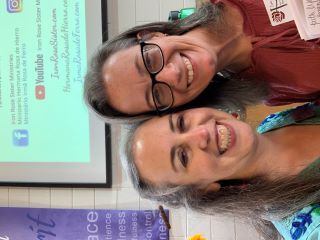 Written byKatie Forbess, president of Iron Rose Sister Ministries Board
 As iron sharpens iron, so one person sharpens another. (Pr 27:17 NIV)
During this exciting month of prayer, we are working our way through the prayer calendar. This is a wonderful way of blessing the ministry. There are so many areas covered for us to think about and pray for together. In this way, many of us are able to pray for the people in our lives by breaking into topics and using scripture.
Another way of praying is to pray through the Common Threads, for yourself or someone else. This, to me, is one of the best resources of IRSM. They are so important that they are incorporated into each of the blog posts. Using them in small groups or even in everyday conversations helps to fulfill the mission of IRSM, which is to help women grow closer to God and to one another. We can use the three parts of the logo as a guide to evaluate what’s going on with ourselves. Then we can transform that into a prayer of our own. Additionally sharing the information with others allows you to pray for each other. That’s awesome!
A Bloom - Which of us doesn’t want a friend to pray for the aspirations of our lives? Reading about wisdom, as it is our theme for this year, makes me want to really grow spiritually in that area, and therefore I want to share that with others so that they can hold that desire up in prayer.
A Thorn - We all have them, and we know it. What an awesome blessing to have the confidence of another sister to share with.
An Iron - The three parts of the logo are very special, but the one that really has proven critical to my long-lasting friendships is the iron sharpening iron piece. I suggest you have friends you can ask to hold you accountable to your aspirations to become more like Jesus. Have a friend who can ask the hard questions and make you face a reality that you are struggling to face.
Michelle often says we are the epitome of Iron Rose Sisters. We have been that for almost 30 years. That means we share and “ooh and ahh” in all the right places as we see each other grow spiritually and become the women that God created us to be (THE ROSE).
This has happened through many seasons over the last 30 years— ups and downs of life that lead us through valleys and to high mountains all bathed in the prayers of each other, knowing each other's thorns and being able to navigate them, helping each other navigate difficult moments, and prayerfully removing or at least dulling the sharpness of them (THE THORN).
Michelle is the one I call when I know she will know before I finish saying what I am saying, and what prayers I need. I don’t have to apologize for being myself, but I can be assured that if what I am saying needs some reality and a biblical lens that I’m not looking through, she will provide those. And vice versa! We can and do say things to each other to hold each other accountable and to help each other dig deeper into areas of our lives that need attention (THE IRON).
 Using the Common Threads, we decidedly pray for each part of this tool and then place them in God’s hands, not our own. There is no room for power struggles or power trips or manipulation when you hand it over to God. That’s a special relationship. That’s an Iron Rose Sister relationship.
 My prayer for you today is for you to use the Common Threads to pray for yourself as well as other Iron Rose Sisters. I pray they will become part of your daily personal reflections and your conversations with other sisters while you are sharing prayer requests.
Question - Do you know and understand the parts of the Common Threads well enough to make them a part of your daily life?
-
Precious Iron Rose Sisters
 Written by Johanna Zabala, volunteer with Iron Rose Sister Ministries in Ecuador
Being an Iron Rose Sister provides great opportunities each week for endless spiritual blessings resulting from the teachings that we read and from meditating on those wonderful words shared by Christian sisters. “Blessed be the God and Father of our Lord Jesus Christ, who has blessed us with every spiritual blessing in the heavenly places in Christ” (Ephesians 1:3 NASB).
There are many spiritual blessings for which we were chosen from the beginning so that we may be set aside as His adopted children. As indicated in the quoted text from Ephesians 1 onward, we are described as princesses of the heavenly kingdom since we have been saved and are striving to live for the glory of God.
In this year 2023, I have observed in more detail how each sister throughout the world who writes for this blog is a beautiful instrument of the Lord to deliver biblical messages and personal stories, called with great love "Godstories". These show how the Heavenly Father Himself in His infinite purposes uses each life experience to make His power and majesty known.
Together, as the virtuous Michelle, the beautiful Deanna, the unique Ana Teresa, the cheerful Sabrina, elegant Aileen, joyful Kat, fervent Kara, creative Corina, fun Katie, jovial Ann, loving Jocelynn, pretty Alina, always kind Brenda, expressive Francia, fascinating Nilaurys, attractive Claudia, cute Marbella, delicate Elina, brilliant Brenda Davis, faithful Wendy, radiant Liliana, great Lindsay, smiling Beliza, assertive Rianna, enterprising Karyn, dedicated Lisanka, and many others, we have shared each blog with the love of God and the heart of the Lord.
Convinced by the relational discoveries that undoubtedly show a range of experiences and moments of life how we are connected, this connection allows us to teach and learn from each other. For this reason, I feel that we are a great team and every day I get to know and love them much more, creating a bond of fellowship, equality, and continuous growth of faith and hope in the Lord Jesus.
Many are the themes shared by these various writer-sisters that have touched my heart and have led me to reflect on my needs; through their writing they all teach, knowing how to relate as a team in spiritual harmony. Likewise, they have strengthened my belief in the undeniable fact that I will never be alone— that I am always in unity with the Maker of Life and therefore with my fellow sister.
I confess that it has been difficult for me to write to you; it is easier for me to communicate verbally than with a written message. But these sisters have encouraged me with their distinct examples to do it better and better, and I am confident you will understand me because of the different learning styles that have also been described in previous blogs, and that in each facet of life, our talents are acquired and perfected through cognitive stimulation, daily practice, and seeking God’s wisdom.
In short, writing will always be an art. That is why writing is not simply a recording of facts, but also involves knowing how to make oneself understood and felt, and reaching the audience in a meaningful way, I am constantly reminded that the main protagonist without question is and always will be the Holy Spirit, the Guide of each topic presented. That is how I have been able to perceive it at all times in the service of the Almighty.
In addition, I particularly consider that the inter-learning process of these human and spiritual relationships allows each of us to benefit from our combined experiences. This leads us to have the mind of the Lord, and I love that. "In your relationships with one another, have the same mindset as Christ Jesus." (Philippians 2:5 NIV)
Therefore, all the manifestations of faith that are projected in each blog entry communicates what exists in each writer’s heart. It is made known at their level of self-knowledge, feelings, thoughts, motor skills, socio-emotional communication, innumerable teaching capacities, and acquisition of continuous learning.
As we think about this theme of relationships that unite us, I would like to bless and encourage each of us who is a part of Iron Rose Sister Ministries not only to consider the written offerings on the theme. Also, to consider the connection that comes from above and that surrounds us to equip ourselves with increasing capabilities to enrich individual and group growth, and to live out the faith, hope and love that characterizes us.
Are you willing? Are you brave and willing to empower every precious Iron Rose Sister to decide to teach and learn in their own relationships? Do you maintain an ongoing relationship with Heavenly Father through prayer so that you can develop communication with each other?
Go ahead— together in unity let's continue to be a great team, precious to God.
-
Preparing to Be a Mentor to Younger Women
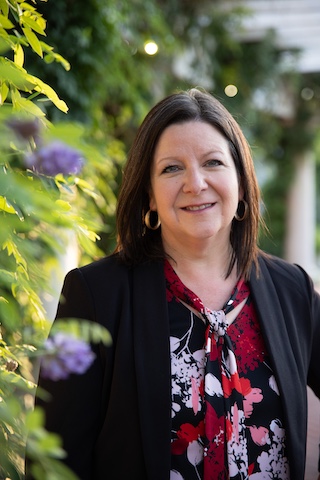 Written by Dr. Anessa Westbrook, volunteer with Iron Rose Sister Ministries in York, Nebraska
 If you were asked to explain marquetry or pyrography, how would you begin? Likely, few of you even know what these crafts are, so you would probably begin by looking them up. Then, perhaps, you would try to learn a little about the process behind them. When it comes to mentoring, our familiarity with that word can give us a false sense of knowing what it is. It’s like hearing a word in another language and assuming that you know the meaning because it sounds familiar, but then later find out that the meaning is different. Often, we do not take the time needed to reflect on everything that mentoring entails.
Women are specifically told to mentor in Titus 2. Titus 2:3 lays out the personal preparation that must occur beforehand, saying, “Likewise, teach the older women to be reverent in the way they live, not to be slanderers or addicted to much wine, but to teach what is good” (NIV). Before someone begins mentoring, there is a preparation process that needs to take place. According to this passage, mentors need to be reverent, watch the way they talk about people, not be controlled by worldly actions, and be prepared to provide good teaching. These qualities take time to develop. What we see reflected in this verse is inner work that is both countercultural and requires the ability to stand one’s ground.
We should not underestimate the power of our influence as women. In Philippians 4:2-3, we see Euodia and Syntyche called out both as partners in the Gospel and with a plea for them to get along. They were obviously influential, but their disagreement was causing issues in the church at Philippi. Mentors should be worthy of imitation. Just as Paul called upon Christians to imitate him in Philippians 3:17, a mentor needs to realize the weightiness of her example.Unhealthy practices should be identified and removed from her life, as they could potentially be replicated in the life of her mentee.
Titus 2:4-5 outlines specific topics for mentors to cover. These topics are mainly domestic in nature, but they represented the everyday reality of women at this time. Paul wanted women to infuse their daily work with purpose and faith, so that they could represent Christianity and their faith well. Today’s mentors should take into account the daily work of their mentees, preparing them to reflect God in their work and personal lives.
Throughout Acts, women played important roles as the early church was being established. Right after the apostles watched Jesus ascend into heaven, they returned to the upper room in Jerusalem. Acts 1:14 says, “All these with one accord were devoting themselves to prayer, together with the women and Mary the mother of Jesus, and his brothers”(ESV). In this small community, women wrestled alongside the apostles with how to apply what they had learned from Jesus to their lives as a Christian community.
Throughout the book of Acts, we see women stepping up to use their gifts for Christ. We are introduced to Tabitha in Acts 9, who is described in verse 36 as “always doing good and helping the poor.” After she became ill and died, her absence was felt keenly by the widows whom she was caring for, and ultimately resulted in Peter raising her from the dead so she could continue her work. In Acts 16, we see the influential and connected Lydia and her household’s conversion and baptism. In verse 40, we find that Lydia went on to host Christians in her home. And in Acts 18, Priscilla, alongside of husband Aquilla, shares the good news of Jesus’ life and ministry to Apollos, who was boldly preaching about the coming of the Messiah. This transformed his message. These women used their influence in the circles God had given them, stepped up, and served God faithfully in those areas. Mentors should demonstrate this type of faithful service in their own circles, encouraging younger women to do the same.
Mentoring is not a suggestion or an option; it is what we are called to as women. We should approach our own preparation with intentionality, carefully considering the way we influence and mentor. As you reflect on mentoring, what are some growth areas that you can work on? What type of impact do you think you could make in the lives of other women after working in these areas?
-
Prioritizing Relationship
 Written by Wendy Neill, Advancement Coordinator for Iron Rose Sister Ministries
Hopefully you have caught on that this year’s blog theme is “Teaching and Learning through Relationships.” But we can’t get to the point of teaching and learning unless we make meaningful relationships a priority.
For most of my life, I have not been good at “friendship,” but Iron Rose Sister Ministries has taught me the importance of investing in relationships with Christian sisters. It takes effort, but if I make the time for friendships, then I learn and am encouraged. With this, I can teach and encourage in return.
Here are some ideas for prioritizing various relationships in your life. If it seems like a lot, don’t worry! It’s great to start small and just pick a couple.
- Christian sisters – Do you have two or three close friends in your “inner circle”? Jesus had Peter, James, and John (Matthew 17:1; 26:36-38). Identify two or three women you’d like to know. To spend more time with them, get lunch or coffee now and then, go on a walk, pray for each other, memorize a scripture passage together, read a book of the Bible over the course of a month and discuss it, or make a pact to avoid “unwholesome talk” about others (Ephesians 4:29 NIV).
- A Christian sister who needs a mentor – Find someone younger than you to spend time with. Don’t view them as a “project,” but show that you truly care what is happening in their life. As appropriate, share what God has taught you in various aspects of your own life. Use some of the same ideas above for this Christian sister.
- Children – Children need multiple adults speaking truth and love into their lives. You may not have children of your own, but I bet you have children around you such as nieces, nephews, or children at church. Give them your undivided attention. Ask what they’ve been learning at church, find out what they do for fun, celebrate milestones, invite them on an adventure or a game night, go to their game/concert, or send them a card. If you have children of your own, schedule one-on-one outings with them once a month. Those are precious times when they will open their hearts to you and will be more open to deep spiritual truths you’d like to impart. Those bonds will carry through your child’s teen and adult years.
- Neighbors –Do you have leftovers from a meal or big gathering? Knock on a neighbor’s door (particularly if they are single) and see if they would enjoy a portion. Invite them for ice cream or dinner sometime. Offer to get the mail, feed the pet, or mow the lawn when they are away. Listen to their stories. You never know when there will be an opportunity for teaching and learning.
- Employees – Remember that those who serve you as waitresses, checkers, and post office workers are people who also need connection and relationship. The time I have invested showing love to two grocery store employees has opened a door to study the Bible with a Hindu! It’s all about relationship. If you work, invest in building relationships with your colleagues, customers, and employers.
You will bless others−and you will be blessed−if you take time to make relationships a priority in your life.
What are two ideas you can incorporate into your week?
-
Prioritizing the Relationship
 Written by Cami Urquidi, volunteer with Iron Rose Sister Ministries in Brazil
When I thought about prioritizing the relationship, the first thing that came to mind was the call of Jesus to his disciples.
When he had finished speaking, he said to Simon, “Put out into deep water, and let down the nets for a catch.” Simon answered, “Master, we’ve worked hard all night and haven’t caught anything. But because you say so, I will let down the nets.” When they had done so, they caught such a large number of fish that their nets began to break. So they signaled their partners in the other boat to come and help them, and they came and filled both boats so full that they began to sink. When Simon Peter saw this, he fell at Jesus’ knees and said, “Go away from me, Lord; I am a sinful man!” For he and all his companions were astonished at the catch of fish they had taken, and so were James and John, the sons of Zebedee, Simon’s partners. Then Jesus said to Simon, “Don’t be afraid; from now on you will fish for people.” So they pulled their boats up on shore, left everything and followed him. (Luke. 5:4-11 NIV)
Why did I think of this passage specifically? I was recently reading the book of a brother in Christ, who worked in a company. The interesting thing is he related that working in a company was not his first priority (of course it was important to earn a salary to pay the family bills), but what was most valuable to him was using the environment to create relationships and lead souls to Christ.
In thinking about this passage where Jesus calls His disciples and they leave everything to follow Him, I reflected on the importance of prioritizing our relationship with God. Placing Him first in our lives, obeying His word and making it our daily bread, because obviously it's not just getting in the water and voilà, happily ever after. We must relate more intimately with God, get to know Him, show true change and show Jesus in our lives, using the spaces and environments that He gives us in our daily lives (such as work, school, the neighborhood store, etc.) to turn them into opportunities to lead disciples to Christ. It is not just about unifying our own relationship with God, but about creating new relationships with, for and through Christ.
1 John 4:11 says, " Dear friends, since God so loved us, we also ought to love one another.” So, we must remain in love just as God loved us to the point of giving His own son; and we must understand that loving others also means wanting them to relate to God. In a certain way, a person's love for God manifests itself in love for other people and the intentional desire for these people to relate with Christ. They become disciples who want to follow their Teacher, leaving everything because they recognize that the most important thing in life is to create a true and lasting bond with our Heavenly King.
I currently work as a coordinator of pedagogy in a language school, so my life ends up being quite social. It involves having to interact all day with teachers, co-workers, students, parents, neighbors, supermarket employees, the gas station, etc. add to that church members, etc. I am aware that God gives me opportunities to interact with people. The problem is getting past that barrier of “I want to be your friend” to “I want you to meet my Savior, who can also be yours if you decide to follow Him.” It has been a great challenge for me, but something that has helped me a lot is to remember that I am in this world because He wants to relate to all His children, and it is my duty to help them find the right path to the Father. Therefore, I try to avoid thoughts like “I'm going to work” and instead I imagine: I'm entering the space that God has prepared to show the way of His loving relationship to others.
Matthew 28:19-20 says: “Therefore go and make disciples of all nations, baptizing them in the name of the Father and of the Son and of the Holy Spirit, and teaching them to obey everything I have commanded you.” Preparing disciples to make more disciples. It’s not easy, for there will always be doors that close in our faces, but with Christ the path is light.What opportunities in your life have you taken advantage of so that other people know and have a relationship with Christ?
-
Redefining Our Steps
 Written by Débora Rodrigo, volunteer with Iron Rose Sister Ministries in Spain
The past year was full of changes and challenges. Of that, there is no doubt. Much has been said about what 2020 will be remembered for. But here we are facing a promising new year that gives us some hope, although we well know that this year, like any other, will bring its own challenges.
Changes, challenges, and unforeseen events all are parts of life that have their moments, as do times of tranquility and happiness. Many things happened in our lives last year, and many others will continue this year, but all things, as Paul promises us in Romans 8:28, contribute to the good of those who love God. We can be sure that during 2020, God was working in us, refining and redefining us according to His will.
The people of God faced many changes and challenges, and were still going through them after their exile in Babylon and the subsequent rebuilding of the walls of Jerusalem, led by Nehemiah. God's people had been refined and redefined during times of great difficulty. After returning to Jerusalem, the changes would continue, and they would have to continue facing challenges; but a new stage was beginning. Led by the priest Ezra, the people decided to meet as one in the square and keep silent while Ezra read the Book of the law. The people listened carefully and worshiped God (Neh. 8:1-6).
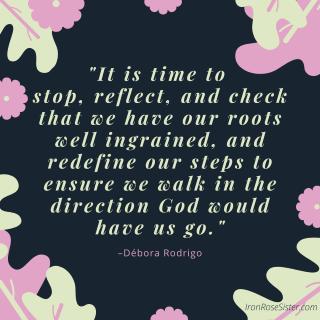
Changes and challenges may continue in our lives, but as we grappled with them over the past months, we have been refined and redefined and we must continue to walk and move forward with every step we take. It is time to stop, reflect, and check that we have our roots well ingrained, and redefine our steps to ensure we walk in the direction God would have us go.
-
Refined and Redefined
 Written by Tiffany Jacox, volunteer with Iron Rose Sister in Bellevue, NE
Well, here we are...2021! Are you leaping for joy and full of new hope or cautiously peering into the New Year? 2020 was full of turbulence, of that we can all agree. It is customary to take time at the end of a year to look back and reflect on what transpired throughout that year. I urge you, if you haven’t already, to take a few moments to do so. Take inventory of the things you witnessed, the things you experienced, your relationship with Jesus, the choices you made and ask yourself how those things changed you.
You see, we are shaped by thousands of little things each day. Little acts, small choices, big decisions, they all have consequences and our experiences help shape the person of whom we will become. If we rely on ourselves or on the voices of the world, we may not be refined the way we should be or would like to be. In your time of reflection over the past year, and preparation for the year ahead, remember who you should be talking to and from where we should seek advice.
We should be spending time in the Word of God and speaking to Him in prayer daily, asking Him for wisdom. Proverbs 3:5 (NIV) reminds us to, “Trust in the Lord with all your heart and do not lean on your own understanding.” We will grow and change through our experiences and God will strengthen us through the trials. “Do not fear, for I am with you; Do not be afraid, for I am your God. I will strengthen you, I will also help you, I will also uphold you with My righteous right hand” (Isa. 41:10, NASB).
We can look forward with joy and anticipation to this New Year with a new opportunity to be not only refined but redefined. God uses our experiences to refine us and we are redefined in Jesus. If you are a Christian you have already been made new. If you aren’t a Christian yet, don’t wait! Get to know our Lord and Savior Jesus Christ and the new life only He can give. “Therefore, if anyone is in Christ, he is a new creature; the old things passed away; behold, new things have come” (2 Cor. 5:17, KJV). The old has passed away and new things have come; we have been redefined!
As we make our New Years’ Resolutions or plans for the upcoming year, remember to keep God in the center of our planning. “Commit your way to the Lord, trust also in Him, and He will do it” (Ps. 37:5, AMP). We must not dwell on the past or things of this world, they are temporary. We need to keep our focus clear and straight ahead. “Set your mind on the things above, not on the things that are on earth” (Col 3:2, NKJV). Allow God to be at the center of all you do and He will guide the way, “The mind of man plans his way, But the Lord directs his steps” (Prov. 16:9, NASB).
God has given us a sweet fellowship in Iron Rose Sister Ministries and a way to be refined, “As iron sharpens iron, so one person sharpens another” (Prov. 27:17, NIV). No more looking behind, only looking ahead, together, as refined and redefined women of God!
-
Relationship with God Through Christ
 Written by Kat Bittner, Iron Rose Sister Ministries volunteer and Board Member in Colorado
Relationships can be difficult to foster. And often they are the hardest things to keep tied. Even the best relationships can be knotty at times. Relationship with God, though, is far less complicated. It’s also the most valuable. A personal relationship with God means unconditional love by Him. It means redemption from the worst we’ve done. It means adoption into a family in which we are heirs of a great inheritance (Gal. 4:4-7; Rom. 8:17). Most importantly, relationship with God means life.
We are given the gift of God’s grace, and we undeservedly receive God’s mercy (Eph. 2:8; Rom. 9:16). And we are also given the hope of eternal life (1 Pet. 1:3). To obtain that life, though, we must enter relationship with God, and we can only get to God through Jesus.
“I am the way, and the truth, and the life. No one comes to the Father except through me“ (John 14:6 NIV).
This is my favorite scripture because it encompasses what I can expect and what I can do to truly live. If I expect to have truth and life, I can only do so by way of Jesus. Because of what God did for me in sacrificing His Son to die on my behalf, I’ve come to acknowledge the need to be more selfless. The truth is, if left to my own inclinations, life would be spent doing all the things that please me. I’d go where I want, when I want, and do what I want with very little consideration for others. Rather than make a home and life for my husband, children, and grandchildren, I would make a home and life that best suits me. I’d be overcome by my addictions (food) and proclivities (controlling). Singing on the worship team, teaching the toddlers’ Bible class, and serving in the women’s ministry at my church would all be meaningless. Ministries near and dear to me like Ciudad de Angelesand Iron Rose Sister Ministries would be inconsequential. My job, my social life, and my pastimes would be centered solely around my personal gain rather than how I can do those things to serve others.To that end, I rely heavily on my relationship with God. I’ve come to appreciate that my relationship with God keeps me focused on what truly matters. It keeps me grounded on more holy things and ensures those things take precedence because one who “pursues righteousness... finds life, prosperity and honor” (Prov. 21:21).
Through Jesus, I’ve come to know God more freely and intimately. I value my relationship with Jesus because, without Him, I would not know God. Jesus said, “The Father is in me, and I in the Father” (John 10:38), so to know Jesus is to know God. Personally, I don’t know who I’d be otherwise. Lauren Daigle beautifully expresses in her song, “Thank God I Do,” the value of knowing Jesus.
You're my safe place, my hideaway
You're my anchor, my saving grace
You're my constant, my steadiness
You're my shelter, my oxygen
I don’t know who I’d be if I didn’t know you, I’d probably fall off the edge.
I don’t know where I’d go if you ever let go, so keep me held in your hands.
I don’t know who I’d be if I didn’t know you. Thank God I do.It’s because of Jesus that we “may have life and may have it more abundantly” (John 10:10 NKJV). Life abounds because of Jesus! I relish that thought because it means that while everything is not always good in life, life is always good. And because I am in relationship with God, I can be less stressed when life goes awry. I certainly do try!
“Be cheerful no matter what; pray all the time; thank God no matter what happens. This is the way God wants you who belong to Christ Jesus to live.” (1 Thes. 5:16-18 MSG)
As in any valued relationship, we should be mindful of what’s necessary to keep the relationship strongly tied. I grow spiritually when I am seeking daily to know God better. My Bible studies, my prayer time, and my relationships with other Godly women all help foster my relationship with God (1 Tim. 4:13-16; Titus 2:3-5; Ps. 119:1-2; Ps. 18:6; Ps. 15:29). And I have found that the less time I spend fostering my relationship with God, the more likely my life is to become complicated—or at least the more likely I am to become anxious about those complications. Ultimately, it’s a ploy from the enemy to distract me from growing in my relationship with God. God is worthy of so much more in our relationship than for us to worry about life. And no human trouble is greater than God’s power to overcome it.
“Nothing in the affairs of men is worthy of great anxiety.” (Plato)
What strides will you make to draw closer to Jesus? And thereby God?
-
Rooted by Grace, Rooted to Grow
 Written by Abby Baumgartner, an Iron Rose Sister Ministries volunteer in Texas
In school, did you ever try to grow a plant in a wet paper towel? My elementary school teacher gave each student a small seed, a wet paper towel, and a Ziploc bag. We placed the seed inside the folded towel, the towel inside the bag, and the bag by a window. Over the course of a week, we watched the seeds sprout, but the plants did not last long. A seedling cannot survive in a wet paper towel forever — in fact, the stem snaps if the plant is not rooted in a source of strength and sustenance. A plant cannot live and grow without affixing its roots to something stronger than itself.
This seemingly trivial science lesson rings true in life, too. When we rely on our own abilities to grow, we are successful for a time, but without being rooted in a deeper source of strength, we continually fall short. Scripture reflects this idea, too. When the LORD led the Israelites out of Egypt, they committed to following the living God who performed miracles, brought them out of captivity, and parted the Red Sea. Yet their growth in trusting God had not taken root — they still questioned how He would provide food and water, doubted His protection, and consistently chose their own desires over closeness to God.
But, before I judge the Israelites of old, I must remember that I struggle with the very same things. Scripture says that “all have sinned and fall short of the glory of God”(Ro 3:23 ESV). If I were able to fix my own flaws, I would not be in need of a Savior. I see areas of life where I want to grow, but making positive, lasting change is hard work! For example, I struggled mightily with gossip in the past. I wanted to honor Christ and the others by ending my sinful habits, but my willpower was not enough. The good news that I was “justified by his grace as a gift, through the redemption that is in Christ Jesus”(Ro 3:24). This was not lost on me, but I wanted to grow in my ability to honor Him fully… What could I do?
In his letter to the Colossians, Paul wrote, “As you therefore have received Christ Jesus the Lord, so walk in Him, rooted and built up in Him and established in the faith, as you have been taught, abounding in it with thanksgiving”(Col 2:6-7 NKJV).
A core temptation of life is to say I can be the source of my own growth, that within me I contain all that is needed to become a better person. While each person must play a part in creating healthy change in their lives, growth only takes root when we are “rooted” in Christ. This passage in Colossians has become a personal favorite because it highlights my humility, Christ’s sufficiency, and our consistency.
First, my humility: Paul says we should “walk” in Christ the same way we “received” Christ (Col 2:6). I received Christ in the humblest of situations. I was aware of my insufficiency and my need for a Savior, and I approached Christ with childlike dependence. In cutting gossip from my relationships, I recognized that my strength could only go so far — I needed to let go of my pride and turn to Christ for help.
Second, Christ’s sufficiency: Christ is more than capable of meeting my needs because when I am “rooted” in Him, I am also “built up” and “established” (Col 2:7). When I focus more on all that Christ gives me, I learn to trust Him to sustain my need for connection that I tried to fill through gossip. Only then could I let go of the fear that drove me to seek connection in unhealthy ways.
Finally, our consistency: Over time, we develop consistency in our relationship with Christ. As I see His work in my life, my roots run deep, and I grow toward “abounding in [Christ and faith] with thanksgiving” (Col 2:7). Now, my life yields the fruit of joy and thanksgiving because my roots are in Christ.
As you go forth today, think: How can you remember your root in Christ, and how can you look for the fruit of that rootedness?
I want to leave you with the words of the song “Grace by Which I Stand” by Keith Green. I absolutely love this contemporary Christian song because it reminds me that any need met, any decision made, any modification of my character can only “stand” and last by the grace of God. Here is how the song goes:
Lord, the feelings are not the same
I guess I'm older
I guess I've changed
And how I wish it had been explained
That as you're growing
You must remember
That nothing lasts
Except the grace of God
By which I stand in Jesus
I know that I would surely fall away
Except for grace
By which I am saved
Lord, I remember that special way
I vowed to serve You
When it was brand new
But like Peter, I can't even watch and pray
One hour with You
And I bet I could deny You, too
And nothing lasts
Except the grace of God
By which I stand in Jesus
I'm sure that my whole life would waste away
Except for grace
By which I'm saved
Well, nothing lasts
Except the grace of God
By which I stand in Jesus
I know that I would surely fall away
Except for grace
By which I am saved -
Rooted in the Reach: Living as Branches of the True Vine
 Written by Kat Bittner, volunteerwith Sister Iron Rose Ministries in Colorado
In the hustle of our daily lives, it’s easy to feel like we are running on empty. We strive to be "good people," to be productive, and to make a difference, but often we find ourselves exhausted and withered. The secret to a vibrant, impactful life isn't found in trying harder—it’s found in abiding deeper.
While 2 Peter 3 reminds us of the patience of the Lord and the promise of His return, it calls us to "grow in the grace and knowledge of our Lord and Savior Jesus Christ" (2Pe 3:18). This growth isn't a solo DIY project; it is the natural result of being connected to the Source.
The Anatomy of the Vine
To understand our relationship with Jesus, we have to look at the vineyard. Jesus famously said, "I am the vine; you are the branches" (Jn 15:5). In a physical vineyard, the vine is the lifeline. It pumps water and nutrients from the earth into the branches. The branch doesn't "work" to create a grape; it simply holds on.
- The Vine provides the identity: A branch without a vine is just a stick.
- The Vine provides the energy: The sap (the Holy Spirit) flows through the connection.
- The Vine determines the fruit: You cannot produce "peace" or "love" on your own strength any more than a branch can produce an apple by sheer willpower.
"The branch of the vine does not worry, and fret, and rush here and there to seek for sunshine, air, and ingredients of life... it simply rests in the vine, and the fruit which comes is the vine’s fruit, grown through the branch." — Hudson Taylor
Why We Invite Others into the Vineyard
If we are truly connected to the Vine, our lives will naturally hang heavy with fruit. And fruit isn't for the branch—fruit is for others to eat. Second Peter 3:9 tells us that the Lord is "patient with you, not wanting anyone to perish, but everyone to come to repentance." If we have found the source of life, our greatest act of love is to invite others to graft themselves into the same Vine. We aren't just inviting people to a "religion"; we are inviting them to a relationship that sustains them.
Practical Ways to Invite Others
Inviting someone to know Jesus doesn't always require a pulpit. Sometimes, it just requires a gardener’s touch. Here are three practical ways to share the Vine:
- The "Taste and See" Invitation: Share a specific way Jesus has helped you through a recent struggle. When people see the "fruit" of peace in your life during a storm, they will want to know where it comes from.
- The Open Table: Invite a neighbor or coworker for a meal. Use the time to listen deeply. As 1 Peter 3:15 suggests, "Always be prepared to give an answer to everyone who asks you to give the reason for the hope that you have."
- The Simple "Come and See": You don't need to have all the answers. Like Philip said to Nathanael in John 1:46, just say: "I’ve found something that changed my life. Do you want to come to service (or small group) with me this week?"
Conclusion
As we wait for the day of the Lord described in 2 Peter 3, let us not be idle. Let us sink our roots deep into Jesus, the True Vine, and extend our branches wide to a world that is hungry for the fruit only He can provide.
I encourage you to create a list of five daily "Abiding Prompts" to help you stay connected to the Vine throughout your week.
-
Rooted or Simply Occupied
Written by Sharit Saman Zapata, volunteer with Iron Rose Sister Ministries in Peru

Imagine a tree in the desert that, from afar, seems strong and robust, but when you get closer, you discover that it is dry, without sap or fruit, and rotten inside. Its strength was only an appearance. Now imagine another tree by a river, full of fruits and shiny leaves; it does not struggle to survive, it grows calmly, and that is why it overflows with life.
Which of the two trees is more like our spiritual life?
Blessed is the one who does not walk in step with the wicked or stand in the way that sinners take or sit in the company of mockers, but whose delight is in the law of the Lord, and who meditates on his law day and night. That person is like a tree planted by streams of water, which yields its fruit in season and whose leaf does not wither—whatever they do prospers.(Ps 1:1-3; NIV)
Many of us, after years in the Church, learn to see ourselves well from afar: we speak like Christians, we move in environments of faith, we master biblical passages and practice disciplines... but inside, something does not grow. The dangerous thing is to stagnate, to get used to living like this, to do the "right" things without satisfaction: we pray, we read the Bible, we surround ourselves with Christians... and we are still empty.
This is a real struggle, but we should not allow ourselves to remain in this state for long or settle. There is a big difference between being busy with things of God and being really rooted in Him.
Some tips we can take from Psalm 1:1-3:
- Stop walking where you shouldn't.
"the one who does not walk in step with the wicked..."
Before speaking of roots, the psalmist points in the direction: how can we grow in God if we listen to voices and make decisions that lead us away from Him? It is like a tree in dry ground: its fruits, if there are any, will be contaminated. Jesus said, "No one can serve two masters. Either you will hate the one and love the other, or you will be devoted to the one and despise the other" (Mt 6:24). Many times, we do not grow because we have our hearts divided between obedience and comfort and we do not want to let go of what prevents us from moving forward.
- Stop "trying" and start reveling.
"whose delight is in the law of the Lord."
Here we are going to find the real problem: it is not a lack of discipline; it is a lack of delight. You can read the Bible every day and still be dry, we can pray and still be empty, all this because God is not looking for routines: He is looking for genuine love. And if we think about it, no one needs reminders to do something they love. Psalm 42:1 says, "As the deer pants for streams of water, so my soul pants for you, my God." That is our reference, it is not an obligation… it is hunger. If your relationship with God feels heavy, it is not a problem of agenda... It's a heart problem. This is because a tree should not simply visit water, it should live connected to it.
- Stay, don't just pass by.
"who meditates on his law day and night"
Sometimes we treat God as a quick stop: a short devotional, a prayer before bed, a song on the road, while the rest of our life is disconnected. Jesus says, "apart from me you can do nothing" (Jn 15:5). It doesn't just say a little, it says NOTHING. It is like a state-of-the-art cell phone—although it has all the potential, without being charged or connected, it is useless. So is your spiritual life if you do not abide in Him.
- The fruit will be inevitable if the roots are real and firm.
"That person is like a tree planted by streams of water, which yields its fruit in season"
Many people get frustrated looking for immediate fruit, but the passage says it will be in due time. Like the tree that stands by its source, without comparing or forcing itself, it only strives to stay at its source, then the fruit comes naturally. In Galatians 5:22–23 we see the fruit of the Spirit: love, joy, peace,... This fruit grows when we are connected. If there is no fruit, the problem is not the fruit, but the roots.
You don't need another spiritual strategy or a perfect plan; you need to decide TODAY where you are planted. You can be busy with Christian stuff or be a really rooted woman by the river. Those two things are not the same. How much longer are you going to settle for a life that seems strong on the outside, but is dry on the inside?
-
Set Apart for a Purpose
 Written by Deanna Brooks, volunteer with Iron Rose Sister Ministries in Arkansas
When I bake a wedding cake and make roses to decorate it, I set the prettiest roses to the side for the top tier or front of the cake. That is what I want people to focus on, not the rose whose petal folded inward as it was drying. Those roses are set apart for a special purpose.
In the same way, we, as God’s children, have been set apart for a purpose. From the beginning, God has called people out from where they were for a special purpose. “For we are his workmanship, created in Christ Jesus for good works, which God prepared beforehand, that we should walk in them” (Eph. 2:10 ESV).
We have examples of people God set apart from the world:
Noah was called out from the evil world to build the ark to save his family from the flood.
Abraham was called from his pagan homeland to a land God would provide with the promise that a great nation would come from him, including the Messiah.
Moses, after fleeing Egypt, was called from herding sheep to return to Egypt, go to Pharaoh, and say, “Let my people go.” These were descendants of Abraham.
David, another descendant of Abraham, was called from being a shepherd whose heart was turned toward God to become a mighty king.
John the Baptist was born to aged parents and called to prepare the way for the Messiah.
In Deuteronomy 14:2 we read about the Israelites, “For you are a people holy to the LORD your God, and the LORD has chosen you to be a people for his treasured possession, out of all the peoples who are on the face of the earth.”
In each of these examples, there was a purpose— a reason they were set apart— to be His chosen people.
There are dozens of other examples in scripture, and what we need to realize is that God takes us where we are and gives us time to grow into what He has planned for us.
What does it mean for our lives to live as one set apart?
We stand out just as a rose stands out from the thorns. We will look different from the world around us as we make decisions that glorify God.
Jesus told His followers, “Let your light shine before others, so that they may see your good works and give glory to your Father who is in heaven” (Matt. 5:16).
The world is evil, but light shines brightest in the dark. We live in the world, but we are to be different.
Jesus prayed,
I do not ask that you take them out of the world, but that you keep them from the evil one. They are not of the world, just as I am not of the world. Sanctify them in the truth; your word is truth. As you sent me into the world, so I have sent them into the world. (John 17:17,18)
We are set apart by our actions and by our speech. Those are the two things most noticeable to other people. There are two scriptures I think of that encourage our lives to be set apart.
Colossians 3:2, “Set your minds on things that are above, not on things that are on earth.”
Romans 12:2, “Do not be conformed to this world, but be transformed by the renewal of your mind, that by testing you may discern what is the will of God, what is good and acceptable and perfect.”
Just as the roses I set apart draw attention to the cake, so our lives should draw attention to Jesus and bring glory to God.
The words of Peter remind us of our purpose and importance to our Heavenly Father.
But you are a chosen race, a royal priesthood, a holy nation, a people for his own possession, that you may proclaim the excellencies of him who called you out of darkness into his marvelous light. (1 Peter 2:9)
Are you living your life as one set aside for the purpose of drawing attention to our Lord?
-
Set Your Mind on Things Above
 Written by Ana Carolina Mourão, volunteer with Iron Rose Sister Ministries in Campo Grande, Brazil
Since, then, you have been raised with Christ, set your hearts on things above, where Christ is, seated at the right hand of God. Set your minds on things above, not on earthly things. For you died, and your life is now hidden with Christ in God. When Christ, who is your life, appears, then you also will appear with him in glory. (Col 3:1-4 NIV)
I found it interesting Colossians 3:2 was the suggested verse for this blog: Set Your Mind on Things Above. This is a struggle I have with my mind and which has been unfolding for some time. I believe we all face this battle. When I reflect on this verse, I think “If my mind stays and works on things that are from above, then it is filled with what is good and there is no time left for the things of the world.”
Our whole life is for the Lord’s honor and glory. Sometimes we fail, sometimes we judge, but only God is the true judge, and this Judge gave us such grace by sending Jesus to die on the cross in our place.
This is my prayer: Father, I ask you for forgiveness because I sin, but I thank you for your mercy, Lord. I give you my life. I thank you for reaching so many sisters and as long as I live, I believe in your healing. I thank you for the sisters who pray for me, Lord, because I believe in the power of prayer. In the name of Jesus, amen.
A good way to occupy your thoughts with things above is to ask yourself: What do I love to do for the Lord? In my case, it is working with the little ones; playing with them, doing theater, and making fun classes. And you? What is your gift? Invest in it. That's your TALENT. Do you remember this beautiful parable? To each is given their talent, and the one who multiplies it hears, “Well done, good and faithful servant! You have been faithful with a few things; I will put you in charge of many things. Come and share your master's happiness!” (Mt 25:21).
May our thoughts remain on things above. And what are these things? These would be things that involve the Lord, His church, the brotherhood, widows, and orphans, as this is true religion (Jas 1:27). When we help with visits, women's classes, coffee and tea for church events, and preparing the Lord’s Supper, we are taking care of things from above.
“But the fruit of the Spirit is love, joy, peace, forbearance, kindness, goodness, faithfulness, gentleness and self-control. Against such things there is no law” (Gal 5:22-23). I would like to highlight one of the fruits of the spirit, kindness, and talk about a brother, Fonseca, the greatest example of kindness I have ever seen on earth. He fought the good fight and left a legacy, three daughters and his wife, with the same good heart. With my own eyes, I saw him buy a bag of food and give it to a family who needed it. His kindness was always immense. Anyone who knew him has to hold back tears when talking about him. “Let us not become weary in doing good, for at the proper time we will reap a harvest if we do not give up. Therefore, as we have opportunity, let us do good to all people, especially to those who belong to the family of believers” (Gal 6:9-10).
We must always do good to everyone, especially those in the family of faith (Gal 6:10). In fact, it is something which should not need to be mentioned it should be inherent to who we are like in the stadiums where the Japanese collect the garbage without anyone asking.
And think of Jesus, who had all the fruit of the Spirit? With His kindness and mercy, after a life of sacrifice, He died for me and for you. May we keep our minds on things above in preparation for His return!
-
She Did Her Part and Let God Be God
 Written byLiliana Henríquez, volunteer for Iron Rose Sisters Ministries in Colombia
One of the most challenging tasks for a human being is to let go of egocentrism and adopt a position of total surrender to God. We mistakenly believe we are all-powerful, but the truth is that nothing moves without God’s will.
When we look at the life of Jesus, we see that He was obedient in everything, even though, humanly speaking, He faced the unimaginable pain of crucifixion. Who would willingly offer himself to endure such intense physical suffering as dying on a cross? Jesus did! And because of this, you and I don’t have to pay for our sins—we have eternal life. In the pivotal moment of His death, Jesus fully surrendered to God and His will, saying, “Father, into Your hands I commit My spirit” (Lk 23:46, NIV).
In our daily lives, we must “crucify ourselves” repeatedly, or in other words, set aside our own desires and make sacrifices for a higher good.
We set aside our desires to prioritize those of our partner...
We set aside our rest to choose to play with our children...
We set aside our comfort to serve others with love...
We set aside what we want and focus on fulfilling God’s calling for our lives.
In the spiritual realm, things operate under the principle of total surrender to God. Those of us who have accepted Christ as Lord understand that we no longer live to satisfy our own desires, but to fulfill Christ’s (Gal 2:20). We know that those who want to be exalted must humble themselves. Those who want to be served must serve. Those who want to be loved must love. Those who want to receive must give.
This doesn’t mean we always agree with God’s plans. Often, we don’t. In fact, many times, we feel upset because we don’t understand why He asks us to do things that seem “illogical” or outside our comfort zone. However, a true servant of God surrenders because she knows WHOM she is serving and follows the example of Jesus on the cross saying, “Father, if you are willing, take this cup from me; yet not my will, but yours be done” (Lk 22:42).
A true servant does her part with a surrendered heart and in complete obedience to God—and lets God be God. We don’t need to understand everything God does, but we do need to do everything He calls us to because that’s the commitment we made when we decided to be His disciples.
Is your life fully surrendered to the will of God?
-
She Did What She Could – Pruning
Written by Ayane Nayara, Brazil Assistant for Iron Rose Sister Ministries

In the northeast region of Brazil, where I live, we are in the time of year when the fruit trees are full of their fruit. It's a beautiful sight to see; our eyes are filled with the beauty of each fruit, with its different shape and color. After this season, the farmers who care for these trees have the job of cleaning them, removing dead branches and leaves, and adding fertilizer, preparing them for the following seasons so that, in due time, they will bear fruit again.
I once lived in a house with a huge mango tree in the yard. It was beautiful. When I first moved in, I thought, "I'll eat plenty of mangoes when the time is right." The time for that mango tree to bloom came, and it did, just like all the others in the region, but when the time came for the flowers to turn into fruit, they began to fall. While all the mango trees I saw around the city were laden with fruit, the one in my yard was empty. I found out that my tree hadn't borne fruit for years.
Jesus often used illustrations from agriculture and fishing to teach people about the message of the Kingdom and the Gospel, and I particularly enjoy these illustrations because I appreciate this way of life. On two occasions (Jn 15:1-6 and Lk 13:6-9), He tells His disciples two parables. The first is about the true vine, and the second about a fig tree that did not bear fruit. Reading them allowed me to reflect on some points that I want to share with you.
- If you or I are not bearing fruit, we should repent (Lk 13:6-9)!
We were called to be part of a Kingdom where each one plays their role, and that is a privilege. We were dying, useless branches that by ourselves were incapable of producing anything, and we were connected to a tree that made us capable of producing fruit. So, let's bear fruit! God has given us, through Christ, a new chance, and we cannot waste it. We cannot occupy a space that could be filled by someone who would bear fruit, without bearing any fruit at all. We must be fruitful! Or we will be like that mango tree in my yard, blossoming – pretending that we will bear fruit, but that fruit never comes to be (Col 1:21-23).
- We need to be pruned of our old habits so that we can bear more fruit, and better fruit (Jn 15:2).
And that is exactly what God wants to do with each of us who are in Christ--To prune us so that we may be more fruitful. But what would this pruning entail?
The Greek term for pruning is also used for cleansing. God, our Father, wants to cleanse us. The reason a farmer prunes trees, removing dead branches and leaves, is so that the plant doesn't waste its energy and nutrients on things that are not worth cultivating and that hinder the growth of the fruit. God wants to cleanse us of what can hinder our fruitfulness. Surely there are some twigs of sin in our hearts that drain our energy and hinder our growth, and that is exactly what God wants to remove from our hearts.
For you have been born again, not of perishable seed, but of imperishable, through the living and enduring word of God. (1Pe 1:23 NIV)
Therefore, rid yourselves of all malice and all deceit, hypocrisy, envy, and slander of every kind. Like newborn babies, crave pure spiritual milk, so that by it you may grow up in your salvation. (1Pe 2:1-2)
- There is no other way to bear fruit except by remaining in Jesus Christ (Jn 15:5).
We can observe that while Jesus speaks to His disciples in John 15:1-6, He repeats the word "remain" at least six times. Clearly, He wanted to convey to them the importance of this attitude. To bear fruit and continue to be cleansed by our great Gardener, we need to remain in Christ. There is no other way to grow. We are incapable of producing anything or even sustaining ourselves alone. Without Christ, we are nothing more than dry and dead branches.
Finally, sisters, God expects from us what we were called to do – bear fruit. This work is a two-way street: our surrender in allowing ourselves to be cleansed and used by our Gardener, and His work in us, pruning and cleansing our hearts of all that hinders our development.
Reflect:
What is hindering the growth of your fruit and needs pruning? Are you willing for this pruning to happen?

See more photos on our Photo Gallery page.
(c) Iron Rose Sister Ministries. Site setup by Perfect Fit Web Design; Flag icons by Free Flag Icons